
A Girl Raised by a Village
Thilaga Ramesh grew up believing that life was something you experienced together. In the sprawling warmth of a joint family somewhere in Tamil Nadu, her childhood was never lonely. Trips to amusement parks and temples, evenings with cousins and grandparents, the constant hum of a household full of people who belonged to each other, this was the world she knew.
Then came the hostel.
As Thilaga grew older and moved away for her studies, she began to feel the quiet ache of missing out. Family functions she could not attend, festivals that passed without her, the slow drift from the togetherness that had defined her earliest years. She does not speak of it with bitterness - only with the tender clarity of someone who now understands what she had.
In college, she had a plan. A government exam. A coaching centre. A future she was building brick by brick.
Then came COVID-19. Then came an arranged marriage. Then came everything she had not planned for.
“In my childhood, I mostly interacted with my family. After I grew up, I missed many moments with them. I only understood the value of it later.”

Before Baby, After Baby
Thilaga speaks about her life before and after her first child with the precision of someone describing two completely different people.
Before motherhood, life was simpler: her parents, her husband, the small ecosystem of her immediate world. She had not yet thought about what it would mean to be responsible for another life. After marriage, everything was new. After the baby, everything was transformed.
“I spend more time with my baby. I can’t concentrate on many things. There are so many mood swings.” She says it not with complaint, but with the quiet acknowledgement of a woman who has walked through fire and emerged with her hands full of love.
The first time she found out she was pregnant, the feeling was not purely joyful. It was a mixture of happiness and fear braided together so tightly she could not separate them. How would she manage? What kind of mother would she be? The questions were enormous. The answers were still forming.

The Moment She Heard It
There are moments in a pregnancy that stay with a woman for the rest of her life. For Thilaga, it was the first sonography.
She had gone in for her first check-up, nervous and uncertain. And then, through the static and hum of the ultrasound machine, she heard it. A heartbeat. Rapid, insistent, impossibly small.
“Some little tiny thing is growing inside me.” That is how she described the feeling, years later, to the Janitri Club team. Not grand, not clinical, just that. A tiny thing. Growing. Hers.
“I was very happy when I heard my baby’s heartbeat for the first time. It was the most memorable moment in my life after marriage.”
That heartbeat became an anchor. It was the thing she returned to in moments of doubt, the proof that something real and alive was happening inside her body. It was, she said, the most memorable moment of her life after marriage.
Which makes what happened in the third month all the more terrifying.
The Night She Ran to the Hospital
It was midnight. A severe stomach pain, sudden, sharp, the kind that leaves no room for reason. Thilaga did not know if her baby was fine. She did not know what was happening. She only knew that she was scared in a way she had never been scared before.
Her husband rushed her to the hospital. The doctor was not there. She was told to wait. In those hours of uncertainty, she sat with a fear so profound it had no name. What if the baby was not okay? What if something had gone wrong without any warning?
When the doctor finally arrived and told her - The baby is safe, there is nothing to worry about - Thilaga felt something physically leave her body. Relief. Pure, breathless relief.
“When I heard that word, I was very relieved from that strain.”
She went on to have a normal delivery. Induced labour, two pushes, and her little angel came out into the world. The moment she saw her baby on her chest, she forgot every second of the pain that had come before.
A Husband Who Held Her Together
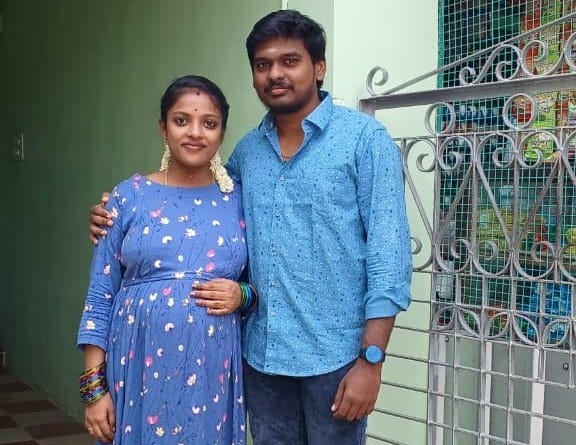
Thilaga does not talk about her pregnancy without talking about her husband. He is woven into the story in a way that cannot be extracted.
Mood swings in pregnancy are real. The sudden anger, the inexplicable sadness, the tears that arrive without warning and leave without explanation. For Thilaga, these were not abstract concepts; they were her daily reality.
Her husband showed up. Every time. He managed her moods not by dismissing them, but by being present for them. He did not flinch at her anger or grow impatient with her grief. He simply stayed. In the first pregnancy and now, in the second.
“It is a main role for a husband to play in a pregnancy. He was so supportive of me. I am very thankful to him during my whole pregnancy.”
Thilaga would later describe postpartum depression not in clinical terms, but in the language of lived experience: sudden happiness, sudden anger, inexplicable crying. Days when she did not understand why she was weeping. Her husband managed everything. He held her world together while she found her footing inside it.
The First Month: No Sleep, No Manual, No Rest
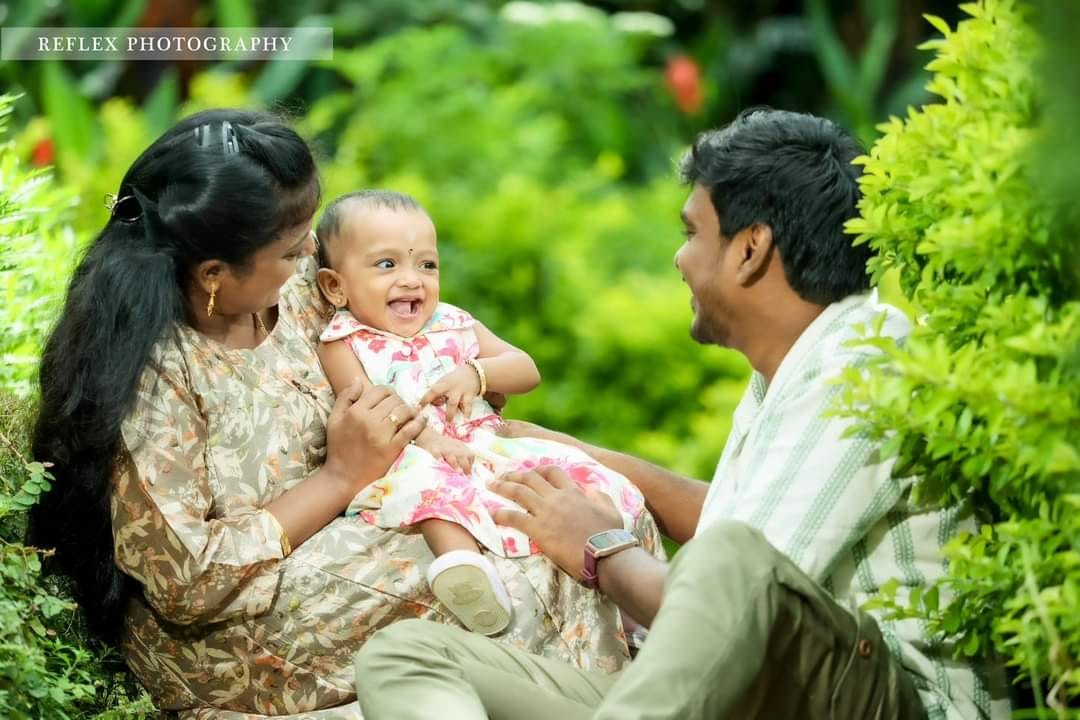
The first month after her baby was born, Thilaga’s mother was with her. Then she left. And then it was just Thilaga, her husband, and a baby who cried constantly, a baby neither of them knew how to read.
“I was very stressed. I don’t know what to do, how to take care.” As a first-time mother, she had no template. The nights were long and sleepless. The days blurred into each other. Every cry was a question she did not yet know how to answer.
And then there was the breathing check.
In the depths of the night, Thilaga would wake up and lean over her sleeping baby, just to check. Is she breathing? Is she okay? The stillness of a deeply sleeping infant is one of the cruelest tricks of new parenthood - too peaceful, too quiet, too easy to misread as something wrong. She checked. And checked again. And only then, reassured, returned to her own fitful sleep.
“In the night, she had a long sleep. I would wake up and check if she was breathing or not. I was panicking sometimes.”
The Products She Wished She Had
During her conversation with the Janitri Club team, Thilaga spoke with unmistakable certainty about two things she would have found invaluable as a mother.
The first: a device that would let her listen to her baby’s heartbeat at home, whenever anxiety called for it. She did not need to be reminded of why. She had lived through that midnight hospital run in her third month, the terrifying silence before the reassurance. If she had been able to hold a small device to her belly and hear that rapid, rhythmic heartbeat, she would have known immediately that everything was fine.
“I prefer to buy a product to see my baby’s heartbeat in my home whenever I want to hear my baby’s heartbeat.”
The second: a continuous temperature monitor for her baby’s fever. Managing a restless, crying infant with a standard thermometer had been a battle she fought alone at two in the morning. A small patch attached to the baby’s armpit, one that sends alerts through the night, one that does not require her to hold down a wriggling, wailing child just to know the temperature, this, she said, would be very useful.
She said yes to both without hesitation. Not because she was asked to, but because she had already lived the absence of them.
WHAT THILAGA KNOWS
• The first heartbeat you hear in a sonography is a memory you carry for life.
• A supportive partner is not a bonus in pregnancy; it is essential medicine.
• Postpartum depression is real. It does not always look like sadness. Sometimes it looks like crying without knowing why.
• Managing a fever in a small, crying baby is harder than it sounds. Technology that helps mothers monitor silently through the night can change everything.
• The breathing check at midnight is universal. Every new mother does it. Every one of them deserves to feel less afraid.
The Second Time Around
Thilaga is six months into her second pregnancy as she tells this story. This time, she says, she is calmer. Trained, she calls it the way a person earns wisdom, not through reading but through living.
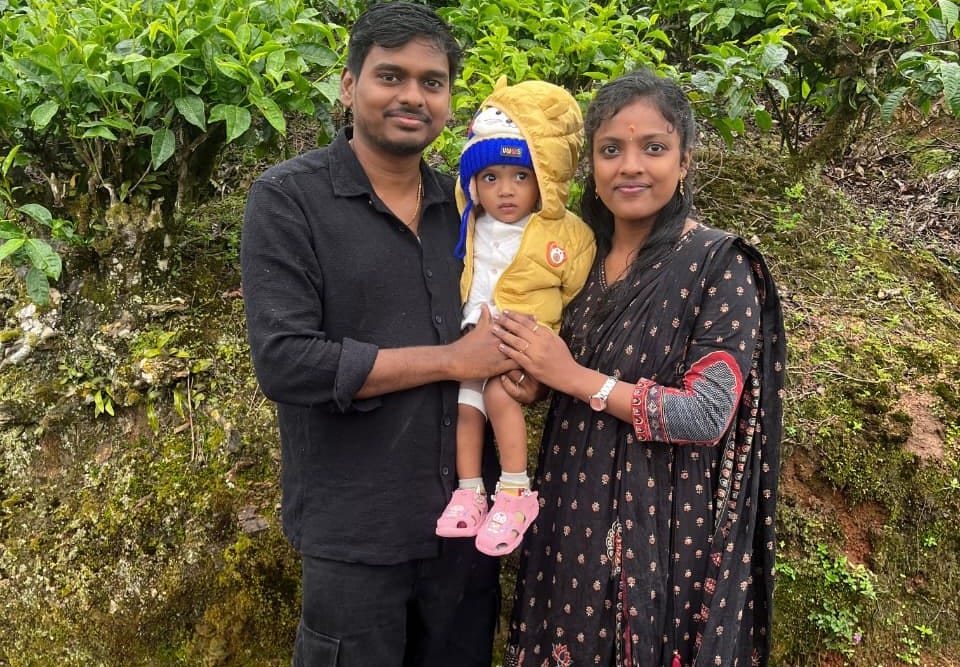
Her first child has become more attached since the pregnancy was confirmed. Thilaga suspects, with gentle amusement, that the toddler knows something is coming. “She is very attached to me now. I think she knows there is a competition coming.”
She has help at home now. A cook. Her husband. The scaffolding of a family that has learned, together, how to hold itself up. She is not scared of every single thing the way she was the first time. She is ready.
And yet, the dream she paused is still there, steady and quiet in the background.
The Government Officer She Is Still Becoming
Before COVID changed everything, Thilaga was preparing for a government exam. She had joined a coaching centre. She had a plan. Then the pandemic arrived. Then her parents arranged her marriage. Then life, in its irreversible way, moved forward.
She does not carry regret about any of it. But when asked what she would want if she could restart her career, her answer is immediate: a government officer.
“I have that plan also,” she says, about the future. “After my baby is a little big, I can try.”
But Thilaga has not been waiting quietly. Marriage, it turns out, opened doors she had not expected. Since becoming a housewife, she has taught herself Aari work, mehandi, Tally, and press-on nail courses, each one a new skill claimed on her own terms. And right now, in the middle of a second pregnancy and a toddler at her heels, she is learning portrait drawing.
Her husband supports every single one of these pursuits. The same man who managed her mood swings, who drove her to the hospital at midnight, who showed up through two pregnancies without being asked, is also the man who says yes when his wife wants to pick up a pencil and learn to draw a face.
It is a sentence that carries so much inside it. The patience of a woman who knows that the timing of her dreams has shifted, but not dissolved. The quiet confidence of someone who has already done harder things than passing an exam, who has grown a human being, held a household together, survived sleepless nights and postpartum tears, reinvented herself across multiple creative disciplines, and is now doing it all again.
If she could give one piece of advice to a new mother, it would be this:
“Some support person should be by your side. When you are angry, when you are happy, you should have someone to share your moments with.”
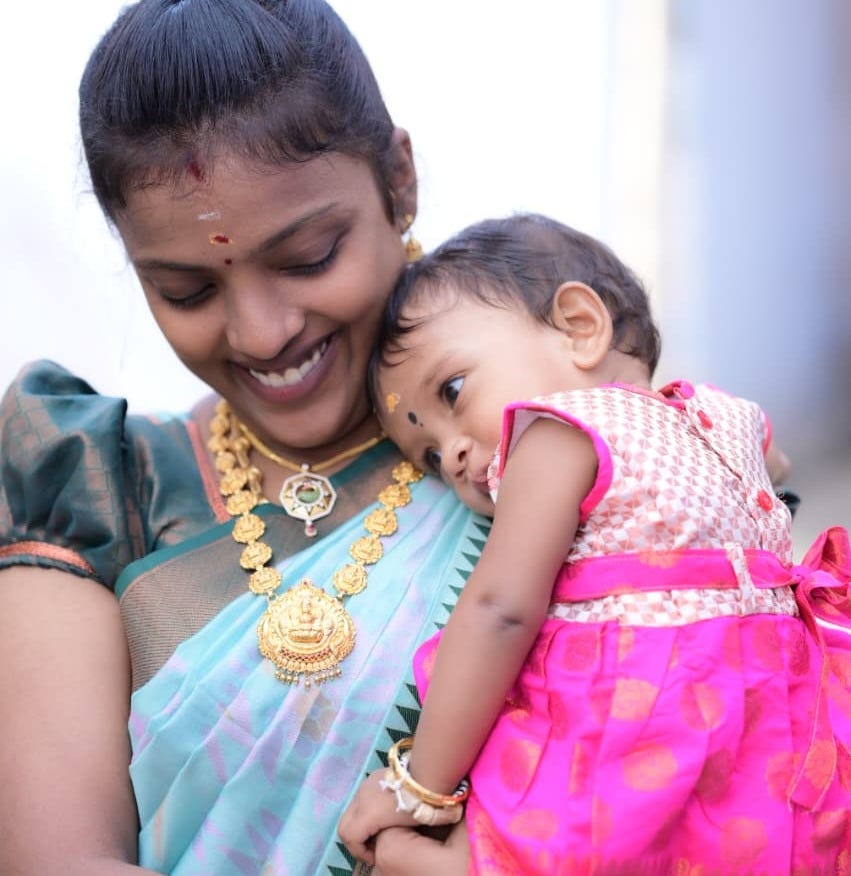
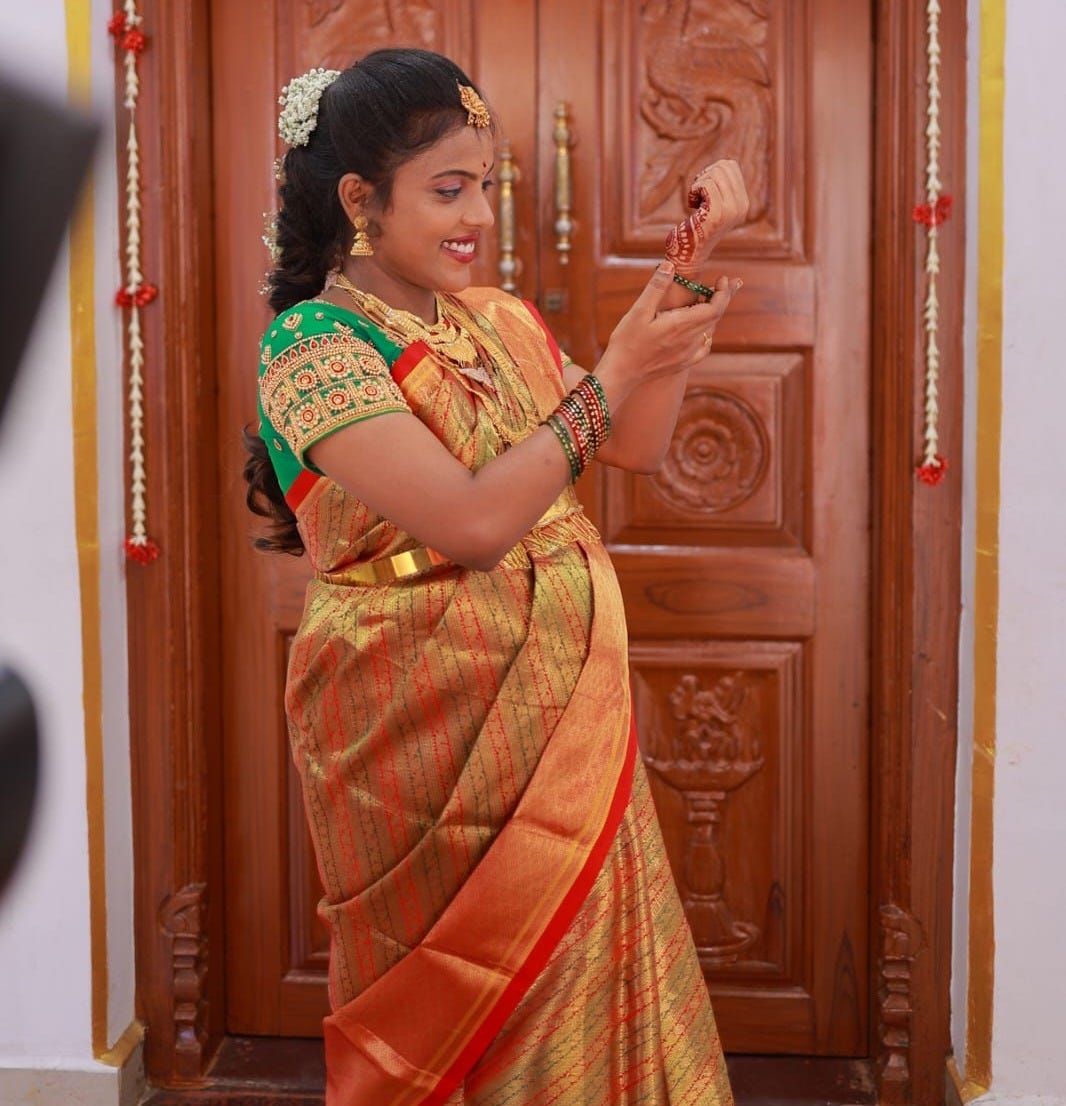
Thilaga Ramesh is a housewife and mother of one based in Tamil Nadu, currently expecting her second child. Since marriage, she has pursued Aari work, mehandi, Tally, press-on nail courses, and is currently learning portrait drawing, all with the full support of her husband. Before her arranged marriage, she was preparing for a government examination and had dreams of returning to that path once her children were older.
This story is based on a conversation between Thilaga and the Janitri Club team. Her words have been lightly edited for clarity while preserving her authentic voice.
About Janitri
Janitri is built on a simple yet powerful mission: to save lives by supporting women and newborns through the critical 1,000-day journey from pregnancy to early motherhood. Every solution we create is rooted in care, early detection, and the belief that no woman should lose her life while giving life.
With this same spirit, we introduce Janitri Club, a space where we celebrate not designations, but the people behind them. The caregivers, doctors, parents, and supporters who quietly hold this journey together.
Through real stories of emotions, challenges, and victories, Janitri Club brings these voices to life, honouring their experiences and building a community that uplifts everyone who stands beside a woman in her journey.