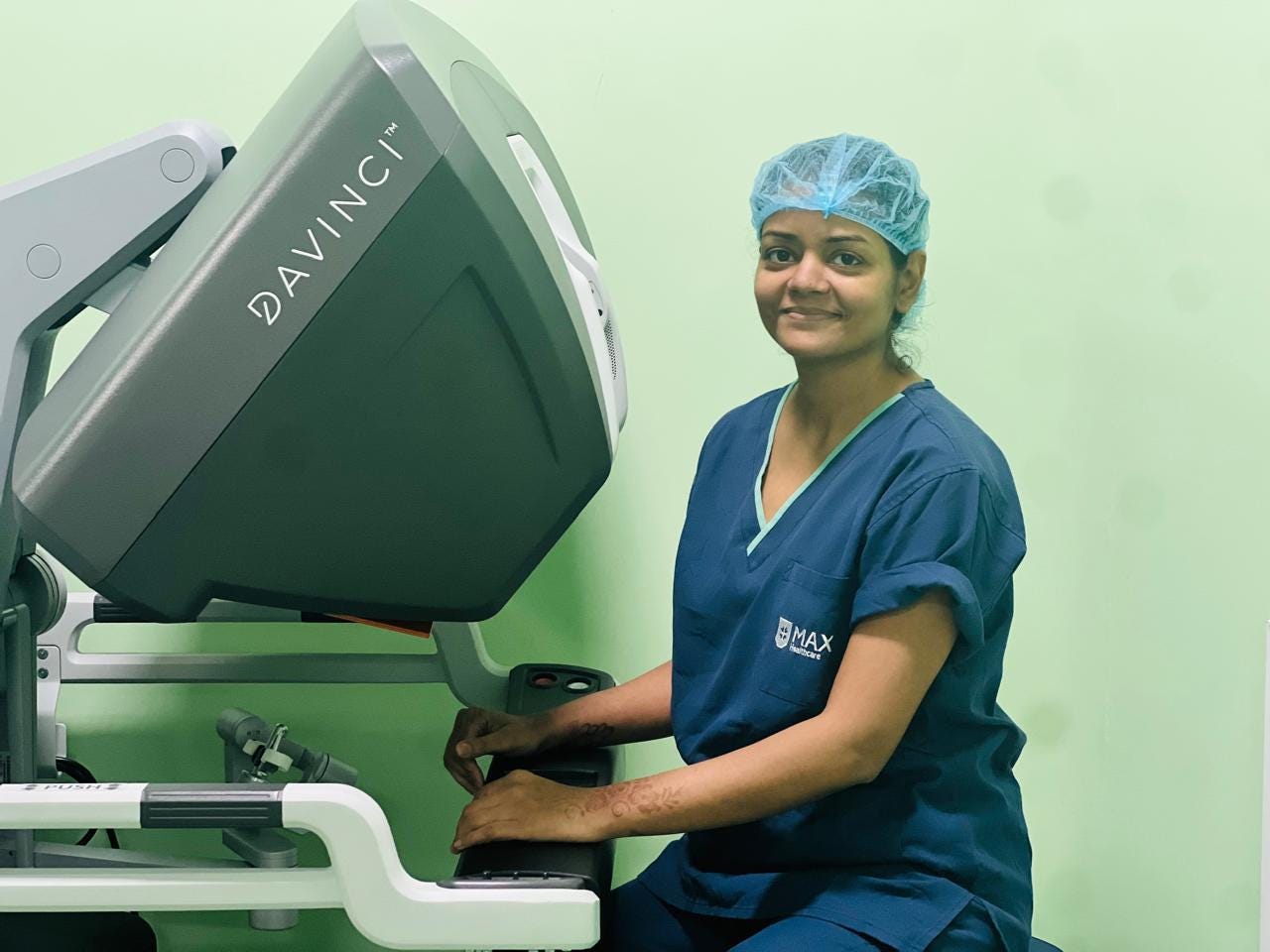
There is a hospital bed in Bihar that Dr. Sarita Kumari has never really left.
She is seven or eight years old in it. Blood is coming from her mouth - a symptom of the pulmonary tuberculosis that has taken hold of her small body - and, in the particular, unfiltered way that children understand the world, she is certain she is going to die. Her treatment will stretch on for six to nine months. Decades later, as one of India’s few gynaecologic oncologists, she will operate on tumours the size of footballs, sit across from families who cannot afford the truth she has to tell them, and lose patients she fought hardest for. But ask her where all of it began, and she goes back to that one bed, in a Christian mission hospital, in a small Bihar town, where a group of doctors treated a frightened girl like she mattered.
“Seeing the amount of care a doctor can do... when I was completely cured, I was able to understand that there is a lot of importance to doctors,” she says now. What she felt in that room wasn’t just gratitude. It was recognition - of exactly who she wanted to become.
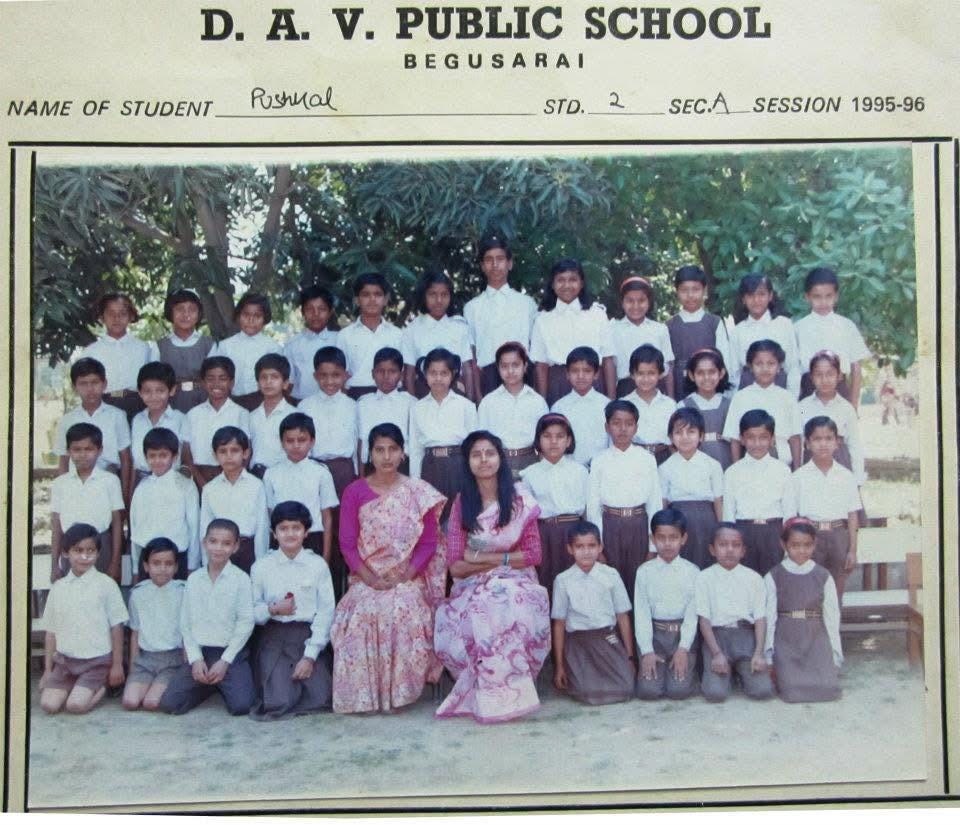
A Daughter Worth Educating
Dr. Sarita was born in Begusarai, a small town in Bihar, the eldest of three children, to parents with no doctor anywhere in their family tree - not a cousin, not a distant uncle, nobody who could have shown her the way. Her father worked hard to secure a government job; her mother had never studied in a private school herself. And yet, somewhere along the way, this ordinary couple made an extraordinary decision: their daughter would be the first in the family sent to one.
It is easy, hearing this today, to skim past how radical that choice was. It wasn’t just an educational decision. It was a quiet act of rebellion against everyone around them.
“People used to say, why are you spending so much money on educating a girl child - keep that money aside, you’ll need it for her dowry,” Dr. Sarita remembers.
This wasn’t a stray comment from one bitter relative; it was the ambient noise of the world she grew up in, said so often and so casually that it became almost background music. Her parents heard it too. And chose, every single time, to ignore it.
“Despite all that negativity, they never did anything different,” she says. “They always gave me full freedom - that you study whatever you want, you can do it.”
That freedom would be tested sooner than anyone expected - not by strangers this time, but inside her own home.
“I Will Not Live in This House”
By the time she finished class 10, the girl who had once been the top of her class, the one whose teachers called home just to say how extraordinary she was, had made up her mind: she wanted to be a doctor. Her family did not understand why. She had scored 99% in mathematics. She had cleared her engineering entrance. In a household - in an entire community - where “settling down” after four years of engineering was the obvious, respectable, financially sound path, medicine looked like an indulgence, maybe even a risk not worth taking for a girl.
There was a fight. A real one. “I told them I will not live in this house. I’m not able to give medical entrance,” she recalls, still able to summon the heat of that moment. Her parents, unable to afford the coaching institutes her friends were enrolling in, offered something between a compromise and a test: go do a BSc instead, at Banaras Hindu University, and see what happens.
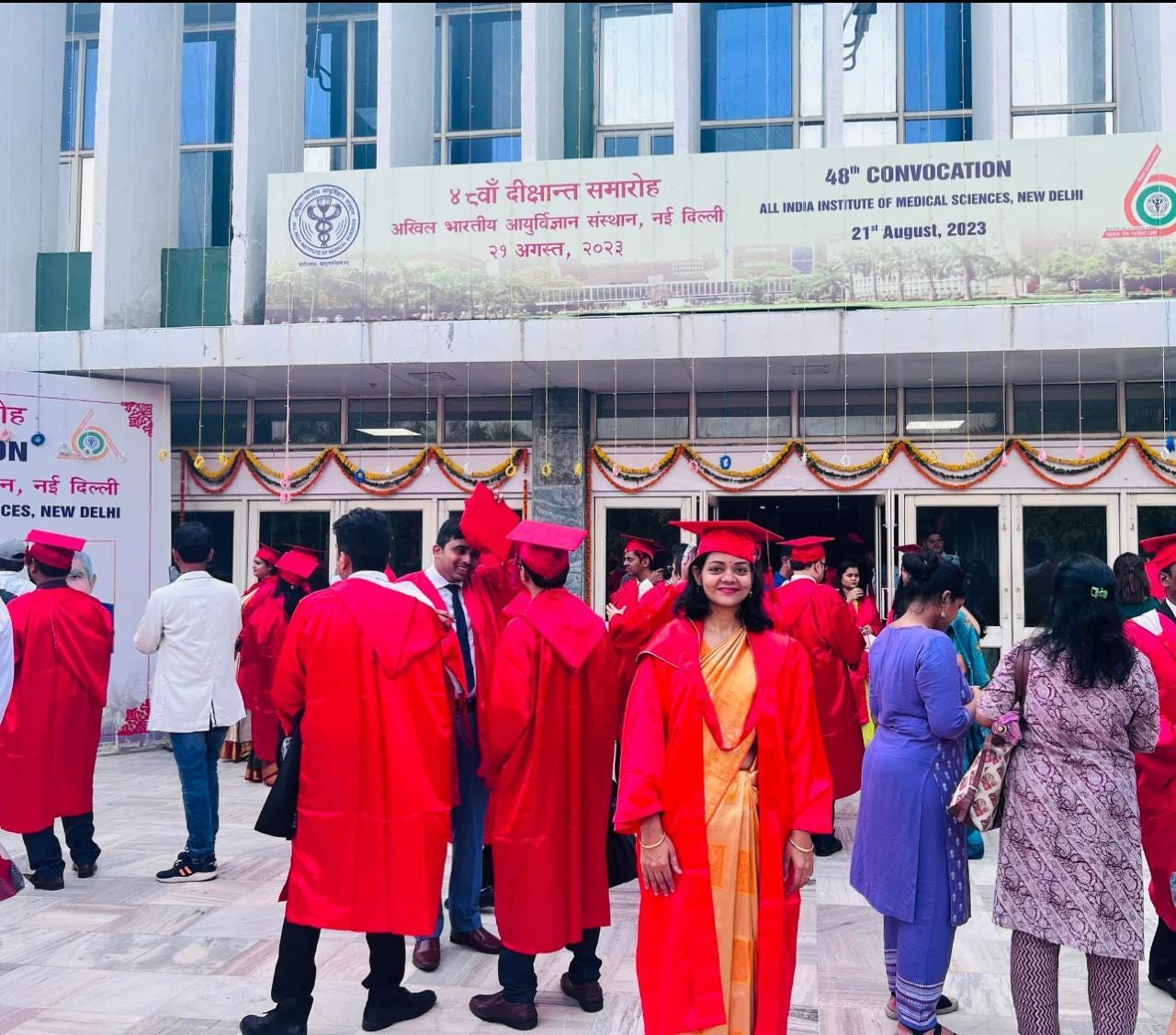
She went. She kept studying - on her own, without the structured coaching everyone around her insisted was essential. The next year, she cracked AIIMS Delhi: fifty seats, nationally competed for, fully sponsored by the government. No coaching fees. No donation. No connections. Just merit.
“There was no turning back,” she says, “because there was no money, no cost of education involved. It was purely based on merit.” Her father, who had spent years quietly worrying whether sending his daughter away to Delhi alone was even acceptable, finally had his answer. There was nothing left to argue.
It is a story she now tells every anxious student and parent who asks her the secret to cracking India’s hardest medical entrance. Not the advanced test series. Not the expensive coaching chains promising shortcuts. “The students who are actually selected are the ones who have studied really by heart,” she says. “I only prepared by reading three NCRT books. Big, thick textbooks - nothing else. You have to study daily, in a consistent way.” Coaching institutes, in her experience, often bury students under so much supplementary material that they lose the basics they were actually tested on. Marks in school, she adds, mean almost nothing on their own - she remembers classmates who scored higher than her in Class 10 and Class 12 and never cleared a single competitive entrance. “Getting exam marks versus qualifying an entrance and being able to pursue that career - entirely different things.”
Villagers in Delhi
Nothing, though, quite prepared her for AIIMS itself.
She arrived from Begusarai in jeans she had never worn before, one of fifty students in her batch, most of them from Delhi, Kerala, Punjab, Haryana - states that felt like a different country compared to hers. Six or seven of them had come from Bihar. “We looked like villagers when we landed in AIIMS,” she says, laughing now at a memory that clearly wasn’t funny at the time. There was ragging - “healthy ragging,” she insists, the kind that, somehow, forged friendships as fast as it tested nerves. Within a month, she had found her footing.
But she also watched, up close, how easily brilliance could be squandered. AIIMS pulls in some of the sharpest eighteen-year-olds in the country, and with that comes a particular, heady kind of validation - five and a half years of being told, constantly, how exceptional you are simply for having gotten in. “Many of the kids, they even tend to stray away from their agenda,” she says. “It depends on you - if you know from where you have come, and what your aim in life is.”
Her aim never wavered. And in her third year, during bedside clinical rounds, it was handed its first real test.
The Case That Taught Her What Medicine Actually Is
A man had arrived at AIIMS from Bihar, carrying months of exhaustion with him. He had been to hospital after hospital, chasing a fever that would not resolve - three to four months of it - and every test had come back negative. Dengue: negative. Malaria: negative. A bone marrow biopsy to rule out cancer: negative. Nothing fit. Nothing explained why he kept getting sicker.
Dr. Sarita, a student still learning how to listen to a patient rather than simply examine one, noticed something the earlier tests hadn’t flagged: his spleen was enlarged. And she knew - because she knew where he was from - that there was a disease endemic to certain districts of Bihar that behaved exactly this way: Kala-azar, a parasitic infection carried by a specific species of sandfly. The workup confirmed it. He was finally, correctly, treated.
“Unless there is a proper diagnosis, there cannot be a proper treatment,” she says - a sentence so simple it almost sounds obvious, until you realise how many of her patients, years later, are still arriving at her office having been failed by exactly that gap. It is the line she has repeated to hundreds of families since, in far higher-stakes rooms than a teaching ward.
Choosing the Hardest Conversations in Medicine
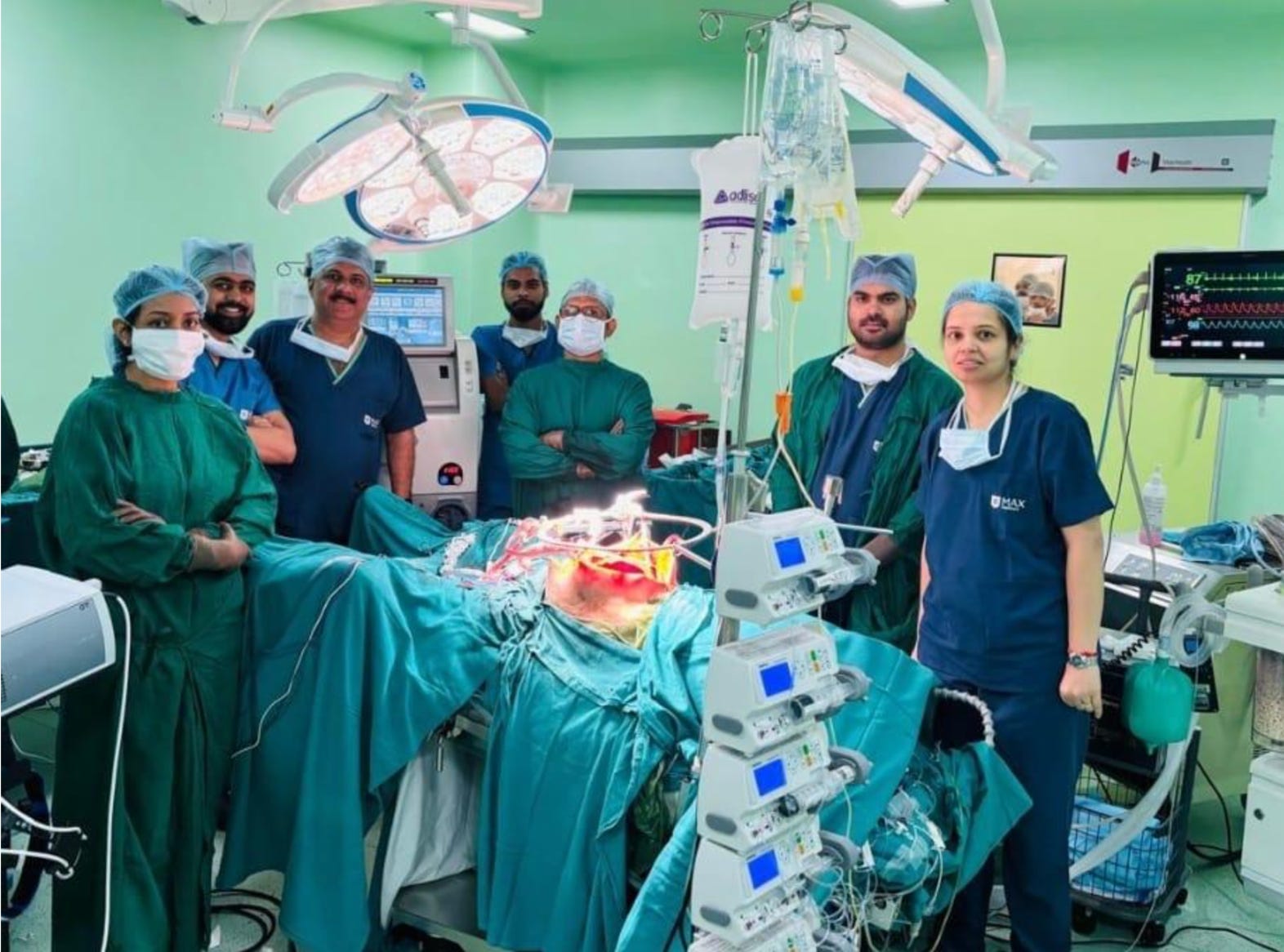
Dr. Sarita went on to complete her MD in Obstetrics and Gynaecology at AIIMS, and then fought for and won a single, nationally contested super-speciality seat in gynaecologic oncology. Today, after more than a decade spent training and later teaching at AIIMS New Delhi and the National Cancer Institute, Jhajjar, she practices at Max Super Speciality Hospital, Dwarka - treating cancers of the breast, uterus, ovary, cervix, vagina and vulva, and everything that sits in the grey zone just before a diagnosis becomes one.
She didn’t choose this specialty by accident. Since 2014, she has worked almost exclusively with women, and what she has seen has shaped, more than anything else, the awareness work she now does outside the operating theatre.
“Women come with another set of problems,” she says. “First of all, they will not tell you about their own problem - they will come with their husband, and the husband is telling you about her problem, who has no idea what is actually happening.” Ask a patient about family history of cancer, she says, and many feel offended rather than informed, convinced the question itself is somehow an accusation. Ask about symptoms below the waist, and the conversation shuts down before it begins. She has watched women in Bihar have their uteruses removed for conditions as simple as an infection, because “every problem is due to the uterus” has become a kind of folk diagnosis passed from patient to patient rather than doctor to patient.
And beneath all of it sits something harder to fix than any single misdiagnosis: a national shortage of trust. Patients doctor-shop from one clinic to the next, hoping someone, somewhere, will tell them a different, gentler story. Alternative medicines - some laced quietly with steroids - offer a fast, false sense of relief, until the liver or kidneys start to fail and the patient returns to allopathic care sicker than before. Increasingly, patients arrive holding a printout of what an AI chatbot told them their symptoms meant, and measure her diagnosis against it. “They don’t want to understand what the real problem is,” she says, of patients confronted with a hard truth. “If you tell them it is looking like cancer, they will be in denial, and they will go to another practitioner who will tell them no, no, it is not looking like cancer. People want to hear what is good - and they bring their patients in very advanced stages, when there is no treatment possible, and then they expect some magical cure.”
It is not, she is careful to stress, that patients are foolish. It is that India offers them almost no structure to be otherwise. There is no formal referral system, the kind that exists in the US or UK, where a cancer diagnosis simply cannot be handled by a doctor outside that specialty. A gynaecologist who sees a hundred routine obstetric cases might miss the one that isn’t, and instead of understanding that as the natural limit of that doctor’s role, families turn it into a story of negligence, another reason to distrust the whole profession. “That doctor was not designated for that purpose,” she says. “For that purpose, there are oncologists - special doctors.”
And running quietly underneath everything, in her telling, is one more current: a culture that still, even now, treats a woman’s own health as secondary to whether she can deliver a son. “People are so much obsessed with a male child,” she says of years spent in obstetric wards. “They have no understanding of what pregnancy is, what complications could happen. They just want a male child - and for that, the female is made to suffer, go through multiple pregnancies, abortions.” When a woman she has just diagnosed with breast cancer sits in her clinic, she has learned to notice which families start doing arithmetic instead of grieving - how much time is left, how much money is worth spending on treatment for it.
It is why, in a country not short on doctors, Dr. Sarita decided she needed to also become something else: a source of plain, unembarrassed, freely available information. It’s why she started her Instagram page.
The Patient She Has Never Stopped Thinking About
She was twenty-two years old, and she walked into Dr. Sarita’s OPD already convinced, from what she had read online, that she had cervical cancer.
She was right.
Dr. Sarita examined her - carefully, respectfully, given the sensitivities involved - and found a tumour already five to six centimetres wide. A biopsy confirmed it. Before her family arrived, the young woman made one quiet, urgent request: please don’t tell them how I might have gotten this. She believed, correctly, that it was linked to HPV, contracted through sexual activity she did not want her family to know about. Dr. Sarita kept that confidence. When the family asked, in the corridor, why their daughter - so young had cancer, she told them simply that the cause often cannot be determined, and that surgery was the priority.
Surgery followed, and because of the tumour’s size, radiotherapy after it. For a while, it worked. The young woman came in for her regular follow-ups, cautiously hopeful, the way patients are after a hard year that seems, finally, to be behind them.
Then, six months ago, she came back with abdominal pain. Imaging showed the cancer had returned - fast, and already spreading through her lower abdomen. “She was like, ‘Ma’am, you had told me it has a good prognosis at this stage. But it came back. Now what can we do?’” Dr. Sarita remembers. There was no good answer to give her.
Chemotherapy and immunotherapy were the next step, but the family’s finances had run out. They took her home, then to a government hospital for cheaper care, and somewhere in that transition, a blood clot formed in her leg and travelled to her lungs - a medical emergency. Dr. Sarita admitted her immediately, did everything medically possible overnight, and then, the next day, heard the words she has carried since: the family could not afford to continue treatment there. She coordinated a transfer to AIIMS’s radiotherapy department herself, pulling every string she had. It wasn’t enough. The gap between the care a government hospital and a private one can offer proved too wide, and the family, feeling unheard, left against medical advice, taking her home without telling Dr. Sarita.
Two days later, she learned from a sister’s social media post that the young woman had died.
“This is one case which still keeps coming back to my mind,” Dr. Sarita says. “She was very young, and we did everything that we could. The best thing we could have done for her was give her a vaccine.” HPV - the virus behind the overwhelming majority of cervical cancers - is preventable with a vaccine recommended for girls and boys starting at age nine. It is not yet part of India’s national immunisation programme. For many families, at somewhere between ₹2,000 and ₹11,000 depending on the brand, it remains an out-of-pocket decision, weighed against groceries and school fees - and against a persistent, unfounded rumour, still circulating widely, that the vaccine causes infertility.
Dr. Sarita has since met two or three more patients in their mid-twenties with the same diagnosis. Each time, she says, the reaction is the same: disbelief that something this preventable is still happening, followed by the same question - why did nobody tell us sooner?
What She Wants Every Family in India to Understand
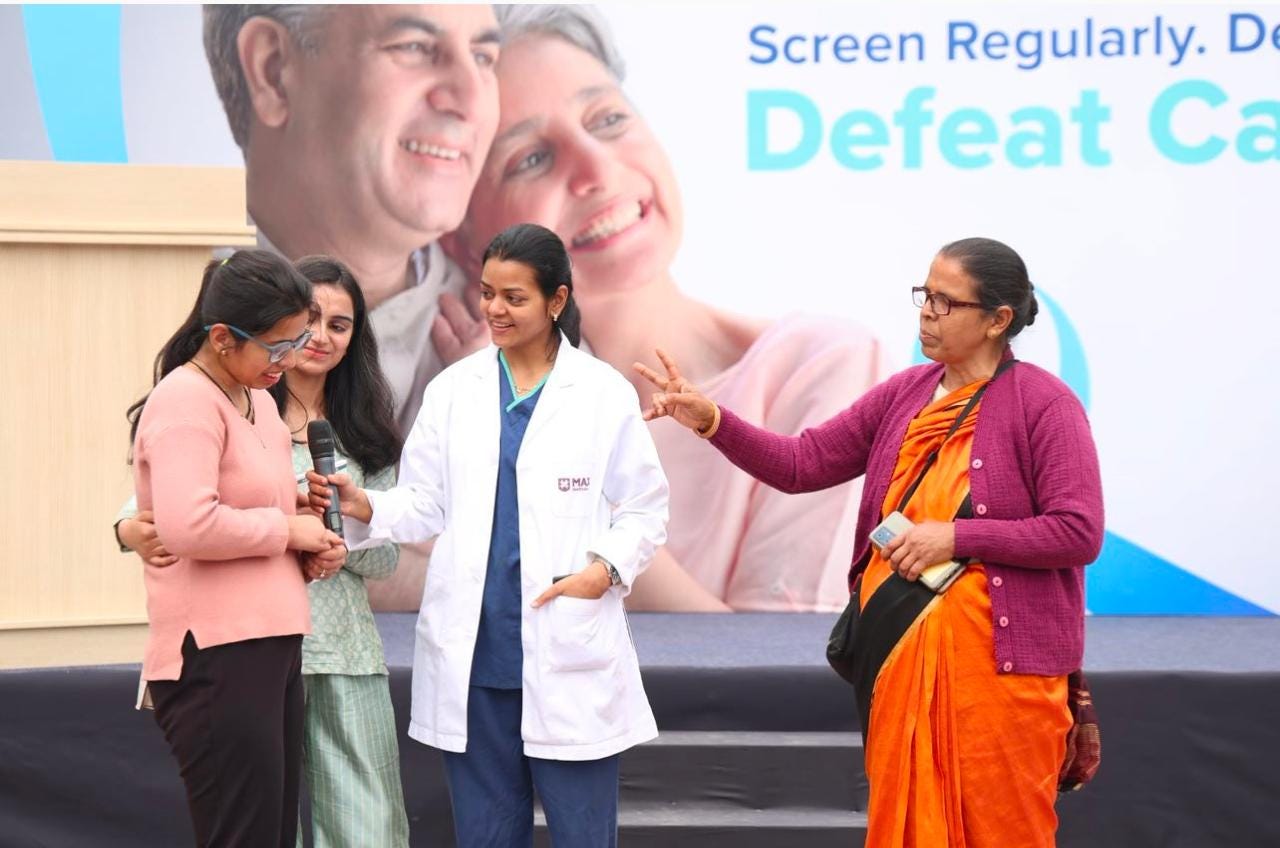
If there is a single thread running through everything Dr. Sarita says - about that twenty-two-year-old, about the patients who doctor-shop, about the families weighing love against a bill - it is this: healthcare in India runs on a level of trust it hasn’t yet earned back, and rebuilding it is not the government’s job alone.
“There is a lot of distrust and disrespect for the medical profession right now,” she says plainly. Some of that, she admits, is deserved - there are hospitals that over-test, over-bill, over-treat. But far more often, she has watched patients mistake the cost of legitimate, necessary investigation for exploitation. A government hospital may offer free treatment, but a cancer diagnosis there can take three to six months to confirm - and by then, a patient’s stage may have quietly worsened. Private care moves faster, but someone has to pay for that speed, “because that money is not coming from anywhere else.”
Her advice, distilled from years of watching families make this exact calculation too late, is almost startlingly practical: buy health insurance before you think you need it. “Have your own health insurance. Invest in it. Because when you are insured, and if you get a diagnosis of some cancer or any bad disease, you will be able to spend on your health in a good manner.” Choose a doctor by their training and credentials, not convenience or word of mouth, and once you’ve chosen well, trust the process rather than restarting it with a new opinion every time an answer feels too hard to hear. “Taking a second opinion is fine. Taking a third, fourth, tenth opinion, and not going anywhere - that is not going to help you.”
And perhaps most of all: don’t wait for pain to become unbearable before asking questions you could be asking now. Women over 40 should be getting an annual mammogram. Women over 25 should be getting an HPV DNA test or Pap smear every few years. Persistent bleeding, pain, or bloating are not things to sit with quietly. “Particularly for females, I have seen that they are very reluctant to go anywhere near a hospital. They will suppress their problems till the very end.” Cancers of the breast, uterus, ovary, cervix, vagina and vulva - the ones she treats every day - are, she stresses, among the most detectable early, if only people would go looking before symptoms force the issue.
She is candid, too, about the other side of that distrust - the way it has begun to change how doctors behave. “Doctors have also started acting smartly,” she admits. A physician who suspects a patient might question a decision, or file a complaint if a recommended test comes back clear, may quietly start recommending less rather than more. It is a defensive posture that helps no one, and she is honest enough to name it rather than pretend medicine exists in a vacuum, untouched by the mistrust around it.
The Surgery No One Else Was Willing to Attempt
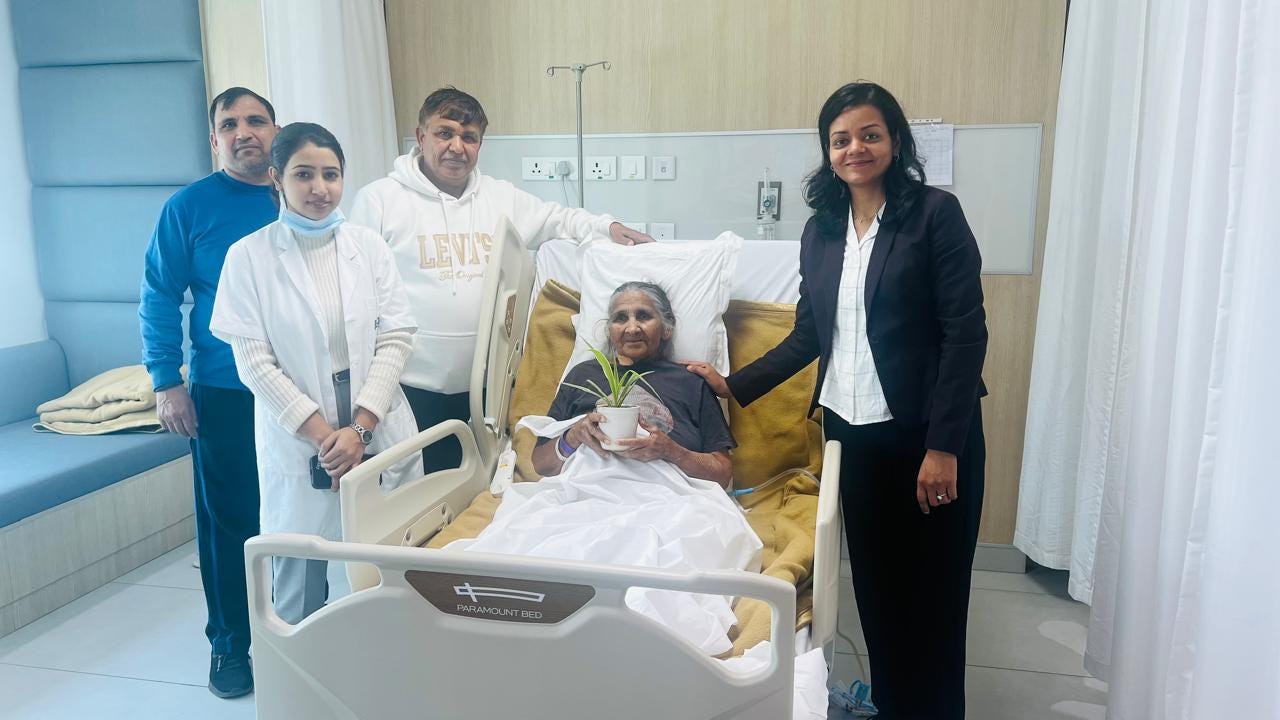
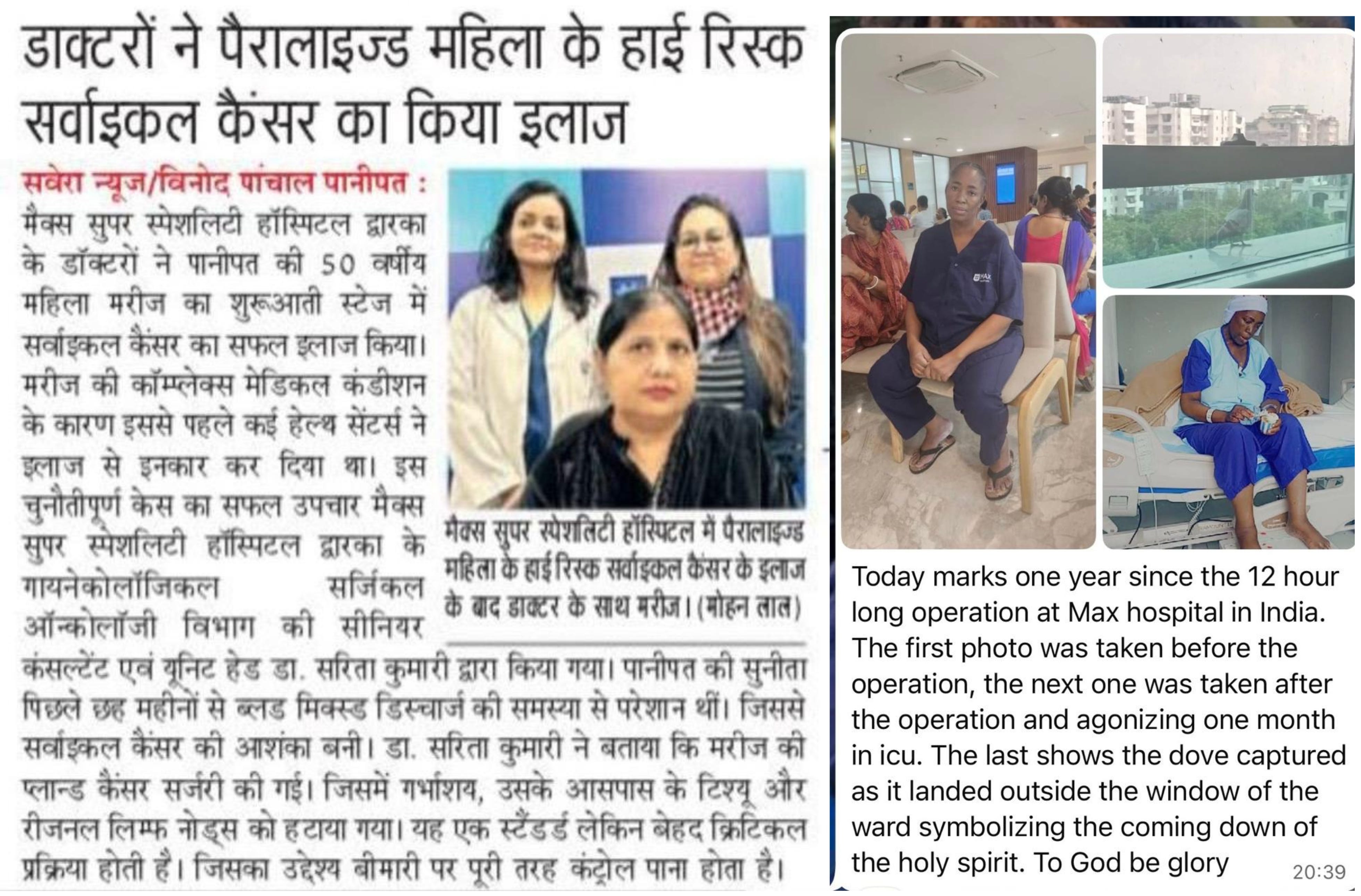
Not every story in her career carries the weight of loss. Two years ago, a woman flew in from Nigeria - fifty years old, mother of four, stage 4 ovarian cancer, her abdomen and chest so swollen with fluid that she could barely walk into the clinic. At home, she had been told, plainly, that nothing could be done.
Dr. Sarita disagreed - but only after looking properly. “I saw that the patient was not even properly evaluated,” she says. Biopsies confirmed the cancer. Chemotherapy, given first to shrink the disease, achieved a partial response - twenty to thirty percent, not the dramatic shrinkage anyone hopes for, but enough. Enough to attempt what few surgeons would: a twelve-to-fourteen-hour cytoreductive surgery, methodically removing every visible trace of cancer from her abdomen.
It did not go smoothly afterward. Two weeks post-surgery, the patient developed a severe infection and spent nearly three weeks in intensive care, her body - recently opened up, immune system depleted - struggling to recover. But two years on, the scans keep coming back clear, in a cancer where 80 to 90 percent of similarly advanced cases recur within that same window, and where, left untreated, survival is measured in months, not years.
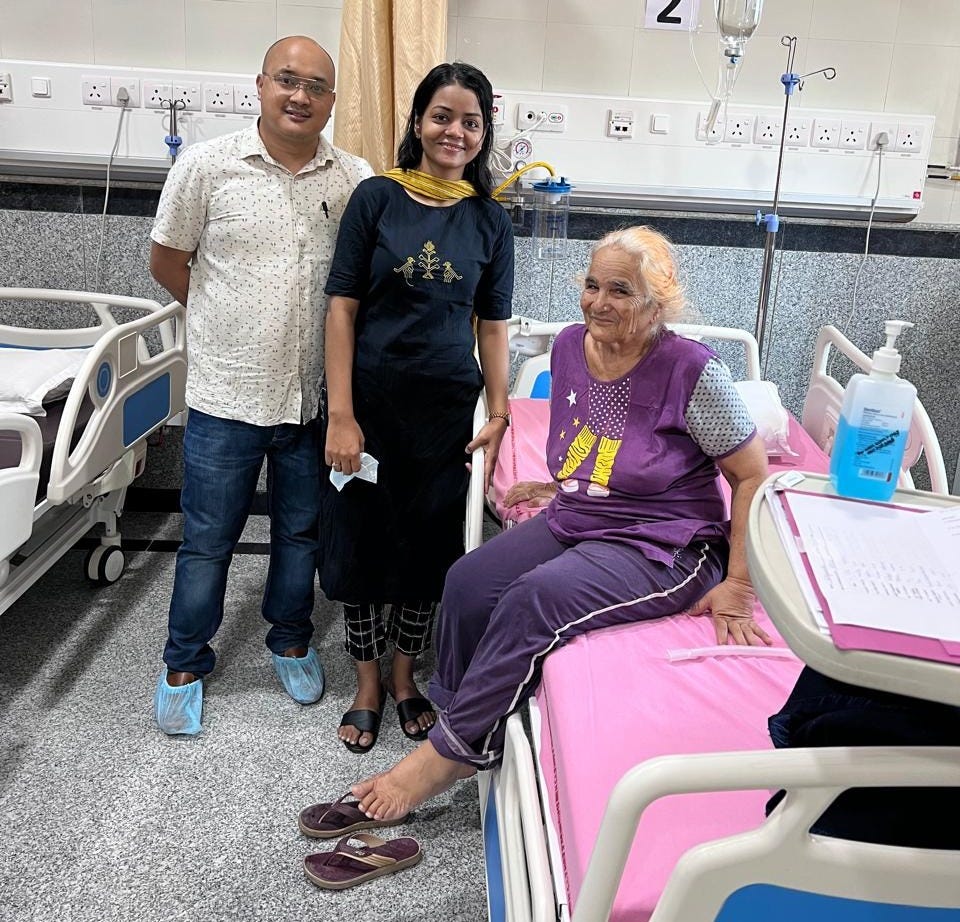
“When I get messages from that patient - she’s in a different country - I really feel good that I took that chance,” Dr. Sarita says. Complex surgeries like this one, she is candid, come with a particular kind of professional risk in India: if a postoperative complication arises, families are quick to ask whether the surgery was ever necessary in the first place, rather than understanding it as a known, survivable risk of an operation that offered the only real chance. “But that patient had a very good understanding, a very good outlook for life. They trusted me, and I was able to do good work.” She and her children, Dr. Sarita says, are doing very well now.
A Baby and a Tumour, Growing at the Same Time
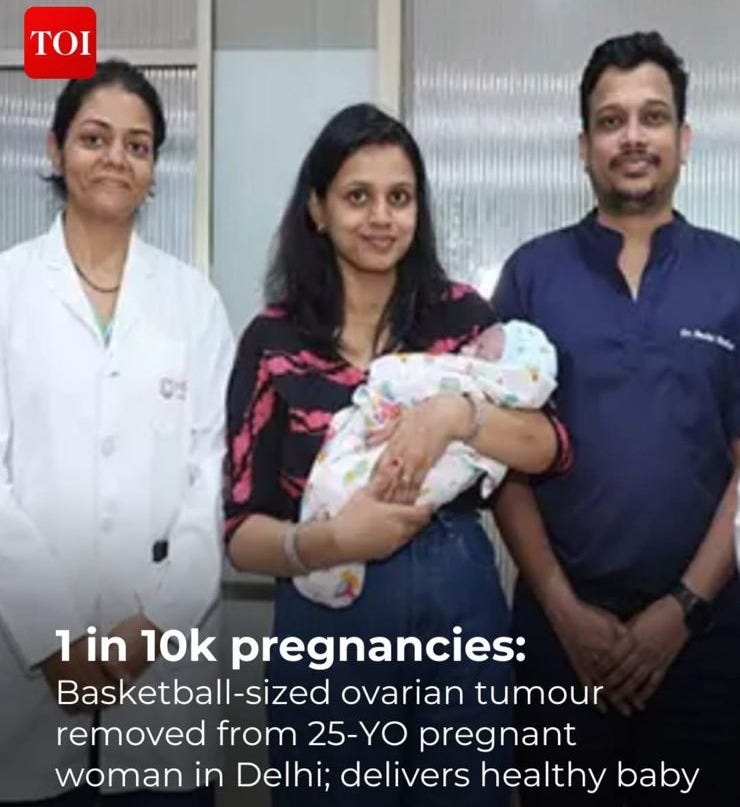
There is one more story she carries - quieter, but no less remarkable. A twenty-five-year-old woman, newly married, pregnant with her first child. In her fourth month, a routine ultrasound found a thirty-centimetre tumour in her ovary. She and her husband moved from doctor to doctor before finally arriving at Dr. Sarita’s clinic.
The workup confirmed what everyone feared: the tumour was cancerous. But it had not spread. After careful counselling - of a family now facing two decisions at once, about a pregnancy and about cancer - Dr. Sarita operated in the fifth month, with anaesthesia calibrated precisely to protect the growing baby throughout. She removed the tumour, staged the disease by sampling lymph nodes and surrounding tissue, and found, to everyone’s relief, that the cancer had stayed contained to that single ovary.
The pregnancy continued. The baby was born healthy. Chemotherapy was planned, then held back in favour of close observation, once every two to three months, with treatment ready the moment it’s needed. Mother and child, for now, are both doing well.
Coming Full Circle, as a Mother Herself
Dr. Sarita has a five-year-old son now, and in him, she recognizes something of her own childhood - the same brightness her school teachers once called home about, and the same pressure, in a very different form, to perform on someone else’s timeline. “I know where I come from,” she told her son’s teacher recently, after being shown, pointedly, how well another child in his class could already write. “I don’t think I’ve reached here because my teachers told me to do this and that. I did what I felt like doing, and I enjoyed my studies. That is why I became something.”
It is, in a quiet way, the same conviction that got a girl from Begusarai into AIIMS on merit alone, now being handed down to the next generation: that a child allowed to become who they actually are will always outperform one forced into who everyone else expects them to be.
The Weight and the Gift of Telling It
By the end of a long conversation about all of this - the childhood illness, the fight to study medicine, the patients she saved and the one she couldn’t - Dr. Sarita admitted something almost as striking as any of the medical stories themselves: she had never told her own family about that twenty-two-year-old patient. “Many a time, we deal with cancer patients every day. We cannot keep on thinking about negative things all the time.” But speaking about it out loud, she said, felt like a kind of release she hadn’t expected. “I have discussed all those things very honestly, after a long time.”
It is easy, from the outside, to see a gynaecologic oncologist as simply a highly trained technician - someone who removes tumours, reads scans, prescribes chemotherapy. Dr. Sarita’s story makes clear how much more the job actually asks of a person: to sit with families making impossible financial choices, to hold a young patient’s secret until her last day, to keep operating, keep believing, keep trying - for the ones who make it, and in memory of the ones who didn’t.
Somewhere in Bihar, a seven-year-old girl once decided, from a hospital bed, that she wanted to be the kind of person who makes people believe they will be okay. Twenty-eight years and thousands of patients later, she still is.
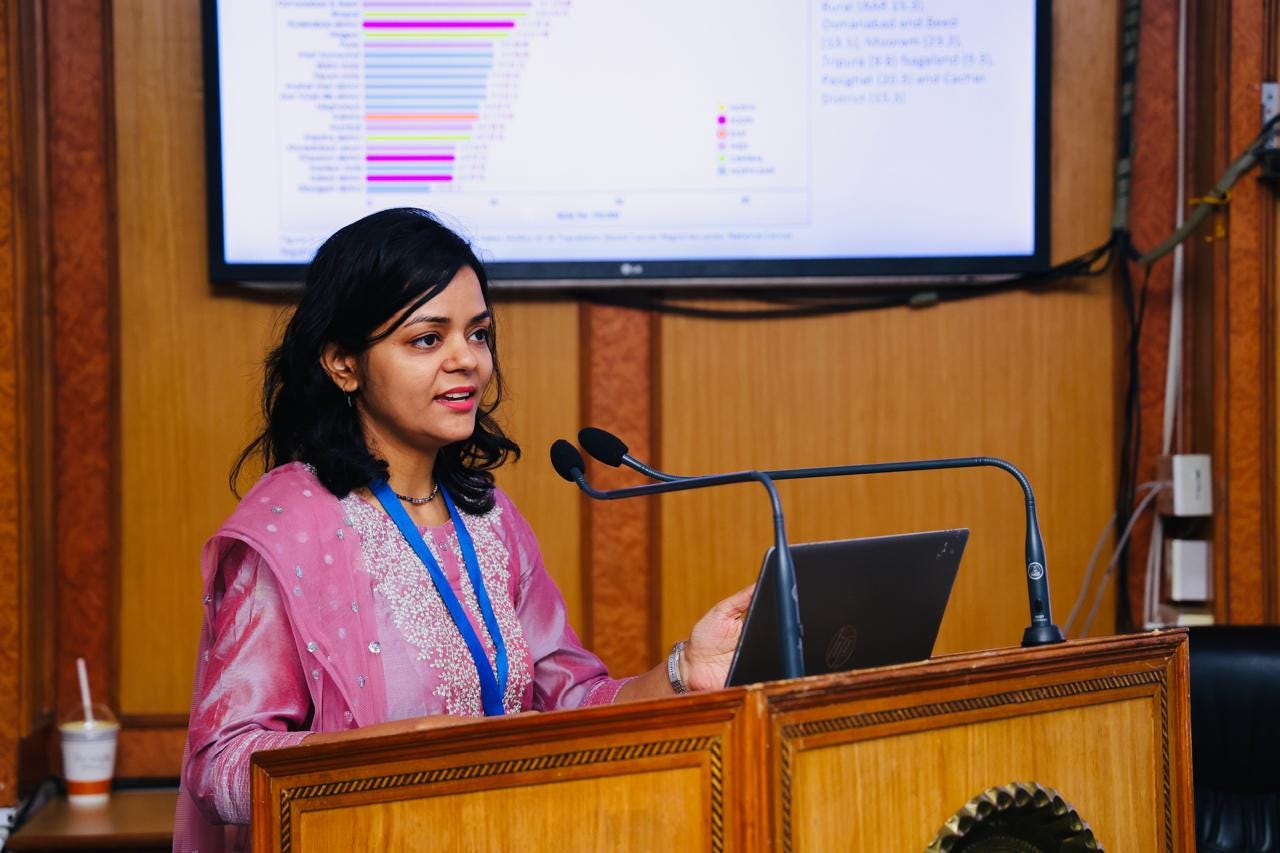
Dr. Sarita Kumari is a Gynaecologic Oncologist at Max Super Speciality Hospital, Dwarka, New Delhi, trained at AIIMS New Delhi (MBBS, MD Obstetrics & Gynaecology, MCh Gynaecologic Oncology). She treats cancers of the breast, uterus, ovary, cervix, vagina and vulva, and shares health awareness content on Instagram - focused on screening, honesty, and the trust she believes could save the next patient like the one she has never forgotten.
About Janitri
Janitri is built on a simple yet powerful mission: to save lives by supporting women and newborns through the critical 1,000-day journey from pregnancy to early motherhood. Every solution we create is rooted in care, early detection, and the belief that no woman should lose her life while giving life.
With this same spirit, we introduce Janitri Club, a space where we celebrate not designations, but the people behind them. The caregivers, doctors, parents, and supporters who quietly hold this journey together.
Through real stories of emotions, challenges, and victories, Janitri Club brings these voices to life, honouring their experiences and building a community that uplifts everyone who stands beside a woman in her journey.