There’s a particular kind of exhaustion that comes at 4 pm on a hospital duty day - the kind where you’ve barely sat down to eat when your phone rings. For Dr. Nilay Kumar, JR2 in Pediatrics at PMCH Medical College, Patna, that exhaustion has a memory attached to it. A 13-year-old girl. Two and a half months in the hospital. A ventilator. And a call from the ICU that made him and his colleague leave their food on the table and run.
“We knew she had developed VAP,” he says, “and we could not do anything to reverse that. But we were still doing everything we could in our hands to save her.”
She didn’t survive. But what stayed with him wasn’t just the loss — it was what her parents said afterward, through tears, half an hour after their daughter had died: We have seen you people do so much to save her. We have no regrets.
“Hearing this from a parent whose child had just died half an hour back - it was very emotional. And that too, in our initial days of joining residency,” he says. “These kinds of cases humble you. They make you think that we have to do everything we can, because their parents have extreme hope in us when they bring their child to the hospital.”
That single sentence - we have to do everything we can - is, in many ways, the thread that runs through Dr. Nilay’s entire story.
A Childhood Without a Plan
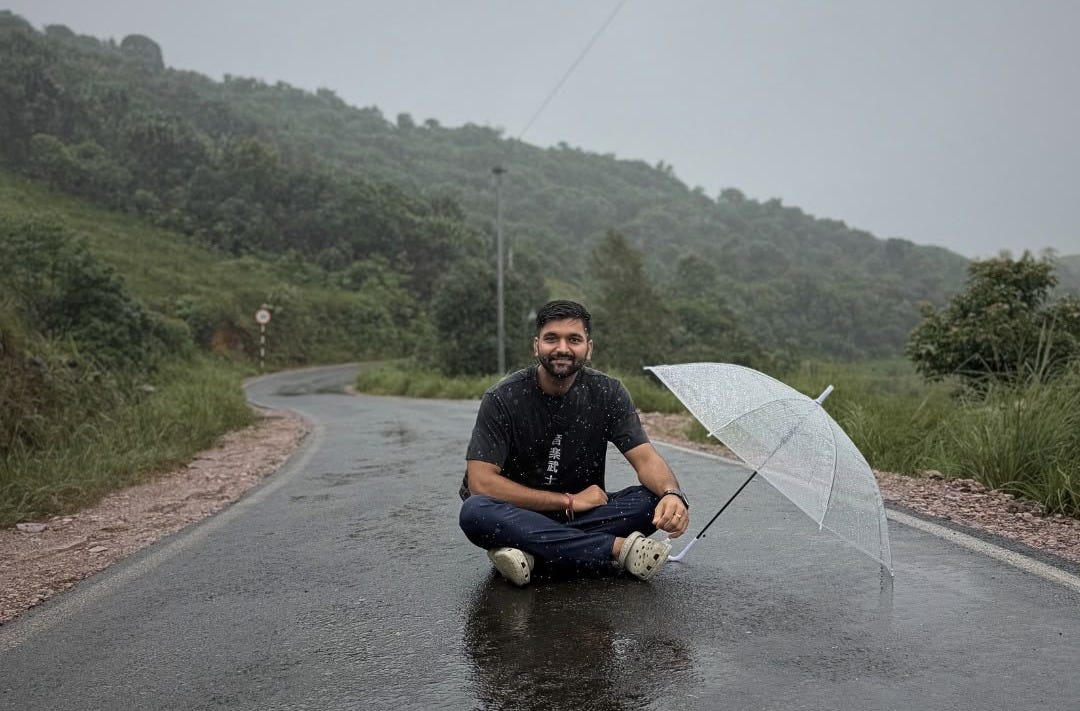
Ask him if he always dreamed of becoming a doctor, and the honest answer might surprise you: not really, not at first. Growing up in a lower-middle-class family in Bihar - his father a now-retired State Bank of India employee, his mother a homemaker, no doctors anywhere in the family tree - Dr. Nilay didn’t have a five-year-old’s certainty about his future. His father’s transferable job meant the family moved constantly, through 8 to 10 schools in about a decade. Friendships barely had time to set before the next shift came. One year it was an unaffiliated school in a small village; the next, an ICSE school; then a CBSE school that almost refused him admission because his earlier records looked unfamiliar.
“It was eventful and adventurous, I can say,” he reflects - the kind of line that only sounds light in hindsight.
It was only from around class 6, tagging along to doctor’s visits with his parents, that the field began to pull at him. And even then, his real ambition was BDS, not MBBS - he prepared for dentistry all the way through his boards, skipping the AIIMS exam entirely because it didn’t offer a BDS seat at the time. It was his parents, after his results came in, who nudged him toward medicine instead.
He’s candid about something many aspiring doctors from non-medical families quietly worry about: whether the absence of a “doctor family” puts you at a disadvantage. His answer is refreshingly matter-of-fact. “I guess having a medical background or not having one didn’t really matter much. You still have to put in that effort to get your college.” The real gap, he says, opens up later - after MBBS, after residency - not before.
Finding Pediatrics by Elimination - and by Feeling
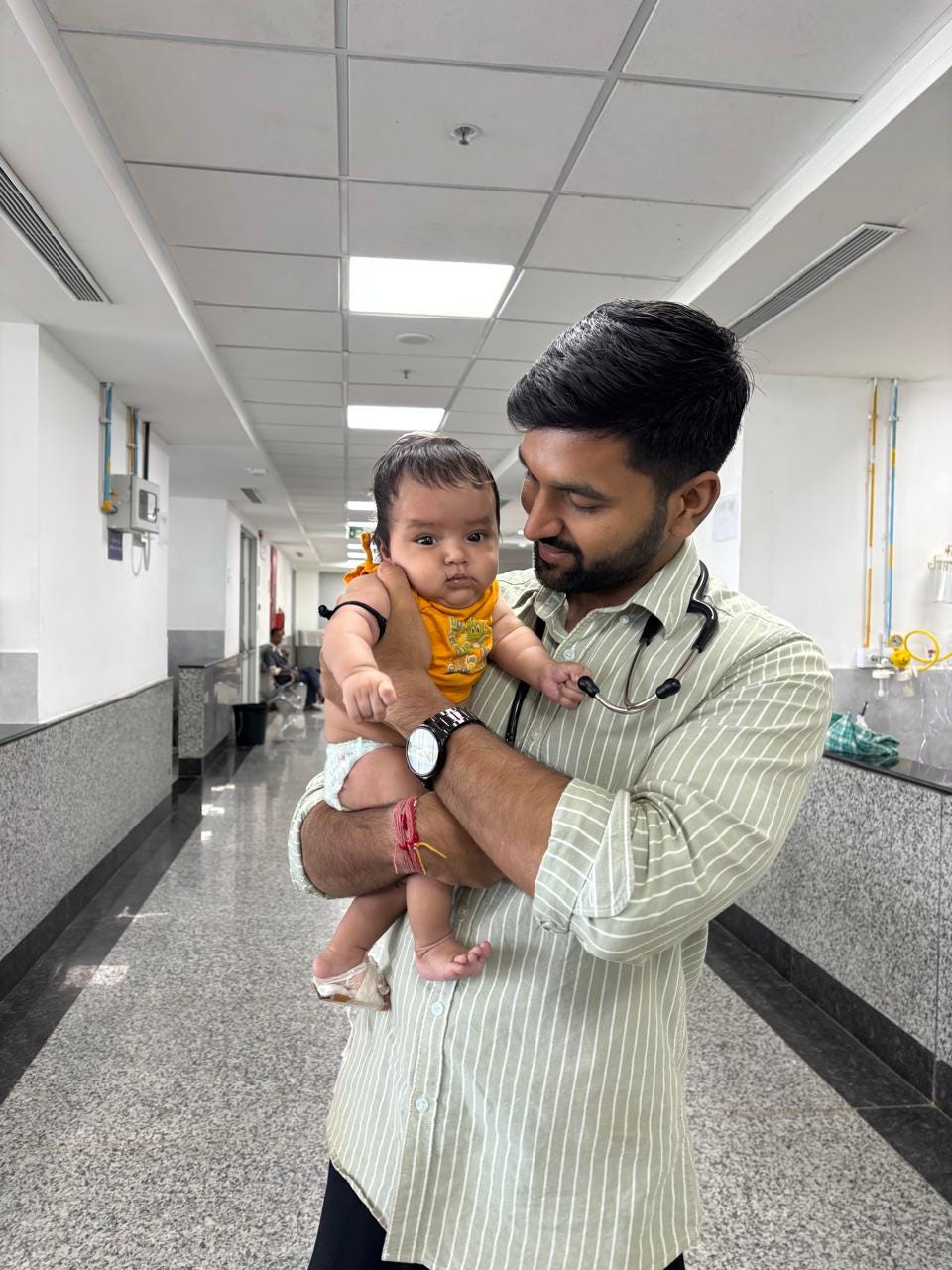
Before his internship, Dr. Nilay assumed he’d lean toward general medicine. Then came three months of rotational internship in medicine, mostly CLD and stroke patients, where the ceiling on what could actually be done for a patient felt low. “There was not much we could do. The only treatment was to give symptomatic relief. I never got that satisfaction of treating them as such.”
Then came one month in pediatrics.
“People come with their children crying at 3 am in the night. But when you treat them properly, they usually get much better - hardly two to three days.” He remembers a child brought in at 2 am in respiratory distress, on a winter night, both parents crying beside the bed. Nebulization, oxygen support, antibiotics. Five to six hours later, the same child was dramatically better. “The relief and happiness on the parents’ faces - that I didn’t feel in medicine as such.”
That contrast decided it for him.
The Cases That Taught Him What Textbooks Couldn’t
Working in a tertiary care hospital that draws referrals from smaller centers, Dr. Nilay has seen conditions most doctors only encounter in exam prep - Gaucher’s disease, congenital nephrotic syndrome in a baby just six weeks old. “All those things which we read, we could actually see it in real life,” he says, still sounding a little amazed by it. But he’s equally clear-eyed about the limits: the child with Gaucher’s disease is stable now, but the enzyme replacement therapy that could truly treat it isn’t accessible to the family, financially or geographically. “We are just doing symptomatic treatment for the patient.”
It’s this tension - between what medicine can do and what a family can actually reach - that seems to animate a lot of his thinking. It shows up again when he talks about protein-energy malnutrition, a condition he describes as devastatingly common and devastatingly preventable. “It’s not fatal and not treatable. It’s entirely treatable - it’s just a protein deficiency in your child.” The early signs are subtle: a child going off food, prominent bones, a pot belly, sunken eyes. Caught early, it’s manageable. Caught late, in a “gasping, half-dead condition,” it often isn’t. “When these patients die, it’s actually a fault - on behalf of the system and on behalf of everyone. Such patients are dying from something that is actually preventable.”
What He Wants Every Parent to Know
If Dr. Nilay had one wish to change something in the world, it wouldn’t be a new drug or a research breakthrough. It would be something almost administrative: functioning primary health centers. He worked at a Community Health Centre that was technically authorized to conduct deliveries, but had no sterilized instruments and no facilities for mother or baby. “We hardly could do any delivery... we actually had to refer even simple cases.” And referrals over long distances often cost a child their life. “If you refer your patient to a very distant centre, covering the distance, those patients usually die.”
On the ground, much of his advice to parents is about learning to notice what children can’t say out loud.
Children rarely name their own symptoms. A child with a vision problem won’t say “I can’t see” - they’ll sit closer to the TV, or ask to move to the front bench in school. “These are very subtle signs. But on seeing them, you have to bring your child to the hospital and get evaluated.”
In infants, illness often looks like nonstop crying - mistaken by exhausted parents for hunger, when it may actually be pain, fever, or something more serious.
Don’t self-medicate fevers. He recalls a three-month-old who’d been given Colistin - a last-resort antibiotic - from a local medicine counter, for a first fever episode. “If we’re seeing such things in the capital city, you can imagine the condition in rural areas.” His advice: get evaluated first. “You don’t even need antibiotics every time you have fever.”
On SIDS, he’s direct about causes that are rarely discussed openly - accidental co-sleeping suffocation, and aspiration from skipping the post-feed burp. “It usually happens within a matter of seconds,” he says, describing a healthy, chubby three-to-four-month-old who didn’t survive exactly this. His counsel to families, including well-meaning grandparents who insist “we never burped and our children turned out fine”: exclusive breastfeeding to 6 months, routine immunization, safe separate sleep space, and burping after every feed. “Very little things. But it might actually save a child’s life.”
On home monitoring technology - devices that track oxygen, pulse, or fever remotely - he’s an advocate, not out of novelty but practicality. With both parents often working in cities and children left with caregivers, a device that flags trouble early “is actually relieving... even if I’m not with my baby currently, I can still see if he’s in any discomfort.”

The Doctor Behind the White Coat
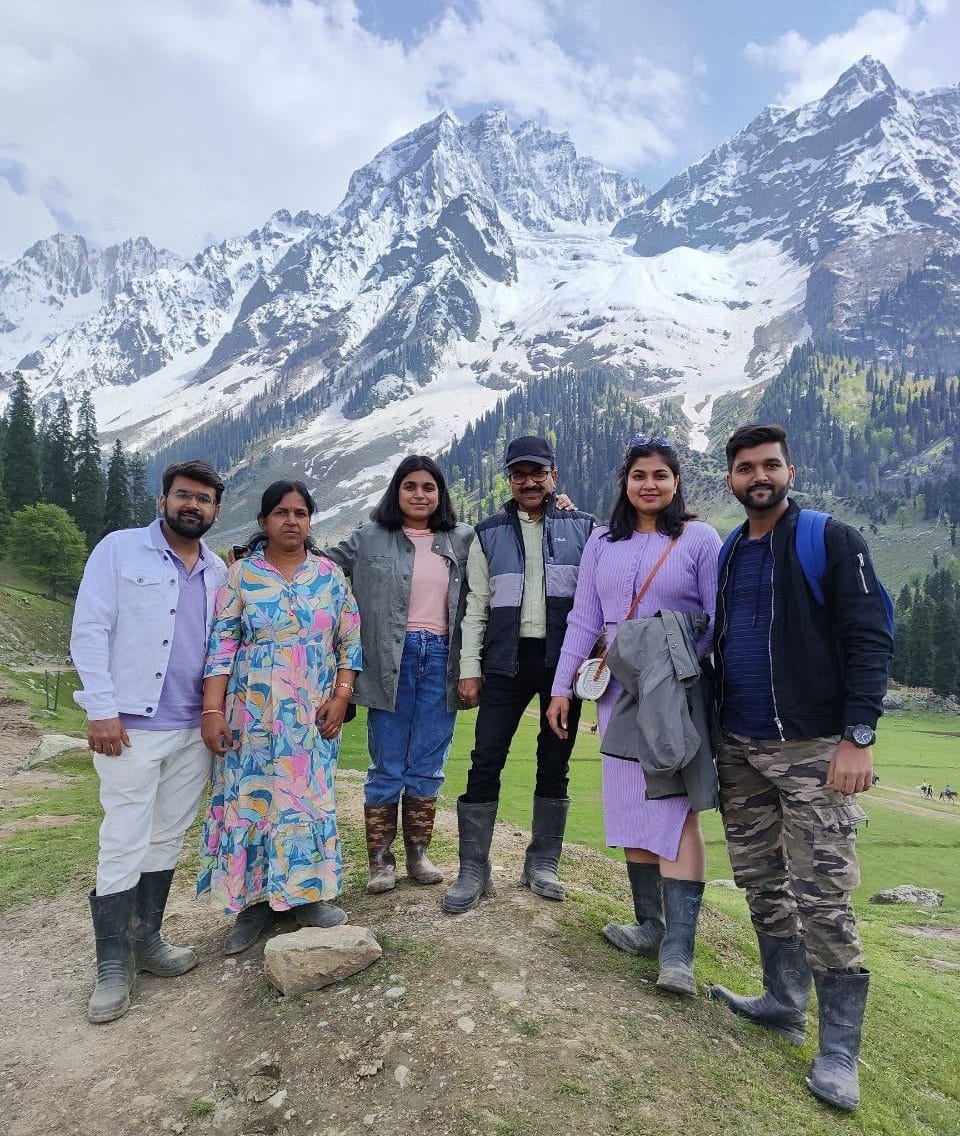
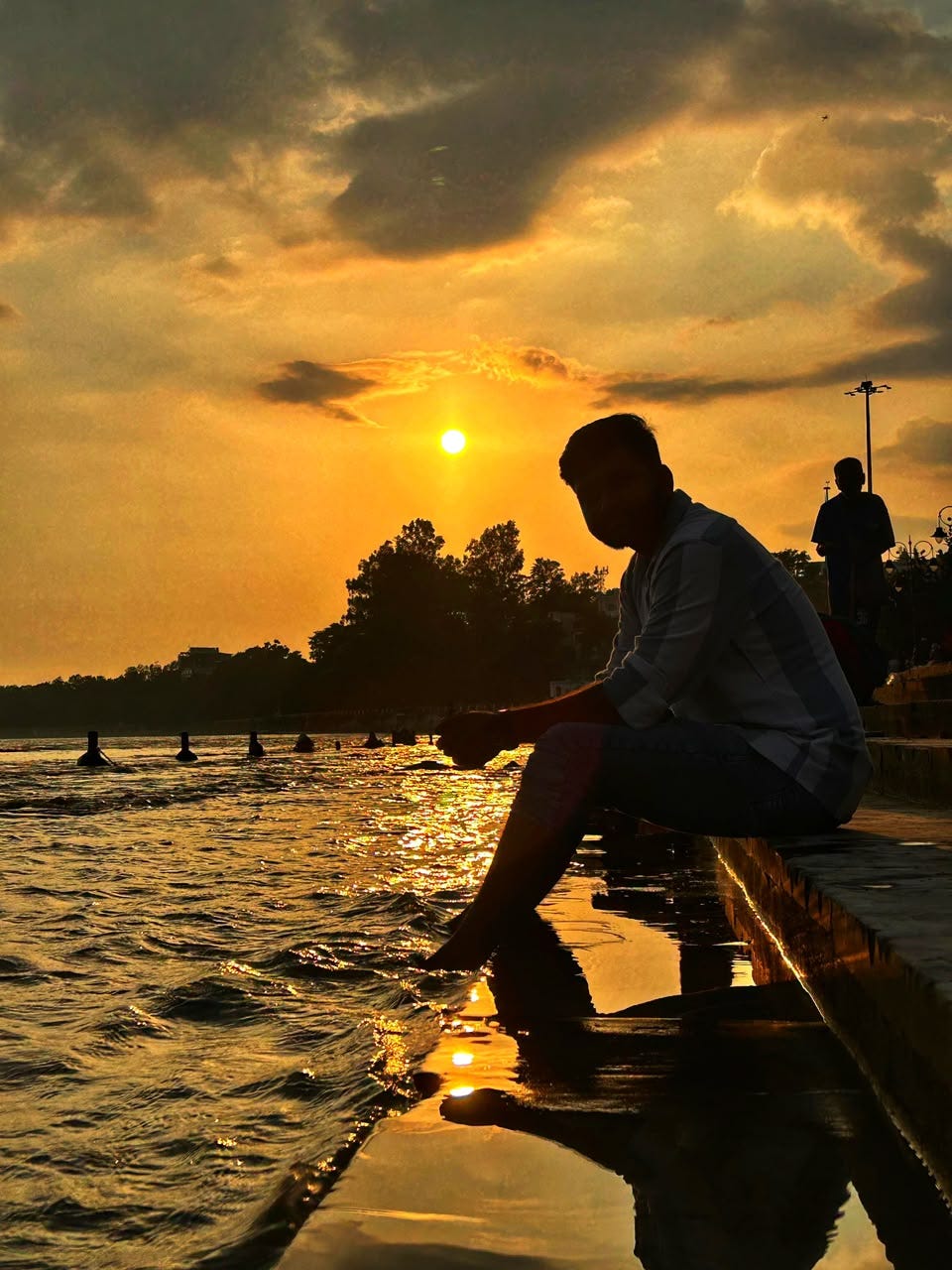
Away from the wards, Dr. Nilay is, by his own admission, a would-be photographer. He got his first camera - a point-and-shoot - from his father on his 10th birthday, after a childhood spent traveling to the mountains, the coasts, and everywhere in between. He’s since built his own equipment collection and still carries a camera on every trip. Kashmir, visited two years ago on a family trip, remains his favorite: “We had been hearing in newspapers and social media that Kashmir is like heaven. When I went there, it was in fact heaven.”
His college years in Odisha - chosen specifically because it was far from home and near beaches and hill stations - were, in his words, full of “annual function” dance events, and last-minute study sprints squeezed in between. Even now, during a residency that offers little free time, he tries to fit in three or four trips a year.
He also built something else during his exam-prep years: an Instagram and Telegram presence, initially meant purely to hold himself accountable to a study schedule. “I made Instagram accountable for my studies,” he says simply. What started as a personal discipline tool grew, almost by accident, into a community of over 5,000 subscribers who joined his study sessions and followed his tips and mnemonics.
Why This Story Matters
Dr. Nilay’s path into pediatrics wasn’t linear, dramatic, or pre-ordained - it was shaped by moving schools, a redirected career choice, and a month-long internship rotation that showed him what recovery could look like. But what he’s built from that path is a very clear philosophy: that the gap between a child surviving and a child not surviving is often not high-end technology or rare expertise - it’s a functioning local clinic, an aware caregiver, a parent who notices the subtle sign and doesn’t wait.
“It’s always better to get treated at the earliest time possible,” he says, “than to wait for complications to develop.”
It’s advice that applies equally to protein malnutrition, to fever, to a baby who won’t stop crying - and, in its own way, to the healthcare system he hopes to see improved. Notice early. Act early. Don’t wait for the crisis to decide for you.
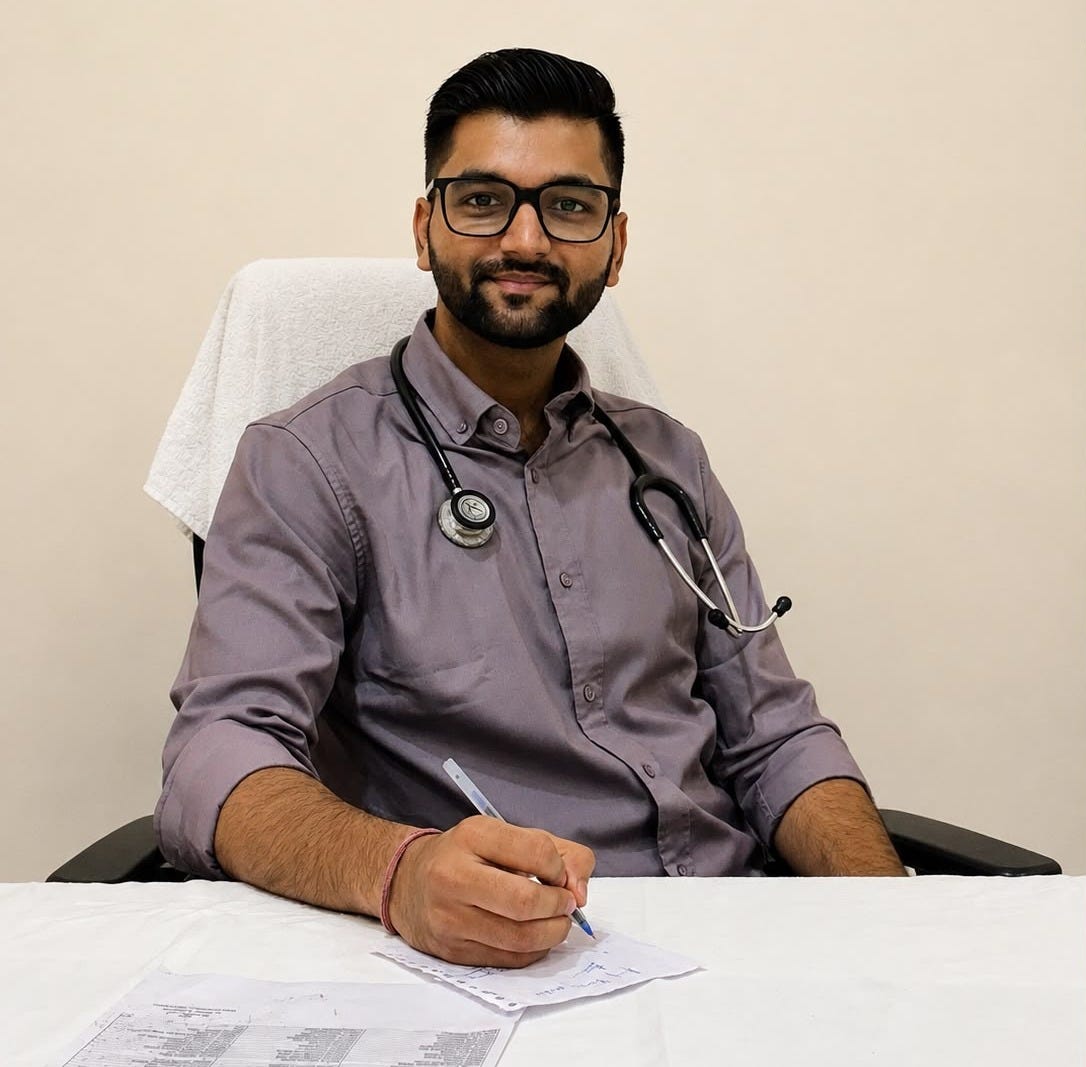
Dr. Nilay Kumar is a second-year junior resident in Pediatrics at PMCH Medical College, Patna, one of Bihar's largest teaching hospitals, where the sickest children from the smallest towns eventually end up. He didn't grow up around medicine; no one in his family had practiced it before him. What he grew up around, instead, was moving - eight or ten schools by the time he finished school, trailing his father's transferable job from town to town. He didn't plan on becoming a doctor, and for a long time he didn't plan on pediatrics either. Both found him. This is the story of what stayed with him once they did.
This story is part of the Janitri Club series, spotlighting the doctors working closest to India’s mothers and children - their journeys, their hardest cases, and the everyday wisdom they wish every parent had.
About Janitri
Janitri is built on a simple yet powerful mission: to save lives by supporting women and newborns through the critical 1,000-day journey from pregnancy to early motherhood. Every solution we create is rooted in care, early detection, and the belief that no woman should lose her life while giving life.
With this same spirit, we introduce Janitri Club, a space where we celebrate not designations, but the people behind them. The caregivers, doctors, parents, and supporters who quietly hold this journey together.
Through real stories of emotions, challenges, and victories, Janitri Club brings these voices to life, honouring their experiences and building a community that uplifts everyone who stands beside a woman in her journey.