Every morning at 11:00 AM, Dr. Tushar Yadav opens the doors to Enhancing Smiles in Vashi, a clinic whose name says it all about his philosophy. By 4:00 PM, he’s at the gym. By 6:00 PM, he’s back. This is the rhythm of a man who has spent his career chasing a single belief: “that the most important dental visit is the one that prevents you from ever needing another.”
But to understand why a pediatric dentist thinks this way, you have to go back. Back to a childhood shaped by a father’s unfulfilled dream. Back to a brother’s preventable pain. Back to the moment a young Tushar stood in front of an entrance exam list and saw his name beside the one specialty that would let him be the kind of doctor nobody thinks to call until it’s almost too late.
The Engineer Who Wanted to Be a Doctor
There are fathers who push their children toward dreams they couldn’t reach themselves. And then there are fathers who do it so quietly, so warmly, that the child doesn’t realize until years later that they were carrying someone else’s hope and had made it entirely their own.
Dr. Tushar Yadav’s father wanted to be a doctor. Financial constraints made him an engineer instead. He never made it a burden. But the aspiration lived in the household like a quiet ember, and somewhere along the way, it became Tushar’s own fire.
“My father always wanted to be a doctor,” Dr. Yadav says. “Because of financial constraints, he had to become an engineer. That inspiration always remained.”
When Tushar joined his Bachelor of Dental Surgery in 2003 and completed it in 2008 from G.D. Pol’s Yerala Dental College and Research Centre, Pune, the ember had become a flame. And when he went straight into his Master’s in Pediatric Dentistry that same year, completing it in 2011 from Rangoonwala Dental College and Research Centre, the flame had found its direction.
He didn’t stumble into pediatric dentistry. He chose it, deliberately, because it was new and it was needed.
“Pediatric dentistry was an emerging field when I completed my undergraduation,” he says. “And only two fields in postgraduation allow for cases under general anesthesia oral surgery and pediatric dentistry.”
There was something clarifying about that. Two paths that asked the most of you. He chose the one that worked with children, arguably the most demanding, most unpredictable, most rewarding patients a dentist can have.
The Brother’s Teeth He Couldn’t Save
Not every lesson comes from textbooks. Some arrive through the people sitting across the dinner table.
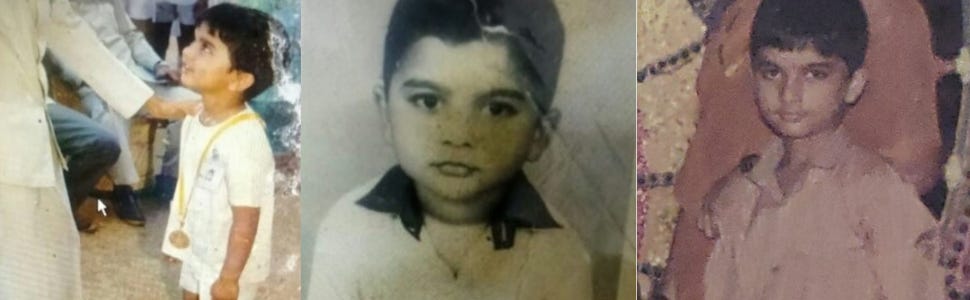
Dr. Yadav watched his brother suffer through early childhood caries decay that began in primary teeth and didn’t stop there. What followed was a cascade that no one in the family had anticipated: the decay in the milk teeth left white patches, hypoplastic spots, on the permanent teeth that came after.
“I witnessed my brother suffer from early childhood caries due to consuming a lot of chocolates,” he recalls. “The decay in the primary teeth later caused white patches on the permanent teeth, a condition that could have been prevented if we had known more at the time.”
That sentence, if we had known more, is the quiet engine behind his career.
He went on to write his thesis on early childhood caries prevention. Not because a university required it. Because he had seen, up close, what happens when parents don’t know that decay can begin the moment the first tooth appears. He had seen what happens when a child’s first white spot at six months old is dismissed as nothing, when it was, in fact, a warning.
“My thesis focused on early childhood caries prevention,” he says, “aiming to prevent decay from the appearance of the first white spot around six months of age to avoid future pain and problems.”
“His brother’s smile became the blueprint.”
What Fever Has to Do with Teeth
Picture this: it’s 3 AM. Your six-month-old won’t stop crying. They’re pulling at their ears, drooling everywhere, running a temperature. You’ve checked everything. You’re exhausted and scared and convinced something is terribly wrong.
And then a little white edge breaks through the gum.
First tooth.
This scene plays out in millions of homes every year. And almost every parent in that moment asks the same question: Is this fever from the tooth? Is it something worse? Should I be worried?
Dr. Tushar Yadav has heard this question hundreds of times. His answer is careful and important.
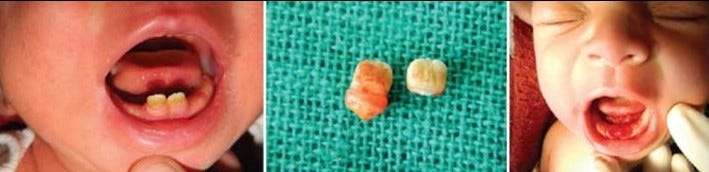
“Fever is a sign of inflammation,” he explains. “It can occur due to eruptive pain when a tooth is erupting around six months. At the same time, maternal antibodies that were protecting the baby begin to decrease at six months so the baby’s immunity is at its most vulnerable exactly when the teething discomfort begins.”
Here’s what parents need to understand: teething typically causes a mild temperature elevation the body responding to the inflammation as the tooth pushes through the gum. This low-grade warmth is normal. But a high fever above 100.4°F (38°C) is not teething. That is the body signalling something else is wrong, a viral infection, an abscess, or another illness that needs attention.
The challenge for exhausted parents at 3 AM is knowing which one they’re dealing with.
“If the fever is related to a dental cause, the tooth needs treatment and continuous monitoring,” Dr. Yadav says. “But if the fever is due to issues outside of our specialty a viral infection, hand-foot-and-mouth disease that falls under the pediatrician’s care.”
Two different causes. Two different responses. One terrified parent who cannot tell them apart in the dark.
This is exactly why continuous temperature monitoring matters so much in those first months of a baby’s life. Not to replace a doctor’s judgment but to give parents the data they need to make the right call at the right moment.
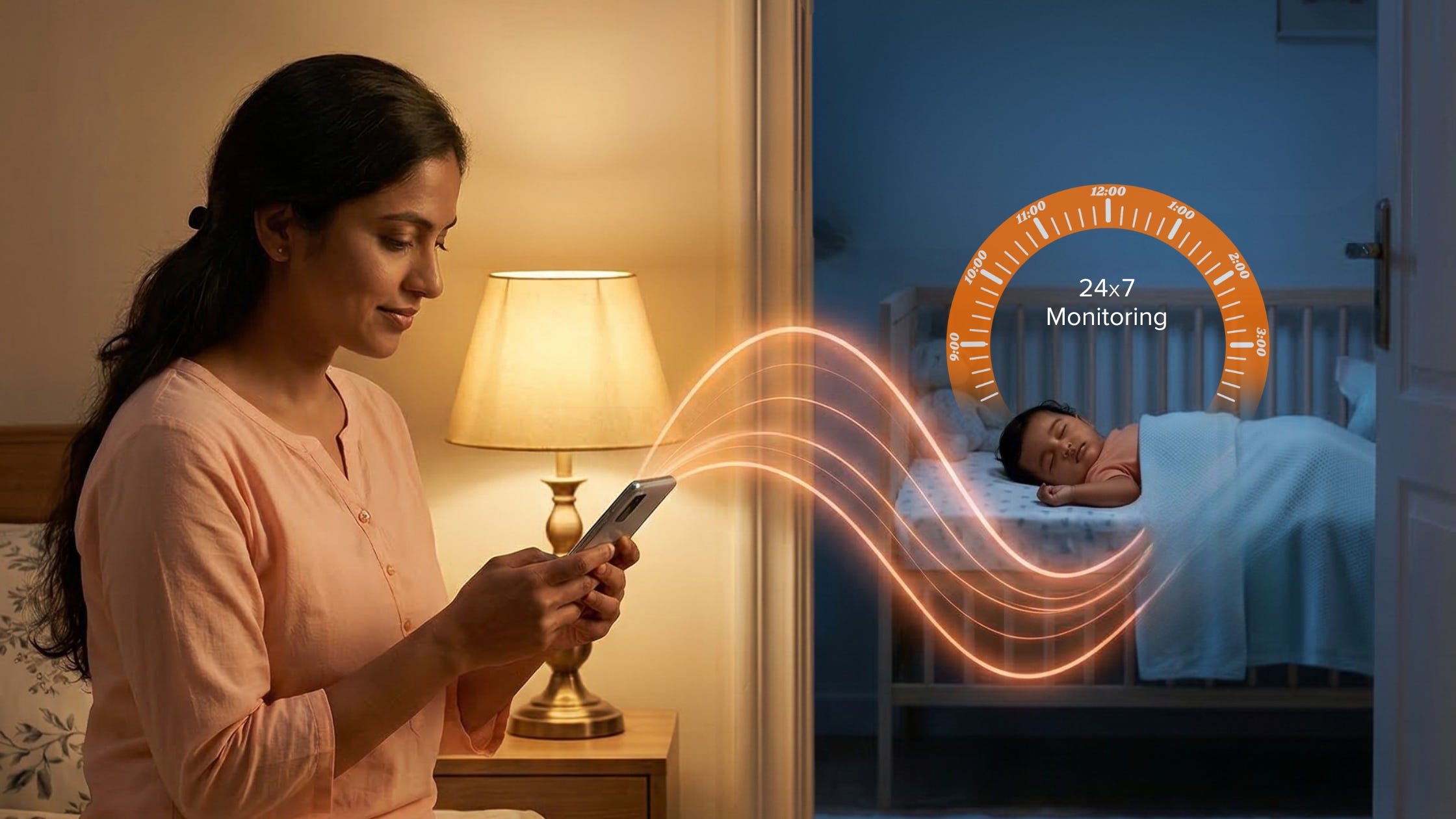
Janitri: Navam TempLive was built for exactly this. A soft, wearable temperature monitoring patch that sits on your baby’s skin and tracks temperature continuously, no thermometer wrestling, no waking a sleeping child to check, no guessing. When the numbers rise, you know. When they hold steady through the night, you can breathe.
Dr. Yadav’s response when he first heard about it was immediate: “ This changes things.
“Such a product could be beneficial by detecting high fevers in the mother during the second and third trimesters of pregnancy,” he said, “which can lead to hypoplastic patches or demineralized teeth in the child.”
He pauses on a point that most parents and even many doctors don’t know: fever doesn’t just affect babies. Fever during pregnancy can reach into the future and damage a child’s teeth before they’ve even formed.
“If a fever occurs while the mother is pregnant, it can affect the ameloblasts, the cells that form the tooth, while the child is in the womb, potentially leading to enamel hypoplasia upon birth. A problematic, weakened tooth.”
These are teeth that arrive in the world already compromised. Already carrying the memory of a fever, their mother ran in the second trimester.
And it doesn’t end at birth. If a child experiences fever during the first three to six months after birth, the window when permanent teeth are quietly forming deep inside the jaws, there is a risk of Molar Incisor Hypoplasia (MIH). These are the permanent molars and incisors that will erupt years later, already weakened, already prone to cavities, already scarred by a fever the child can’t remember, and the parent may have long forgotten.
“Monitoring for such fevers can allow parents to be advised to visit the dentist at six months and around four and a half years when the permanent teeth erupt to prevent future cavities,” he says.
He says this with the calm certainty of a man who has connected the dots that most people don’t know exist. And now, for the first time, parents have a tool that helps them track those dots in real time every degree, every hour, every sleepless night.
→ Get the Janitri: Navam TempLive Here continuous temperature monitoring, designed for babies from birth.
The Protocol Nobody Talks About
Here is something Dr. Tushar Yadav wants every new parent to know, and most parents hear too late:
The first toothbrush doesn’t come after the first birthday. It comes with the first tooth.
“Toothbrushing should begin as soon as the first tooth erupts, typically between six months and one year, using a finger brush,” he says. “It is advisable to clean the oral cavity, including the tongue and tooth, after every feed, using a clean muslin cloth or a finger brush especially for bottle-fed babies, due to the risk of sugar exposure that leads to cavities.”
And the toothpaste? It starts then, too. Not with a full pea-sized amount, but a smear of what remains after wiping the brush.
“Fluoridated toothpaste should be introduced as soon as the first tooth erupts, starting with a smear layer until three years of age. After three years, a pea-sized or rice-grain amount is recommended. Adult toothpaste 1,000 ppm fluoride or more can be used after six years of age.”
These aren’t guidelines buried in a dental manual. These are the instructions parents need the day their baby’s first tooth breaks through the gum. The problem is, nobody gives them out.
Dr. Yadav does.
The Midnight Tooth and What to Do
It’s 2 AM. Your child is screaming. Their tooth is throbbing. You’re searching the internet for anything that will help.
Dr. Yadav has a clear answer, and it’s not what most parents want to hear.
“There is no home remedy to solve the issue,” he says, without softening it. “The pain indicates an underlying problem, an abscess, an emergency.”
The best course of action is simple, if not comfortable: give paracetamol if approved by a pediatrician, calm the child, and see a dentist the moment it’s humanly possible.
“The child needs professional treatment,” he says. “That’s it.”
There’s a kindness in his directness. He’s not being dismissive; he’s preventing the mistake of hoping the pain resolves on its own. Because, as he explains, the black tooth parents sometimes notice isn’t always iron staining from a syrup. Sometimes it’s a cavity. And a painful black tooth is never just staining.
“If the black tooth is painful, it is definitely a dental cavity, not iron staining,” he says. A pediatric dentist can tell the difference. Most parents can’t. Most parents wait.
He doesn’t want them to wait.
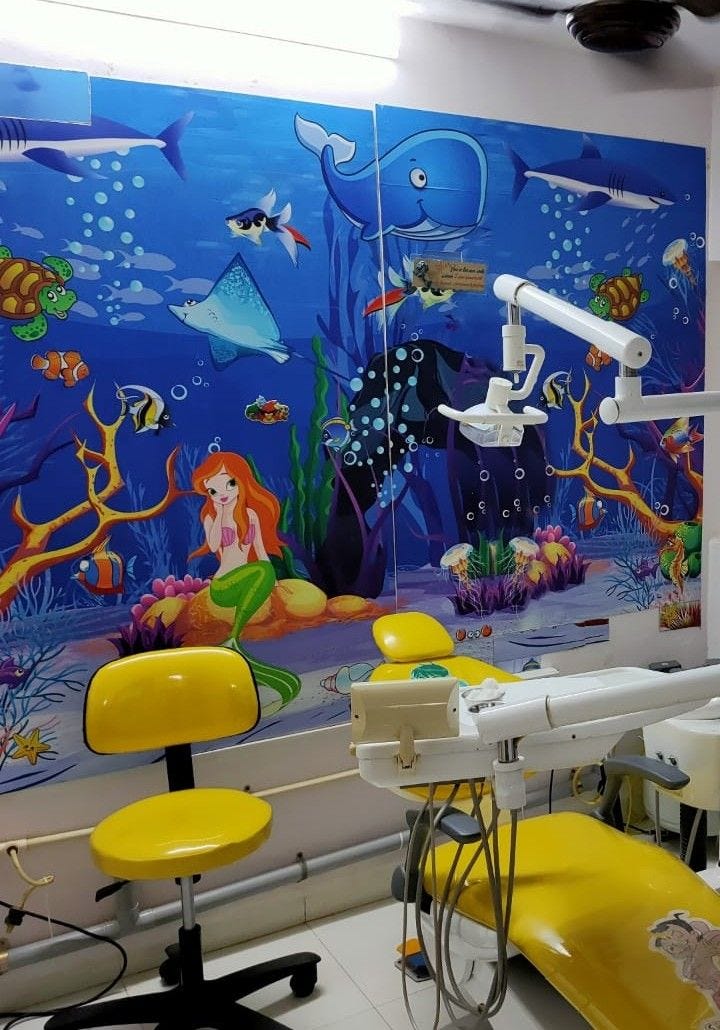
The Clinic He Built
After completing his Master’s in 2011, Dr. Yadav joined G.D. Pol’s Yerala Dental College as a lecturer in October that same year, a role in academics he would hold for over a decade, shaping the next generation of dentists until July 2022.
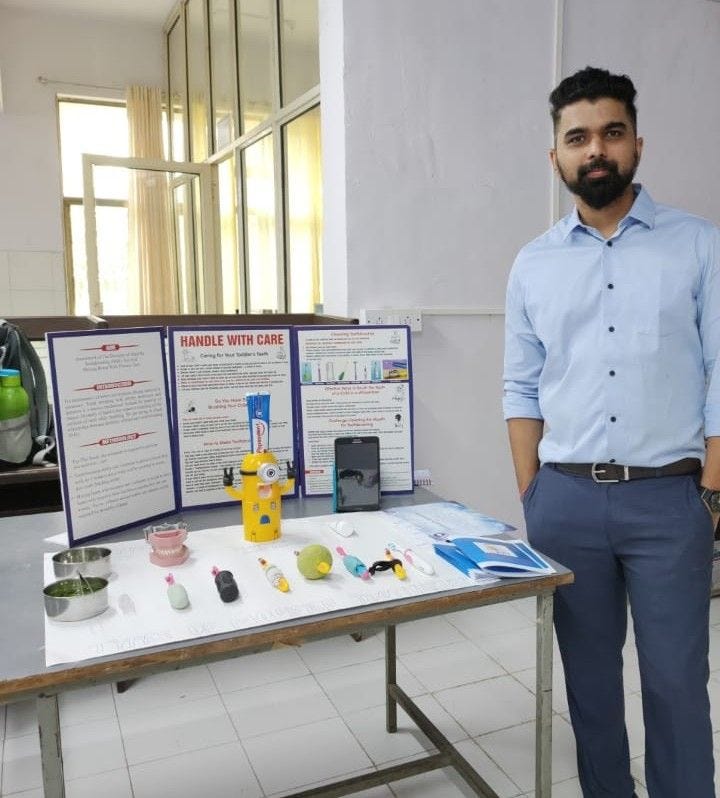
In 2017, while still teaching, he opened Enhancing Smiles in Vashi. A clinic of his own, where he could practice the kind of dentistry he believed in: preventive, early, holistic.
When he left academics in 2022, he stepped into a world few dentists ever enter. He joined Omega Healthcare as a Project Lead, working with US oncology data on ovarian cancer, fallopian tube cancer, peritoneal cancer, DLBCL, and breast cancer. Until April 2025. Then Bayer Pharma, from May to October 2025.
And through all of it, the clinics, the lecture halls, the oncology data sets, Enhancing Smiles stayed open. He never let it go.
Now he’s back at his clinic full-time, running it the way he always envisioned. And in a move that surprises no one who knows him, he’s simultaneously pursuing an Executive Programme in Leadership in AI from IIT Mumbai. Because a man who connects dental enamel to prenatal fever to oxygen levels was always going to find his way to the frontier of what’s next.
The gym at 4:00 PM, the clinic from 6:00 PM to 9:00 PM. The rhythm of a person who has figured out what matters and keeps adding to it.
“Every instance of treating a patient experiencing pain reinforces the worth of my work,” he says. “Offering them the ability to relieve that pain.”
But the moments that sustain him aren’t the dramatic ones. They’re the quiet preventive victories: the parent who started brushing on day one of the first tooth. The child who comes in at six months, as advised, and leaves with a plan. The permanent tooth that erupts cleanly because a fever was caught early, treated promptly, and monitored with care.
The Oxygen Nobody Thinks About
Dr. Yadav had one more thing to add when he heard about janitri: Navam Baby Monitor for babies. Something even more unexpected.
The enamel-forming cells, the ameloblasts, don’t just need a stable temperature to do their job. They need oxygen.
“If an SpO2 monitoring device indicates that oxygen levels drop below a certain threshold, the tooth that erupts in the future may have a problem,” he says.
Most parents have never thought about oxygen levels and teeth in the same sentence. Dr. Yadav has. Because he’s seen what comes out the other end: a permanent molar that erupts at age six with white spots and soft enamel, and a parent who has no idea why.
The answer, sometimes, is a night three years earlier when oxygen dipped too low during a fever, when no one was watching closely enough.
This is what it looks like when a doctor who treats tiny teeth thinks on a lifetime scale.
→ Get the Janitri: Navam Baby Monitor Here, with continuous temperature monitoring, designed for babies from birth.

What He Wants You to Remember
Dr. Tushar Yadav will tell you, quietly and without drama, that the tooth your child loses today will echo in the one that grows in its place. That the fever you manage now might protect a molar that won’t erupt for another four years. The toothbrush you introduce this month might prevent the abscess that would have woken everyone up at 2 AM, three years from now.
He has the credentials to make this case: the degrees, the years of teaching, the clinic he built from belief. But what he really has is something harder to quantify: he carries his brother’s teeth in his memory.
He knows what preventable looks like.
He has spent his career making sure it stays that way.
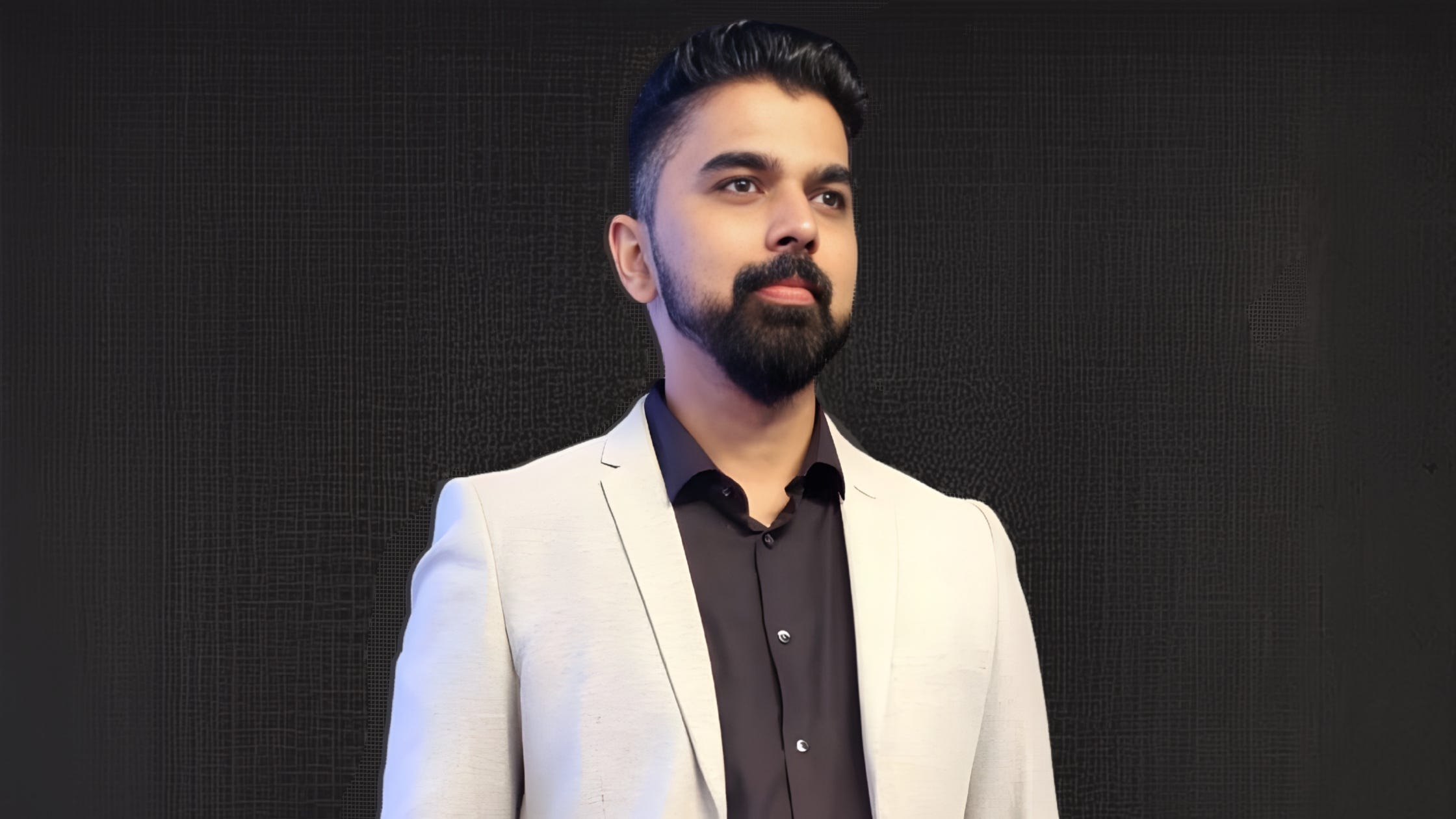
Dr. Tushar Yadav is a pediatric dentist and the founder of Enhancing Smiles in Vashi, Navi Mumbai. He completed his BDS in 2008 from G.D. Pol’s Yerala Dental College and Research Centre, Pune, and his MDS in Pediatric Dentistry in 2011 from Rangoonwala Dental College and Research Centre. He served in academics at G.D. Pol’s Yerala Dental College from 2011 to 2022, followed by roles at Omega Healthcare and Bayer Pharma. He currently practices full-time at Enhancing Smiles and is pursuing an Executive Programme in Leadership in AI from IIT Mumbai.
This story is based on a conversation between Dr. Yadav and the Janitri Club team. His words have been lightly edited for clarity while preserving his authentic voice.
About Janitri
Janitri is built on a simple yet powerful mission: to save lives by supporting women and newborns through the critical 1,000-day journey from pregnancy to early motherhood. Every solution we create is rooted in care, early detection, and the belief that no woman should lose her life while giving life.
With this same spirit, we introduce Janitri Club, a space where we celebrate not designations, but the people behind them. The caregivers, doctors, parents, and supporters who quietly hold this journey together.
Through real stories of emotions, challenges, and victories, Janitri Club brings these voices to life, honouring their experiences and building a community that uplifts everyone who stands beside a woman in her journey.