Roots: A Farming Family and a Dream in Rajasthan
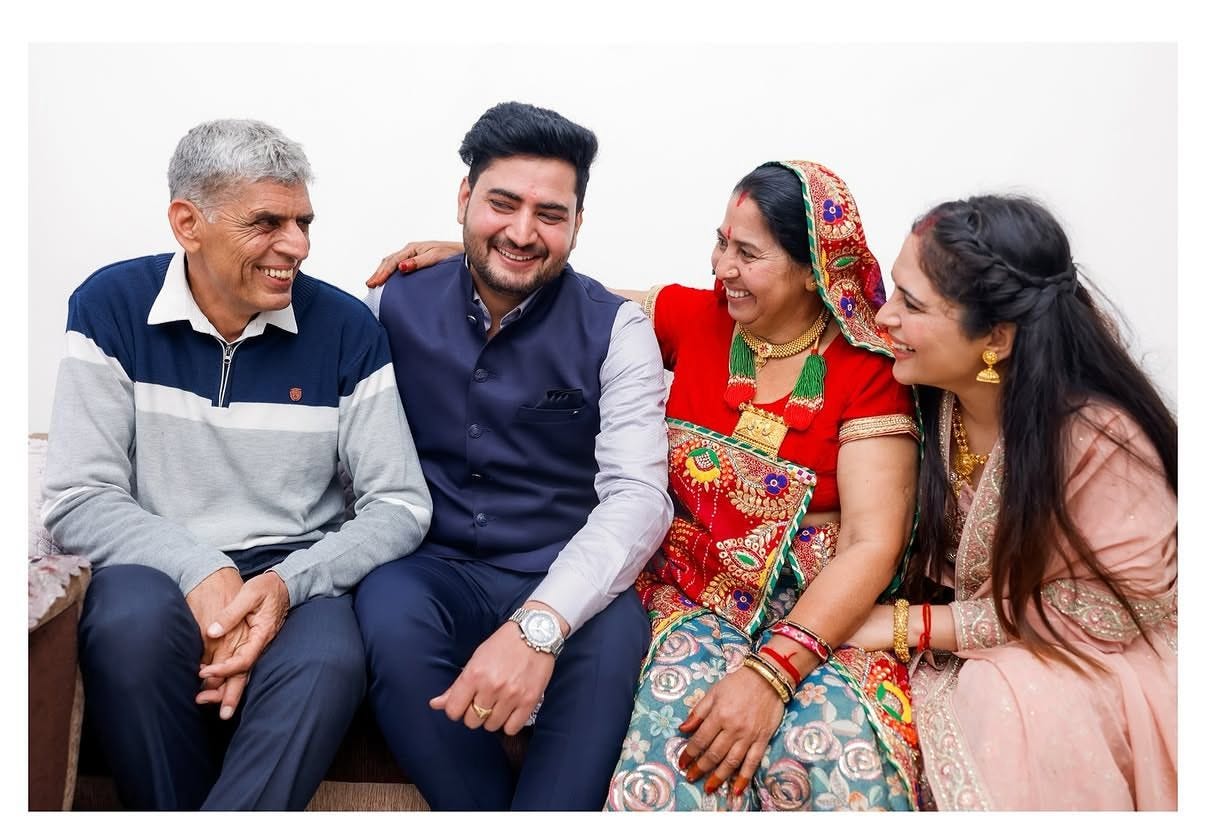
She grew up in Rajasthan, in a farming family where the land was the livelihood, and the classroom was the aspiration. Her father tilled the soil. Her mother stood at the front of a school and taught other children every day. There was no doctor in the family. No inherited roadmap. Just two hardworking parents who believed, quietly and completely, that their daughter could use her hands differently.
From a young age, Preity knew what she wanted to be. Not in a vague, someday sort of way. In a specific, decided, this-is-what-I-am-going-to-do way. She had a phrase for it that she still uses today, without embarrassment:
“I always wanted to be a healing hand.”
And then, at three years old, she was sent away.
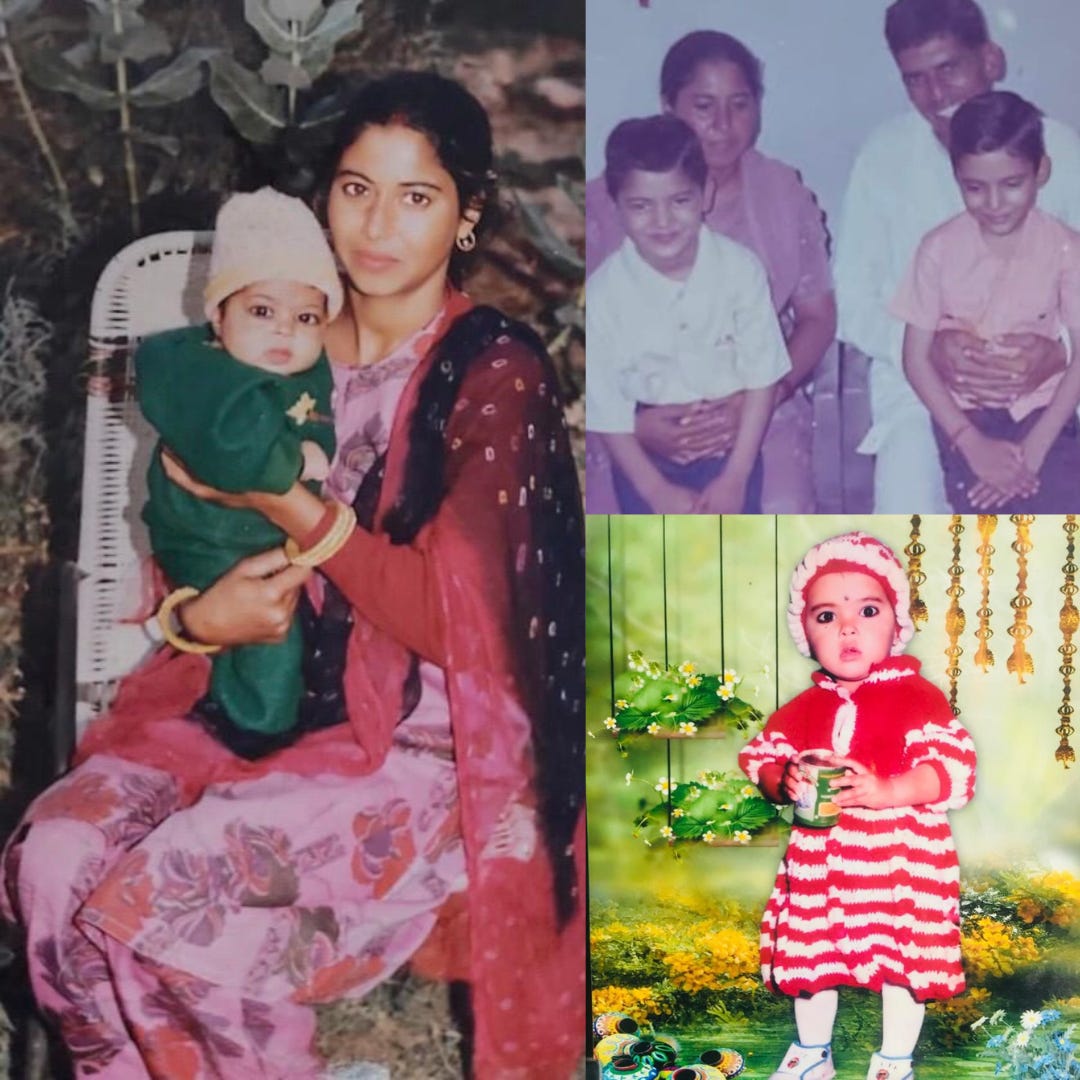
Her parents enrolled her in a boarding school in Jaipur. It was a decision made out of love: a better education than the village could provide, better opportunities, a future they could not fully give her themselves. They were not wrong. But intention and experience are two different things entirely.
Being three years old, far from home, without your parents - when you are sick, or scared, or simply missing the sound of a familiar voice - leaves a mark that no amount of good intention can erase.
“We were sick, and upon that, they were not there. Which caused even more loneliness.”
She did not become bitter. She became resilient. Self-reliant. Disciplined in ways that would serve her for decades. But she also carried something out of that boarding school that would quietly shape every major decision she made as a mother:
The memory of what absence feels like in the body of a child.
BAMS, DRCH, and the Road Less Prescribed
Dr. Preity’s medical journey is not a conventional one. She holds a BAMS: Bachelor of Ayurvedic Medicine and Surgery, which means that, unlike many gynecologists trained exclusively in allopathic medicine, she was always going to look at the body through two lenses at once.
She went further. She completed her DRCH: Diplomate in Reproductive and Child Health - from NARCHI, Kolkata, deepening her expertise in infertility, maternal health, and the care of women across the full arc of their reproductive lives.
Obstetrics and Gynecology called to her during her college years. She excelled at it. She loved explaining it. But what sealed it was something simpler than ambition:
“It’s two lives you are handling - the baby and the mother. Pregnancy is not a disease. It’s a natural process associated with happiness and celebration.”
She has seen a lot of patients in gynaecology. She has managed complications, delivered babies, counselled families through grief, and guided women through diagnoses that changed the shape of their lives. She has done all of this with one growing conviction:
Ayurveda is not the alternative. It is the beginning.
She turns to Ayurveda as a first line of approach for infertility and PCOD - not because she dismisses conventional medicine, but because she has seen, repeatedly, what happens when women come to her after years of IUI and IVF that didn’t work, depleted in body and spirit and savings, asking why no one told them there was another way.
She thinks of a neighbor. Career-oriented, married late. At 38, she began trying to conceive. The IUIs failed. The IVFs failed. By the time she came to Dr. Preity, there was little road left.
“If she had come to me earlier, I would have recommended Ayurveda first. Processes like uttar basti cleanse the body. They cost far less than IVF. And they make subsequent conception easier.”
Earlier. That word carries so much weight in Dr. Preity’s practice. Earlier conversation. Earlier options. Earlier knowledge before the most expensive and invasive choices become the only ones left on the table.
She is currently offering online consultations, bringing this integrated approach to women who may not be near a clinic that thinks this way. The geography of healthcare in India means that this kind of access matters enormously, and she knows it.
The Man Who Taught Her What Discipline Really Looks Like
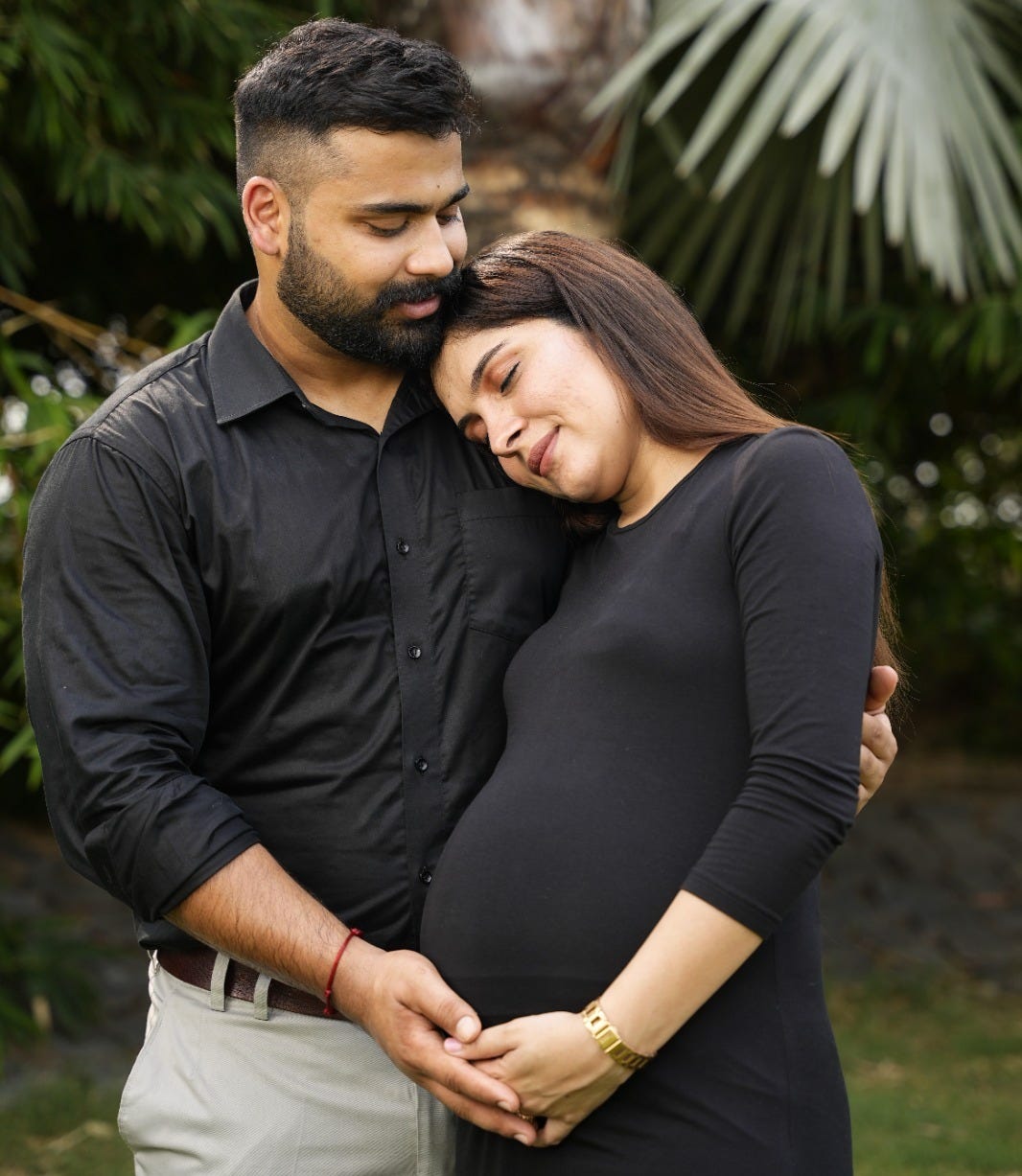
Preity married Vikas Thakur, a name that carries weight in the world of Indian sport. Vikas is a Commonwealth Games medalist in weightlifting, a man who has spent his entire life in pursuit of physical excellence, who knows what it means to show up every single day for something that demands everything you have.
Life with a champion athlete teaches you things that no medical college can.
It teaches you that discipline is not punishment; it is a form of love you give yourself. That consistency, not intensity, is what builds anything worth building. That your health is not a background concern; it is the foundation everything else stands on.
“From him, I learned how to be disciplined in life - and disciplined about my health.”
These are lessons she now carries into her practice. When she tells patients that lifestyle changes matter, that what you eat and how you move and how you rest affect hormones and fertility and outcomes, she is not reciting a textbook. She is speaking from a household where these things are lived every day.
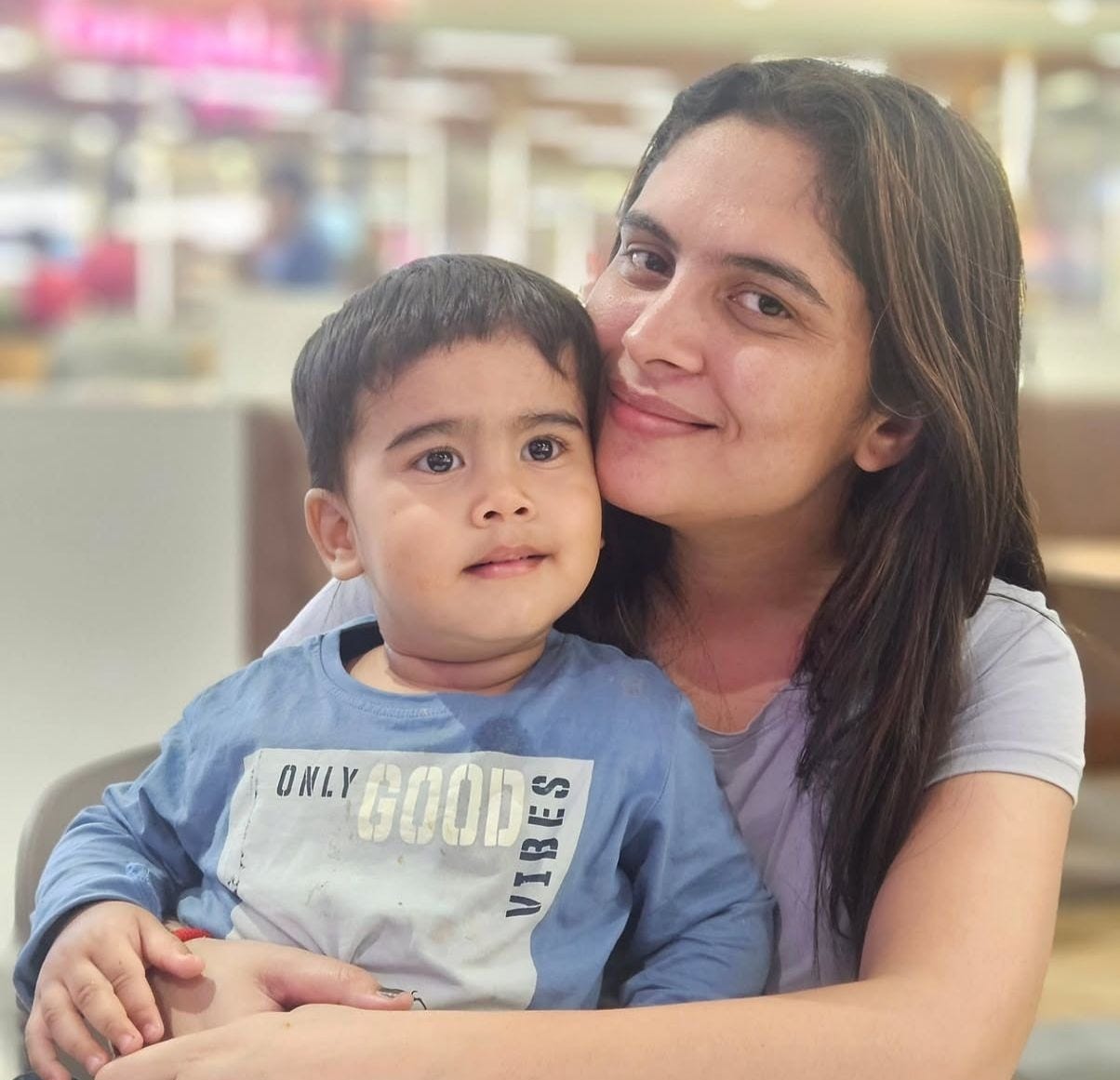
They have a son together. A little boy who is 2.5 years old and, if the stories she tells are any indication, the reason his mother learned something profound about the relationship between a career and a calling.
When the Expert Becomes the Patient
She thought she would be prepared. She was a gynecologist. She had seen pregnancies at every stage, managed complications, and explained exactly what to expect, trimester by trimester, to hundreds of women sitting across from her desk.
Her own pregnancy humbled her completely.
The first trimester was relentless. Severe nausea. Vomiting didn’t ease up. Days where she could barely function - this woman who had told so many patients: " It will pass, it gets better, you’re going to be fine.
It passed. Eventually.

The second trimester gave her the reprieve she had promised others - that comfortable window she calls the “honeymoon period,” where the body settles, and you almost forget what the first three months put you through.
And then the third trimester. False labor pains. Induction that failed. And ultimately: a C-section.
She had attended countless C-sections. She had stood on the other side of that table. She had held the calm in the room when everything else was urgent. She had been the voice that told mothers: " You are okay, your baby is okay, we have you.”
She was not prepared to be the one lying on that table.
The surgery went fine. Her son arrived. And then came the part that none of her training had fully prepared her for.
The Fourth Trimester - And the Husband Who Showed Up
She calls it the fourth trimester. The months after birth that everyone forgets to put in the plan.
The birth plan is meticulous. The hospital bag is packed. The name is chosen, the nursery is ready, and the announcement posts are written.
Nobody puts postpartum depression in the plan.
Dr. Preity experienced intense loneliness after her delivery. A darkness she had counselled other women through, validated in consultations, recognized in clinical terms. She knew what it was called. She knew the statistics. She knew that it was real, common, and treatable.
“Following delivery, I felt intense loneliness. I went through postpartum depression. And I say this even as a doctor.”
Knowing the name of the thing you are going through does not make it less real. Information is not immunity.
What made the difference for Dr. Preity was her husband.
Vikas: the athlete, the Commonwealth Games medalist, the man who had built his life around showing up - showed up for this too. He shared duties. He was present. Not in the performative, occasionally-helpful way that society considers adequate for new fathers. Actually present. Shoulder-to-shoulder present. Nights and feeds and the unglamorous, exhausting, beautiful reality of early parenthood, shared equally.
“My husband helped me during my postpartum depression days. He shared duties during that time.”
She tells this story not to celebrate him - though he deserves it - but to offer it as a blueprint. Because she has sat across from too many women who went through the fourth trimester alone. Whose partners didn’t understand what was happening, or didn’t think it was their role to step in, or simply weren’t told that this was something they needed to do.
If your partner doesn’t know what postpartum depression looks like, they cannot help. Tell them. Show them this.
About 7 out of 10 mothers go through postpartum blues or depression. It is common. It is real. And cases of PPD converting into suicides should not be taken lightly. The partner’s presence - practical, physical, consistent presence - is not optional. It is medicine.

The Myths She Is Tired of Hearing
There is a myth that circulates in India about C-sections that Dr. Preity has heard enough times to have an answer ready before the sentence is finished:
That doctors choose C-sections for money.
She takes a breath. And she explains.
“Many C-sections are required due to medical emergencies. The baby is in distress. Labour is not progressing. The mother’s life is at risk. These are not financial decisions. They are clinical ones made in seconds, under pressure, to save two lives.”
She also says this: Some mothers choose a C-section. Deliberately. To avoid labour pain. And that, she says without hesitation, is also a valid choice. A woman’s informed decision about her own body is not anyone else’s to question.
Then there is the second myth. The one that causes real, lasting harm to real, vulnerable women.
That you cannot breastfeed after a C-section.
This myth stops mothers from trying. It robs babies of colostrum - that precious first milk, dense with antibodies, that the body produces in the hours immediately after birth. And it is simply, entirely wrong.
“Mothers are encouraged to feed within the first two hours. That colostrum is gold for the baby. The C-section does not take that away.”
What it does take away, temporarily, is comfort. A mother recovering from abdominal surgery is in pain. Positioning the baby hurts. The breast tenderness in early feeding days can feel overwhelming. The milk supply can be slow to establish.
None of this means stop. It means: ask for help. Specifically, ask for a lactation consultant.
“The early days of breastfeeding can involve cracked nipples, breast tenderness, fever from milk supply issues. These problems are hormonal. Mothers should never be blamed. They should be supported.”
Lactation consultants are specialists trained to help mothers through exactly this. And most families in India have never heard of them.
Dr. Preity wants to change that. She talks about lactation consultants with the urgency of someone who has watched the absence of this knowledge cause unnecessary suffering. Feeding pillows. Support positions. A professional who knows what they’re looking at.
These things exist. They help. And too many mothers are going through the hardest days of new parenthood without any of them.
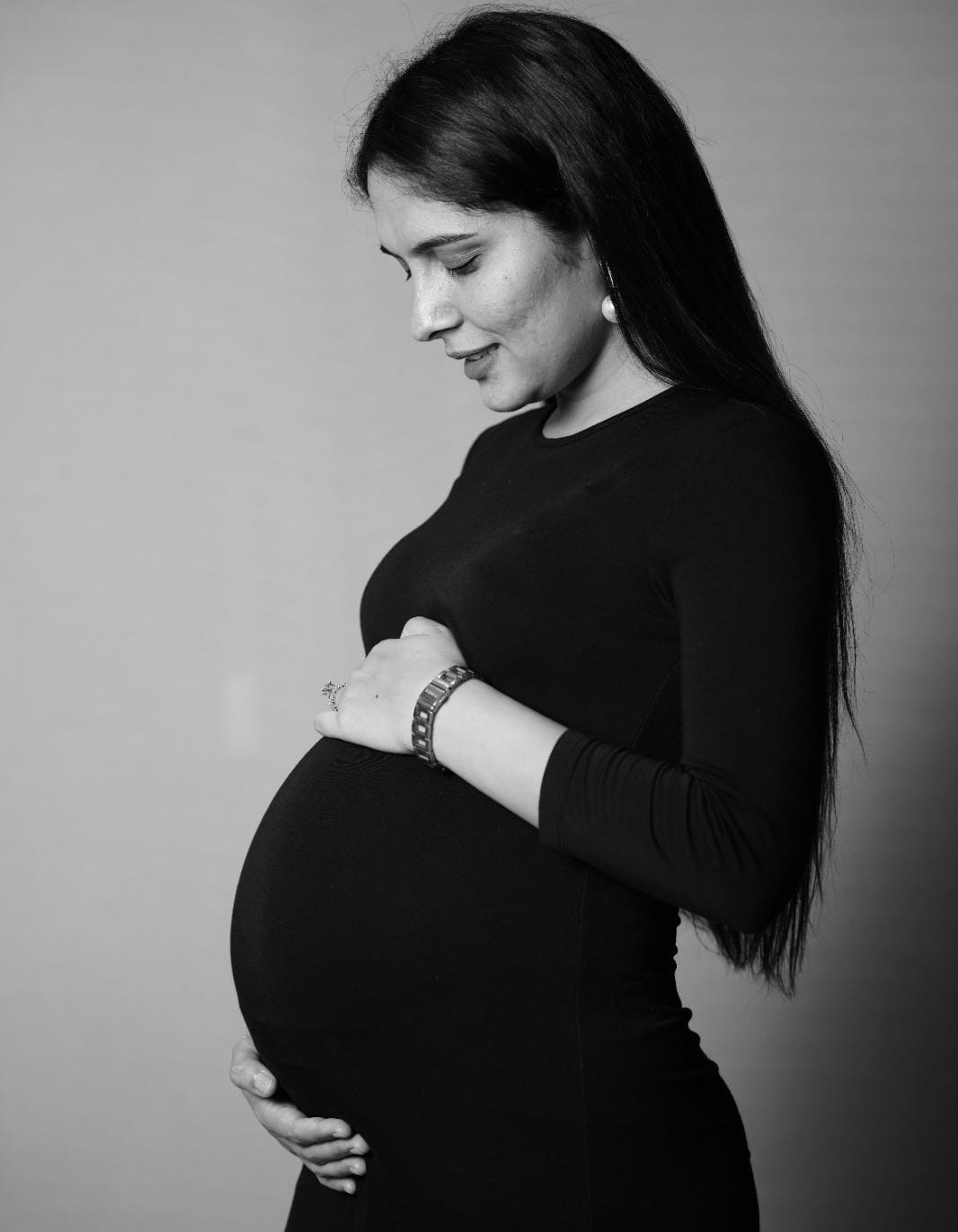
The Mountain Road, the Doppler, and a Heartbeat That Changed Everything
It was on a trip to Shimla that she understood, in her body, something she had told patients in consultations for years.
She was pregnant. Traveling with her husband, her brother, and a few family friends. The mountain roads were winding, the air was cool, and somewhere along that route, she felt something that stopped everything:
Her baby had stopped moving.
She pressed her hand to her belly. She waited. The hills were outside the window. The conversation in the car continued around her. And there was nothing.
Here is what you need to understand about this moment: she was not a frightened first-time mother who didn’t know what to do. She was an obstetrician-gynecologist. She knew clinically, precisely, exactly what a loss of fetal movement can mean. She had sat with other women in this exact fear and been the calm in the room.
Knowing made it worse, not better.
There was no hospital nearby. Not in the mountains. Not that could offer monitoring. There was only the road, and the silence from her belly, and a family around her who didn’t yet know anything was wrong.
She reached for the Doppler device she had with her: the one from Janitri, and placed it against her skin.
She listened.
The heartbeat came through. Steady. Unmistakable. Present.
“It was a blessing. I could monitor the fetal heartbeat and feel comfort until we returned to Chandigarh.”
She had prescribed Dopplers to patients. She had explained them to nervous fathers and anxious grandmothers. She had said many times: technology gives you the distance between panic and calm.
On that mountain road, surrounded by people she loved, she finally understood what she had been telling them.
Technology does not replace a doctor. It gives you the information that tells you whether you need one right now.
The Patient She Cannot Forget
She has stories she carries differently from others.
A 37-year-old woman. Several failed IVFs. And then - finally - a pregnancy. The kind that feels like the end of a long and painful chapter.
She came to Dr. Preity’s clinic for a routine check-up. A hospital had seen her the day before. Declared everything fine. Sent her home.
Dr. Preity placed the probe on her abdomen.
There was no heartbeat.
The baby had died in utero. In the twenty-four hours between one hospital declaring all clear and this examination, something had gone catastrophically wrong - and gone undetected.
“It shook me. This happened because of a lack of technology and patient rush. Better facilities could have changed everything.”
She says this carefully. Not to blame any institution. But because she has spent her career watching the gap between what is medically possible and what is actually available determine outcomes that should have been different.
A monitoring device. A few more minutes. A heartbeat check that wasn’t rushed.
That baby could have been saved.
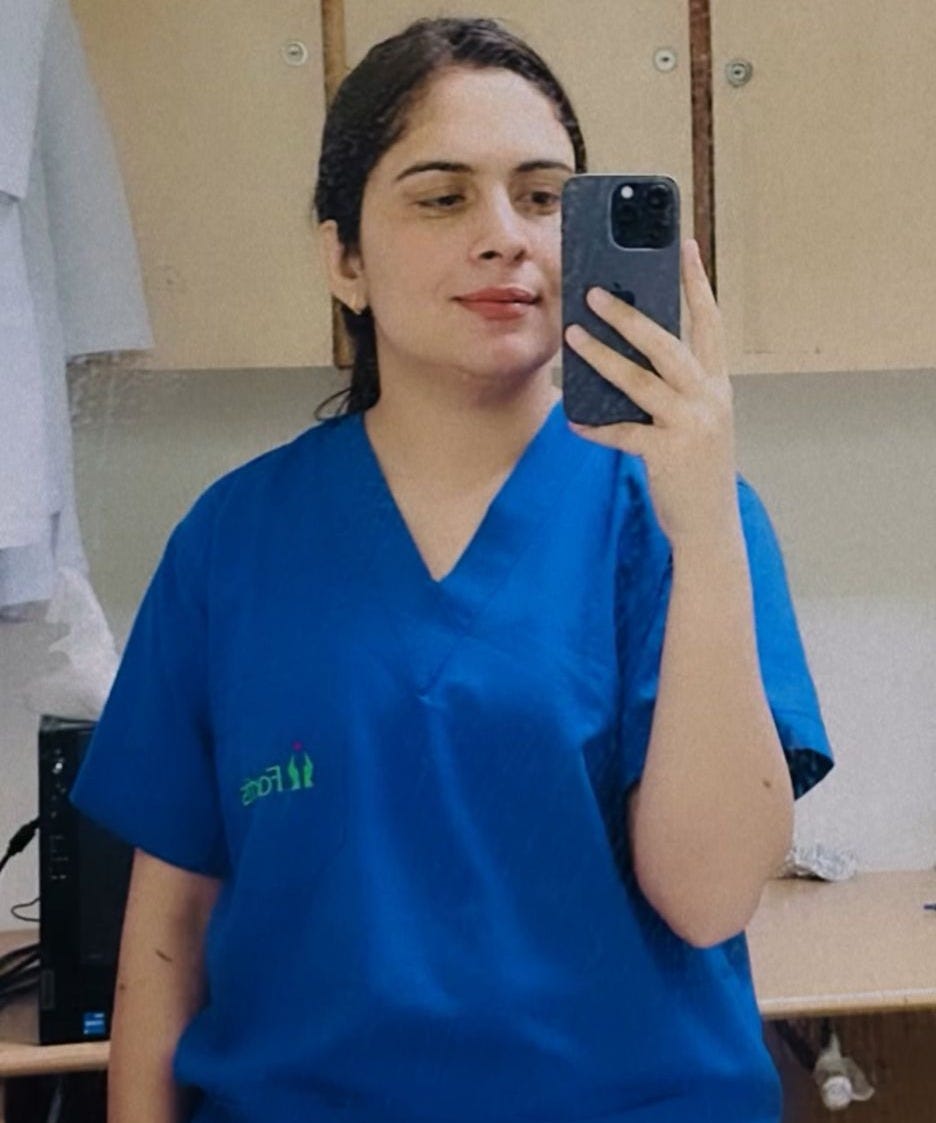
What She Would Tell You
Today, Dr. Preity Choudhary - BAMS, DRCH - sees patients online and works in women’s health, infertility, and child care. She is the wife of a Commonwealth Games champion. She is the mother of a 2.5-year-old son. She is an advocate for Ayurveda as a first conversation, not a last resort. She is a voice for the fourth trimester, for lactation consultants, for partners who show up.
She is, in many ways, still becoming.
To the young person considering gynecology, she says come. Without hesitation.
“It is a great and overwhelming journey. It gives you the best feeling of being able to help, heal, and solve people’s health problems. There is nothing like it.”
To the new mother sitting alone in the dark of a fourth trimester, she didn’t see coming - who loves her baby but cannot find the joy everyone says she should be feeling, who is scared to say any of this out loud:
Dr. Preity has been there.
With her degrees. With her years of practice. With every delivery she attended and every case she managed.
She sat in that same darkness.
Her husband sat with her.
And she came back.
So can you. And you don’t have to do it alone.
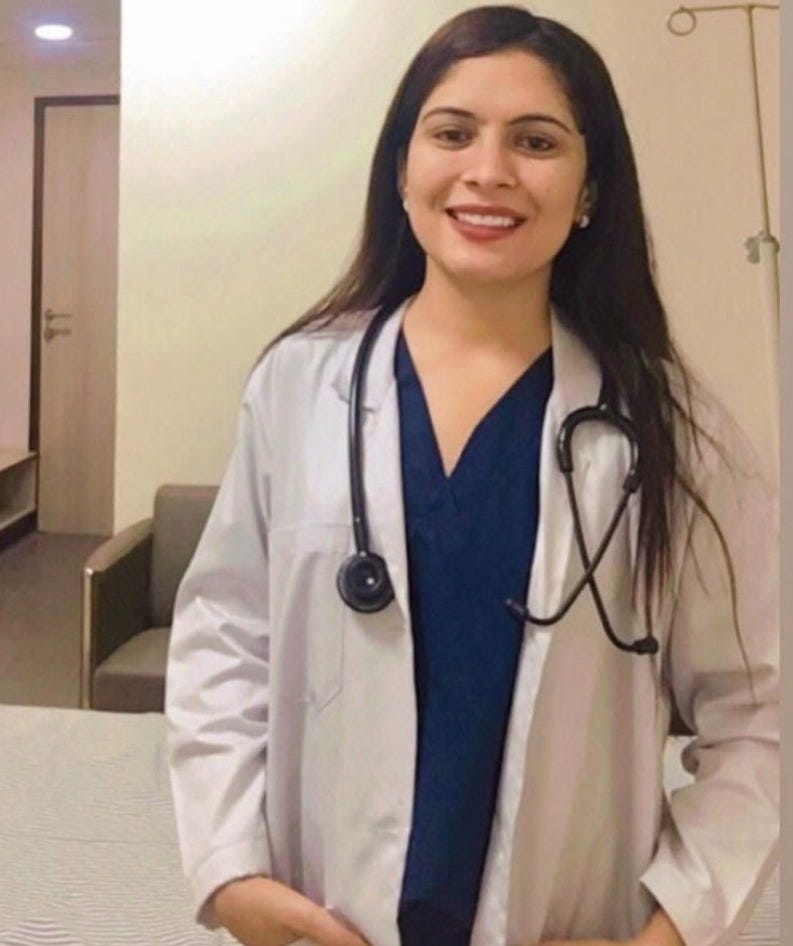
About Dr Preity Choudhary
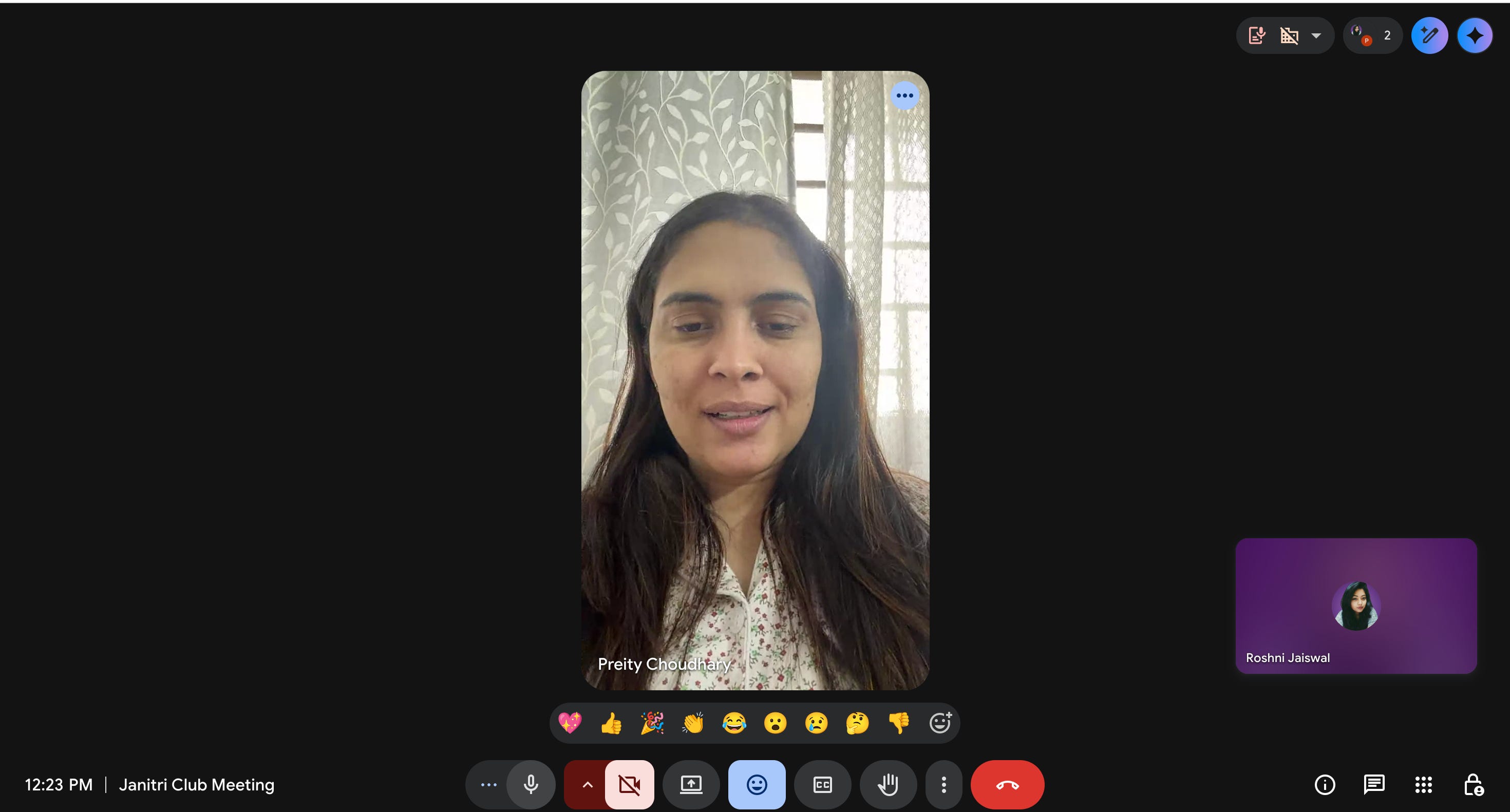
Dr Preity Choudhary is a Ayurveda gynaecologist and Ayurveda practitioner specialising in women’s health, infertility, and reproductive care. She holds a BAMS and a Diplomate in Reproductive and Child Health (DRCH) from NARCHI, Kolkata. Based in Mohali, she practises at Fortis Hospital and offers online consultations, bringing an integrated approach to women who may not have access to this kind of care nearby. She is married to Vikas Thakur, a Commonwealth Games medallist in weightlifting, from whom she says she learned what true discipline looks like. She is the mother of a son, and the reason she took a year and a half away from her career to raise him is the same reason she is so honest about the parts of motherhood that everyone else glosses over.
This story is based on a conversation between Dr Preity Choudhary and the Janitri Club team. His words have been lightly edited for clarity while preserving his authentic voice.
About Janitri
Janitri is built on a simple yet powerful mission: to save lives by supporting women and newborns through the critical 1,000-day journey from pregnancy to early motherhood. Every solution we create is rooted in care, early detection, and the belief that no woman should lose her life while giving life.
With this same spirit, we introduce Janitri Club, a space where we celebrate not designations, but the people behind them. The caregivers, doctors, parents, and supporters who quietly hold this journey together.
Through real stories of emotions, challenges, and victories, Janitri Club brings these voices to life, honouring their experiences and building a community that uplifts everyone who stands beside a woman in her journey.