There’s a question Dr Shruti asks her patients that most doctors skip.
Not how is the baby - she’ll get to that. Not any bleeding, any pain - those come too. The first thing she wants to know is softer, and somehow harder to answer: How are you, really? Did you sleep? Is anyone at home asking you that?
For fifteen years, she has sat in OPDs across Chandigarh and Delhi, a senior consultant gynaecologist trained in some of the most demanding corners of her field - high-risk pregnancies, laparoscopic surgery, adolescent care. And in all those years, she has arrived at a conviction that has nothing to do with scans or sutures, and everything to do with a single, stubborn idea:
A woman should never have to carry a pregnancy alone.
This is the story of how she got there.
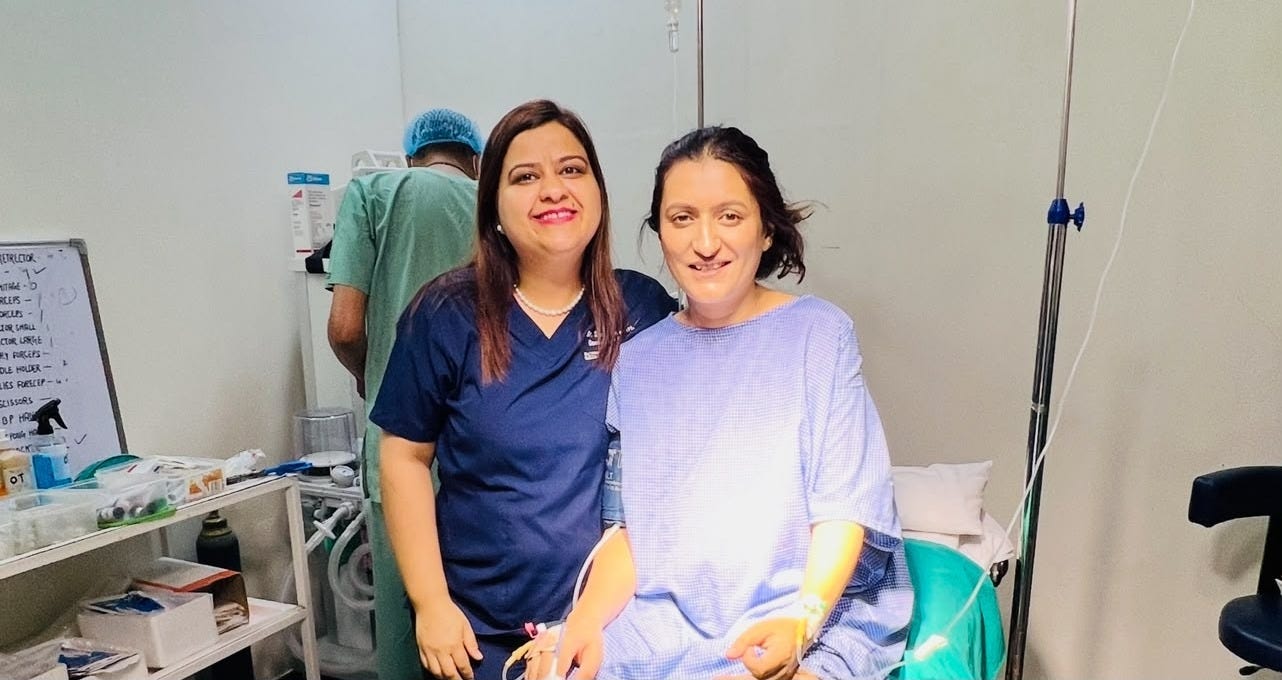
A girl who knew at six
Most of us spend years deciding what to become. Dr Shruti decided before she’d finished learning to write.
“From the very beginning, six, seven years old - I always wanted to be a doctor,” she says. Her father was an engineer with the PWD. But it was her mother, a schoolteacher, who lit the path. “Because of her, I took this career.” It’s a quiet line, easy to pass over, but listen again: the daughter of a teacher became a doctor who would spend her life teaching frightened young mothers how to believe in their own bodies. The apple didn’t fall far. It just changed clinics.
The childhood instinct hardened into something real in her eleventh and twelfth years, when biology stopped being a syllabus and became a kind of wonder - what is this, the actual study of life? Paired with a compassion she’d carried since she was small, the direction was set. Gynaecology itself came later, almost as a discovery, once her training was underway and she realised where her heart actually lived.
The college that built her
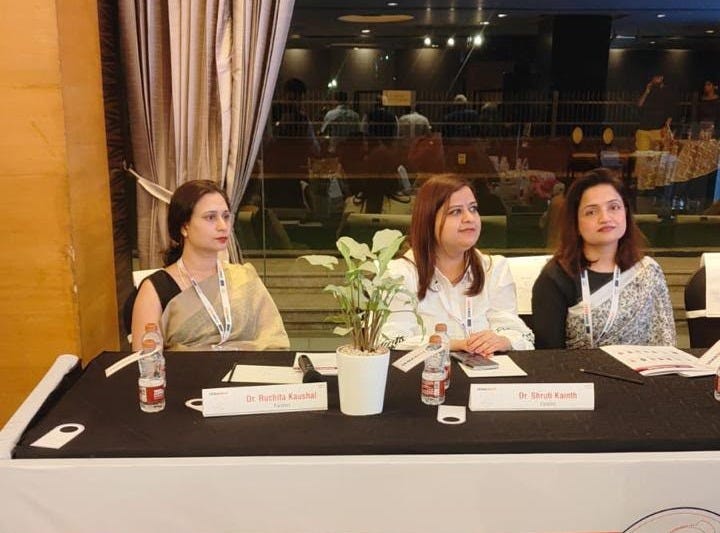
She grew up in the hills of Himachal - a world away from the heat and clamour of the capital. Then she arrived at Lady Hardinge Medical College in New Delhi: one of the country’s most renowned institutions, and its only all-girls medical college. And something in her cracked open.
“Had I not been to that college,” she says plainly, “I would not be the person I am now.”
She means it as more than nostalgia. Those years didn’t just hand her an MBBS in 2007; they rebuilt her from the inside. In a college full of women, surrounded by friends who held her up, she found her voice, her steadiness, the traits she still leads with today. She studied hard in the heart of Delhi and roamed its streets between exams, and she walked out a different person than the hill-town girl who’d walked in. From there came postgraduate training at Maulana Azad Medical College, then a senior residency at Government Medical College, Chandigarh. She has since added fellowships and advanced trainings in reproductive medicine and cosmetic gynaecology - earned both abroad and at premier institutes in India - the kind of credentials she keeps collecting not to hang on a wall, but to keep her answers current for the women in front of her.
Choosing the hardest cases on purpose
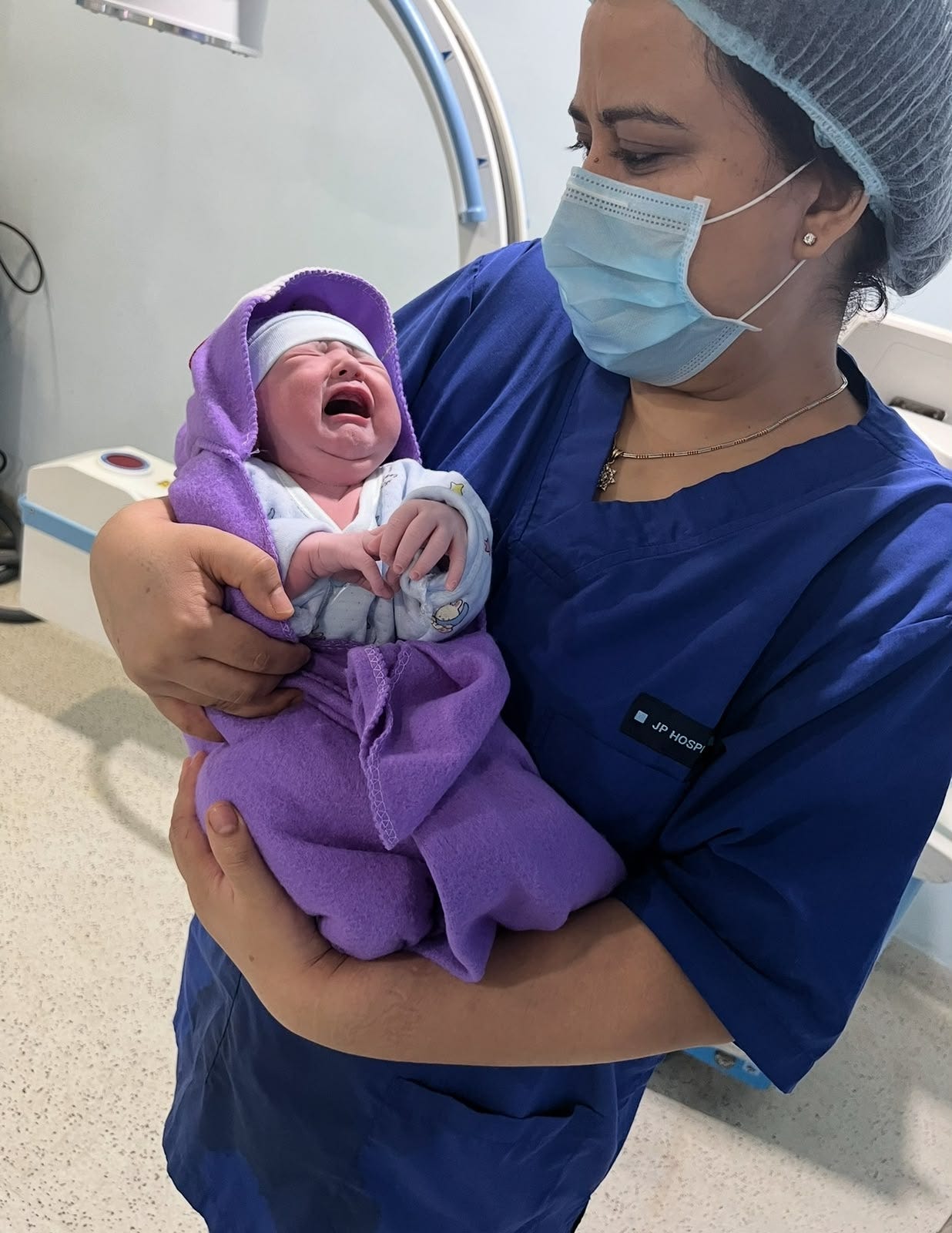
It happened during her internship at Lady Hardinge, in the relentless rhythm of a hospital where maternity cases never stop arriving. Many young doctors find that pace exhausting. Dr Shruti found it magnetic - and she gravitated, deliberately, toward the cases everyone else found frightening.
“I developed a keen interest in high-risk pregnancies,” she says. “It’s a very promising field - you can run your medical OPDs, counsel your patients, and operate.” Over the next fifteen years, she built a career across the tricity: nine years as a consultant at JP Hospital, Chandigarh; five years as a visiting consultant at Cloudnine Hospital, Chandigarh; and three years as owner and medical director of her own Grace Clinic in Panchkula. Since May 2026, she has been a consultant at Cocoon Hospital, Chandigarh - and through all of it, she keeps her edge in laparoscopic surgery, the full spectrum of menstrual and adolescent care, and cosmetic gynaecology, never wanting to be the reason a patient didn’t get the best available answer.
But none of that is the part she’s proudest of. The part she’s proudest of is the listening.
She calls herself a keen counsellor, and she says it the way other doctors might list a fellowship - as a real credential. Because she has learned that an antenatal visit is rarely only about blood pressure and weight. A woman walks in carrying things she can’t put a name to: a bone-deep fatigue, a nausea no one takes seriously, a backache, a loneliness. “Sometimes the family isn’t supportive,” Dr Shruti says. “She’s juggling so many small things she can’t tell anybody.” So she gives them what they came for - the lifestyle changes, the exercises, the reassurance - and then the thing they didn’t know to ask for: someone who will simply, fully, listen.
She has even trained in Garbh Sanskar, and she weaves it into her practice, teaching mothers how to start a relationship with the child still growing inside them.
“Connect with your child from the womb”
This is where Dr Shruti stops being only a clinician and becomes an advocate - and where her voice sharpens.
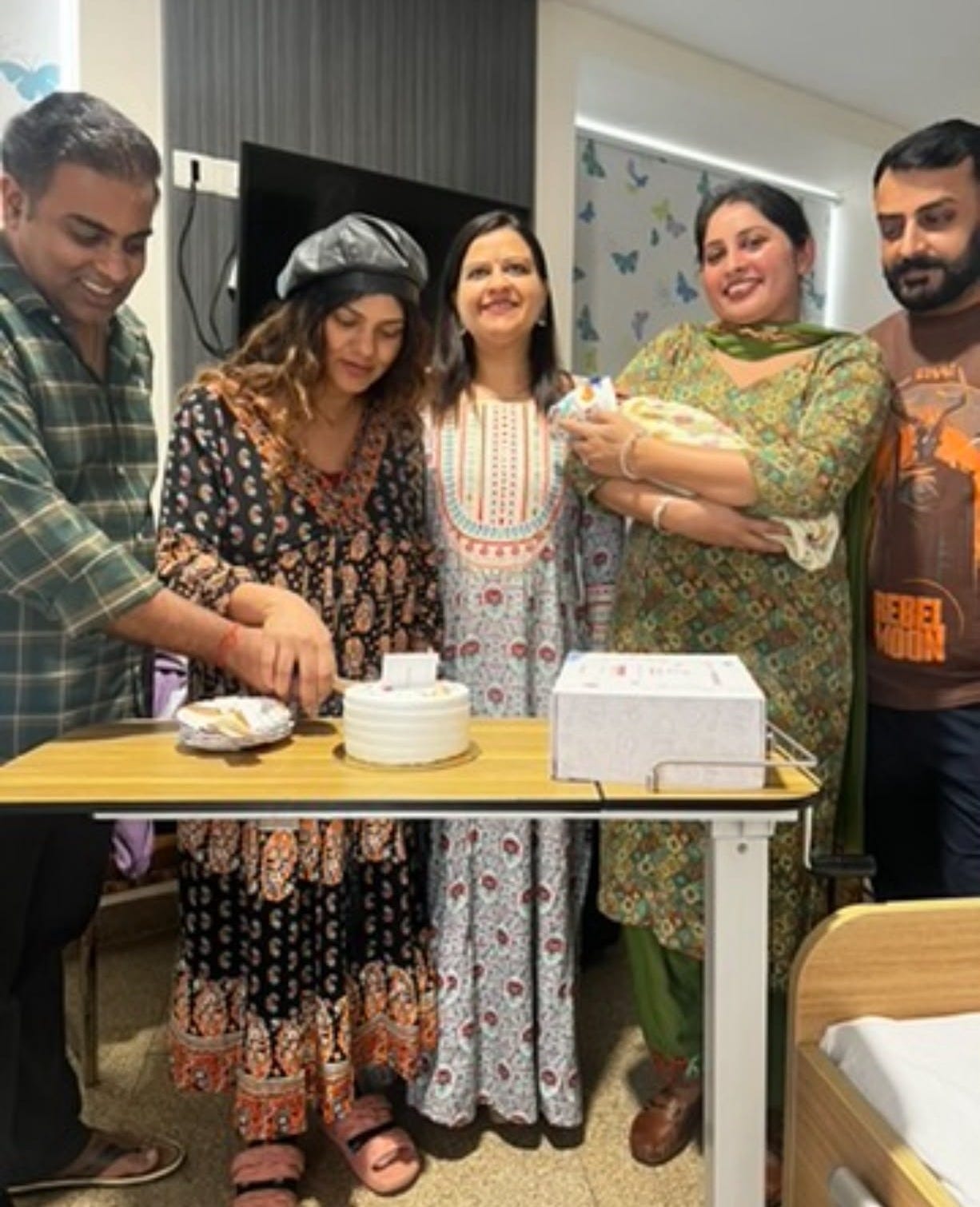
In her OPD, she pushes for a small revolution. She brings the fathers in.
“A woman gets pregnant, and the husband thinks it’s only her duty,” she says, with the patience of someone who has made this case a thousand times and will make it a thousand more. “But you have to connect with your child from the womb itself. Eighty per cent of brain development happens there. By around eighteen weeks, the baby can hear — the fetus is already listening, already interpreting what’s happening around it.”
Then she draws the line most people never draw out loud: if a baby in the womb can hear its parents argue, can sense the tension in a household, can absorb the emotional weather of the home it hasn’t yet entered - then the emotional life of the next generation is already being written, months before the first breath. “So what are you transmitting,” she asks, “to the generation that’s coming?”
It is, when you sit with it, a radical reframing of pregnancy. Not nine months of waiting. Nine months of building someone.
The two cases she still carries
Ask any obstetrician which cases stayed with them, and you’ll learn exactly who they are. Dr Shruti carries two.
The first is her proudest. A woman arrived in shock with a rudimentary horn pregnancy - a rare, dangerous condition where the pregnancy lodges in a vestigial pocket of the uterus, somewhere it was never meant to be. It was critical. The patient ended up in the ICU. But Dr Shruti and her team investigated, named it, and treated it, and the woman lived. “I felt very satisfied,” she says - the deep, private satisfaction of a doctor who got to spend everything she’d ever learned to pull a stranger back from the edge.
The second case she carries differently. It doesn’t sit in the chest like pride. It sits like a stone.
A young woman developed postpartum cardiomyopathy - her heart failing in the weeks after she gave birth. Medically, Dr Shruti’s team did everything that could be done, and did it well. But the patient was poor, and her family did not understand what was happening to her. She would come back for follow-ups and spill out an emotional turmoil that had nowhere else to go. And Dr Shruti - who could treat the failing heart - could not treat the loneliness around it.
“Medically, we did the best we could,” she says. “But she could have recovered so much better if her family had supported her.”
She has never quite let that go. And she shouldn’t - because that one patient is the seed of everything she now believes. The medicine worked. The world around medicine didn’t. And Dr Shruti decided that the world around medicine was worth fighting for, too.
What she would change with a single wish
So we asked her the question you ask someone to find out what they’re really made of: if you had a magic wand, and could change one thing in the whole world, what would it be?
She didn’t pause.
“The positioning of women in the family.”
She spends her days with women, and she has watched too many of them move through the most transforming months of a human life - body, hormones, identity, all of it shifting at once - with no one truly beside them. “A woman goes through so much,” she says. “And when the support doesn’t come, she gets devastated.”
Her appeal runs to husbands and mothers-in-law alike, and it stretches the whole length of the journey - from the first positive test to the long, under-discussed months after birth. Stand by her. Not only for her sake, but for the child’s. “If you can’t support your wife or your daughter-in-law through her pregnancy,” she says, circling back to the belief that anchors her, “you can’t raise a good next generation.”
She is honest about where she lives. In a society she calls, without flinching, patriarchal, she sees the change beginning - women working, families slowly shifting - but arriving unevenly, quick in some homes, painfully slow in others. She wants it to come faster and to reach the homes it usually skips. “If we want children who carry good emotion, good energy - we have to support our women first.”
She has lived it herself
Here is the thing that turns her belief from a sermon into testimony: she has been a high-risk patient too.
At thirty, Dr Shruti had her own high-risk pregnancy. Her husband is an andrologist, so he understood her - clinically and emotionally - and her family closed in around her. With that support, she came through without complications and, just as importantly, came through whole. She knew better than anyone that the postpartum months ask for just as much help as the pregnancy does, and she made sure she had it. Six months after her maternity leave, she was back at work, full tilt, her career intact.
“It was a good journey,” she says. “Despite the medical conditions, I came through well - because of all that support.”
It is the clearest possible proof of the thing she asks of every family she meets. She isn’t telling them to do something she escaped. She’s telling them to give every woman what she was lucky enough to have.
Her advice, plainly
For the woman reading this and wondering about her own road, Dr Shruti offers the counsel she gives across the desk - direct, unfussy, and rooted in the same care that runs through everything else she says.
Start before you’re even pregnant. Preconception counselling is undervalued in India, she says, but it matters: see a gynaecologist about three months before you plan to conceive, get your baseline blood tests, and begin folic acid. “Your general health has to be right first.”
Know what makes a pregnancy high-risk. It can live in your medical history - high blood pressure, high blood sugar, nutritional gaps, recurrent miscarriages, a previous C-section, placenta previa, a tendency toward preterm labour. It can live in your age, under eighteen, or over thirty-five. With more couples marrying and conceiving later, she sees more high-risk pregnancies than ever, and she’s matter-of-fact about why genetic screening matters: the odds of certain birth defects that might sit around 1 in 10,000 in your mid-twenties climb meaningfully by your mid-thirties.
And then - trust your doctor, and actually follow her. This is where her voice firms up. Patients come, but they don’t always listen. She’ll tell a placenta previa patient not to travel; some travel anyway and return only after the complication has developed. “You chose this doctor because you trust her,” she says. “So follow her advice.” Stay active within the limits she sets. Eat well, high protein, high fibre. Keep up the monitoring: blood pressure, weight, vaccinations, the level-two scans, and as many ultrasounds as the pregnancy genuinely needs. “There’s no fixed number in a high-risk pregnancy. Ultrasound is completely safe. If your doctor wants one every week because she’s watching the fluid or the growth, or the blood flow, get it done.”
Why does she believe in monitoring between visits?
This is where Dr Shruti’s two selves meet - the counsellor who asks how you slept, and the clinician who reads the scans.
She talks endlessly about reassurance: about a mother not having to sit alone with her worry for the two or three weeks between appointments. And that, exactly, is the gap that home monitoring closes.
It’s how the Janitri Club found her, in fact - they noticed her using a fetal monitoring device by Janitri in one of her own videos, and reached out. She uses such a device in her own practice. She believes in what it can do in a mother’s own hands at home: a simple way to listen to the baby’s heartbeat, a home NST she can run for a few minutes a day and share with her doctor, a daily BP reading logged without a hospital trip. Not to breed anxiety, the opposite. To let a mother live her busy life with the quiet confidence that all is well, and to make sure that if something shifts - a heart rate dipping where it shouldn’t - her doctor knows in time to act.
“That a patient can monitor the fetal heart herself, and share an NST report we can read = that’s wonderful,” she says. She’s recommended these tools to her patients and to her hospital’s management, not as gadgets, but as one more way to do the thing she has done her whole career: catch the problem early, and give a frightened mother some peace.
Because in the end, every thread of Dr Shruti’s work leads back to the same knot. The listening. The fathers in the room. The family that shows up. The single wish she’d spend her magic on. To her, a pregnancy was never just a medical event to be managed. It is a thousand-day journey of making a life - and no woman, she insists, should ever have to walk it alone.
About Dr Shruti
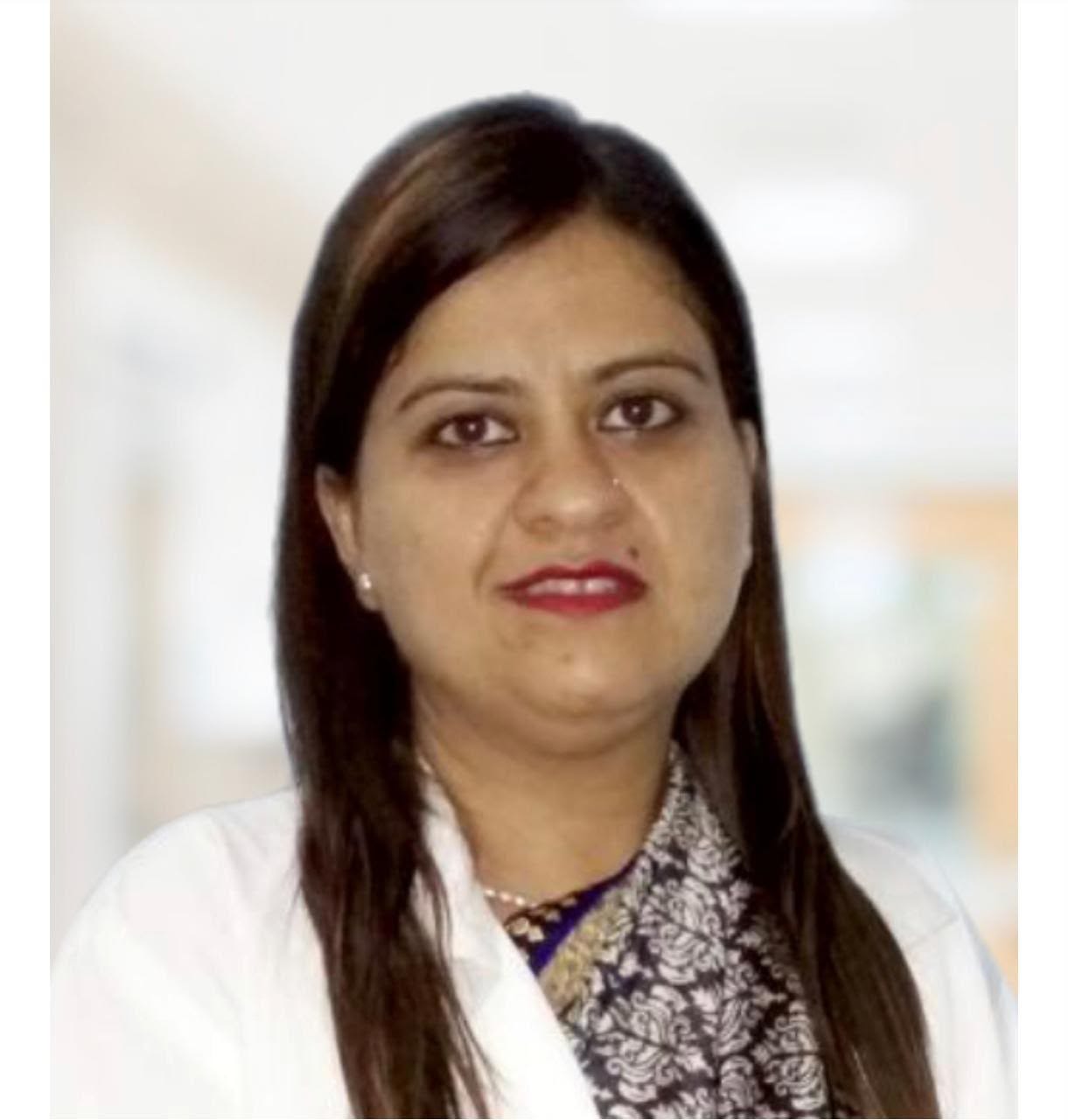
Dr Shruti is a senior consultant gynaecologist with over 15 years of experience in obstetrics and gynaecology, currently practising at Cocoon Hospital, Chandigarh. She completed her MBBS at Lady Hardinge Medical College, New Delhi (2007), her postgraduate training at Maulana Azad Medical College, New Delhi, and her senior residency at Government Medical College, Chandigarh. She has since earned fellowships and advanced training in reproductive medicine and cosmetic gynaecology, both abroad and at premier institutes in India.
Over her career, she has served nine years as a consultant at JP Hospital, Chandigarh; five years as a visiting consultant at Cloudnine Hospital, Chandigarh; and three years as owner and medical director of her own Grace Clinic, Panchkula, before joining Cocoon Hospital, Chandigarh, in May 2026. Her clinical expertise spans high-risk pregnancies, adolescent and menstrual care, laparoscopic surgery, and cosmetic gynaecology. Beyond the clinic, she is known as a devoted counsellor - a believer in Garbh Sanskar, in bringing fathers into the pregnancy journey, and in the simple conviction that no woman should have to walk her pregnancy alone.
This story is based on a conversation between Dr Shruti and the Janitri Club team. His words have been lightly edited for clarity while preserving his authentic voice.
About Janitri
Janitri is built on a simple yet powerful mission: to save lives by supporting women and newborns through the critical 1,000-day journey from pregnancy to early motherhood. Every solution we create is rooted in care, early detection, and the belief that no woman should lose her life while giving life.
With this same spirit, we introduce Janitri Club, a space where we celebrate not designations, but the people behind them. The caregivers, doctors, parents, and supporters who quietly hold this journey together.
Through real stories of emotions, challenges, and victories, Janitri Club brings these voices to life, honouring their experiences and building a community that uplifts everyone who stands beside a woman in her journey.