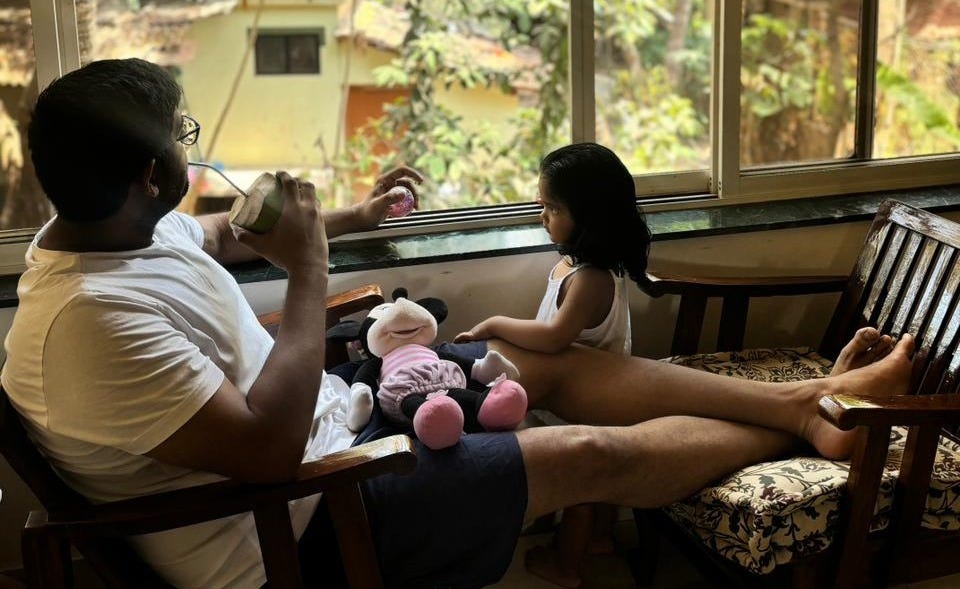
He will tell you, without blinking, that becoming a father made him less happy.
Not because he loves his daughter less. But because love came wrapped in something he hadn’t bargained for: a fear so immense, so all-consuming, that it rewired the way he sees the world.
Dr. Rohit Choudhary was the man who performed stand-up in Gurgaon, who DJed weddings in Armenia, who rapped and acted and ran toward laughter. Today, he is also the man who watches his daughter sleep and mentally runs through every risk she might face before dawn.
This is the story of how one doctor discovered that medicine doesn’t protect you from the deepest fears; it only teaches you to name them.
The Family Background He Couldn’t Escape
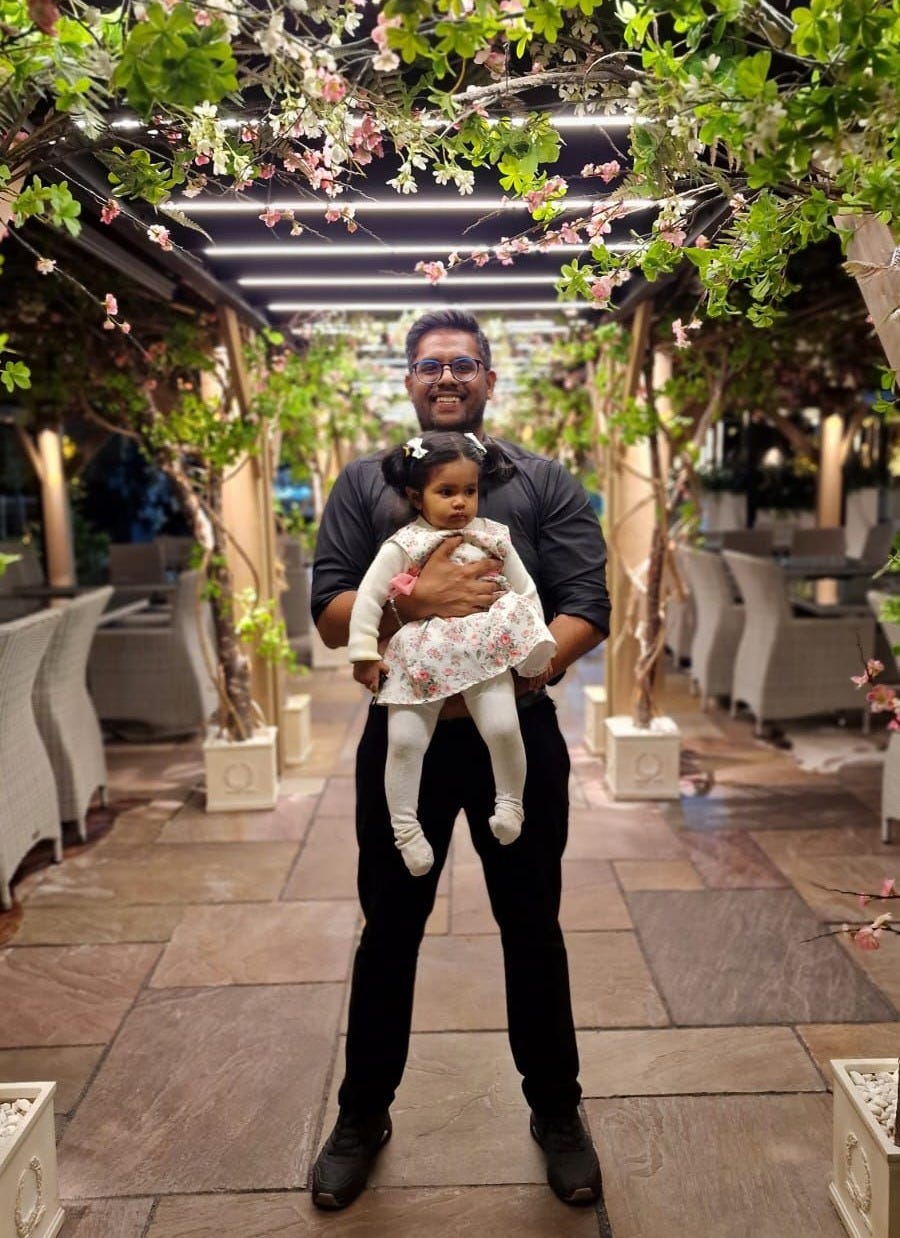
Dr. Rohit Choudhary grew up in Delhi, in a family of doctors. It was not a choice he made in a quiet moment of calling. It was an inheritance, a path laid out before he was old enough to question it.
But Dr. Rohit was never quite shaped for the straight road. His interests were loud and colourful: management, entertainment, the spotlight. He wanted to move people with music, with laughter, with presence. Medicine felt like someone else’s plan.
And yet, there he was in Armenia, completing his degree. And there he also was- teaching English to Armenian children, spinning records at local events, performing stand-up at microphones in Gurgaon, completing an acting course back in Delhi. He never stopped chasing both worlds at once.
“I come from a family of doctors. It influenced my decision. But my interests were always in entertainment and management.”
Today, Dr. Rohit balances clinical life with a growing social media presence- posting on YouTube and Instagram, mixing serious medical content with the creative voice he never silenced. He found, eventually, that the two worlds were not opposites. They were the same man, wearing different hats.

The News That Changed Everything
The pregnancy was unplanned.
When Dr. Rohit found out, he did not feel the joy that films and family members describe in those first moments. He felt responsibility. He felt fear. His mind, trained in emergency medicine, immediately began cataloguing what could go wrong.
He took his wife, a GST inspector he had met at a gym in Armenia, to a gynecologist without delay. He became anxious in the way only doctors become anxious: with precision, with specific worst-case scenarios, with a clinical vocabulary that can make ordinary risks feel like emergencies.
“The happiness came slowly. First came a sense of responsibility and fear.”
The pregnancy, it turned out, came with real medical weight. His wife developed gestational diabetes, a condition Dr. Rohit already knew well. He had seen gestational diabetes in India firsthand, understood how sedentary lifestyles, PCOS, and hypothyroidism conspired together, and how cultural norms discouraged pregnant women from staying active.
He knew too much. And knowing too much, as any medical professional will tell you, is its own kind of burden.
The Weight of Knowing
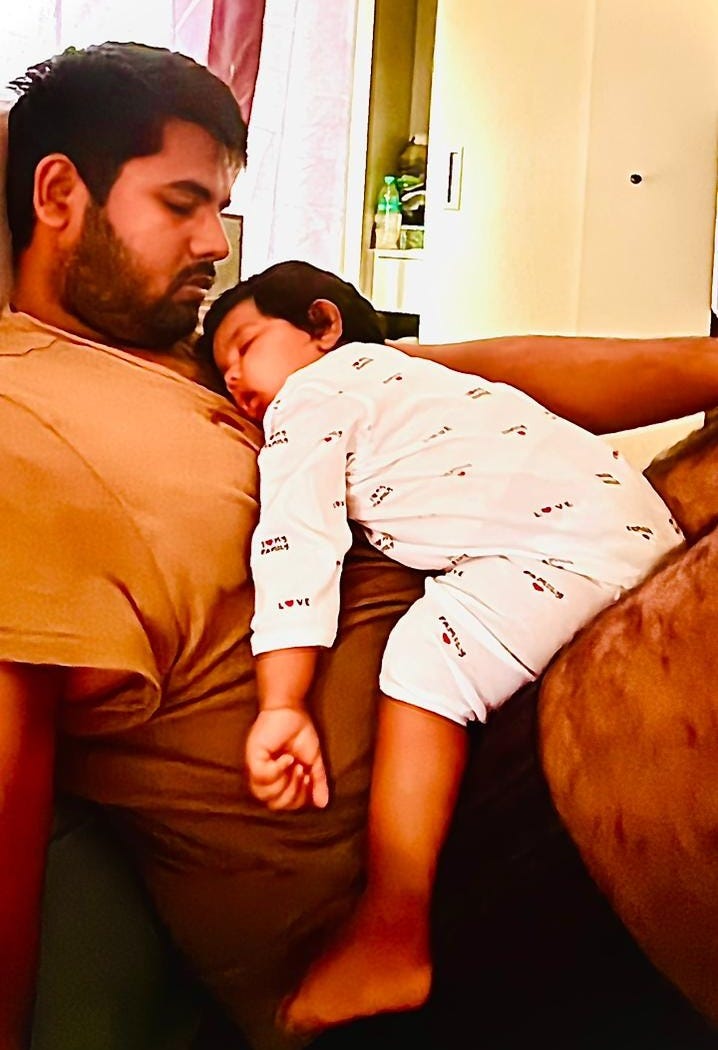
There is a particular kind of anxiety that belongs only to doctors who become patients, or in this case, the partner of a patient.
Dr. Rohit had spent time in emergency care. He had witnessed the ‘worst scenarios’ that most people only read about. He had seen how fast complications could escalate. And now those worst scenarios were no longer case studies. There were possibilities attached to someone he loved.
“My medical background raised more questions and more anxieties. I was worried about neural defects and congenital abnormalities. I started asking my radiologist brother for assurance.”
He became, by his own admission, a little excessive. He monitored his wife’s every movement. He worried about her slippers, her diet, and the household chores she shouldn’t attempt alone. He would sometimes approach his own colleagues, pretending to be a non-medical spouse, just so they would give him objective answers without the professional shorthand.
Because the shorthand, he knew, could hide things. And he didn’t want things hidden from him.
Yet through all of this, there was also something his medical knowledge gave him that panic could not take away: a baseline sense of calm. A voice underneath the anxiety that said, ‘You know what to do. You can handle this.’
“My medical background gave me an inner sense of relaxation that things were generally fine. I could self-calm, because I knew I could manage many things on my own.”
The Solid Partner
While Rohit ran through emergency protocols in his head, his wife was calm.
Not naively calm. Not in denial. But the kind of calm that comes from trust, trust in her body, in her faith, in the slow and steady rhythm of something unfolding as it should.
She listened to the Bhagavad Gita. She watched positive content. She processed the nine months not as a medical event but as a natural journey, and she moved through it with a steadiness that left her husband quietly stunned.
“I was more fragile than she. She was solid during the whole nine months. I realised she handled it in a very natural, calm, and peaceful way.”
Rohit believes his daughter carries something of that peace in her nature. Those nine months of calm, of the Gita’s verses, of positive energy, they settled into the child even before she arrived.
It is not a clinical claim. But it is one he makes with full conviction.
The Case That Never Left Him
Before fatherhood, there was a patient.
It was Dr. Rohit’s third day as a resident doctor. A young father came running into the emergency room, his eight-month-old daughter in his arms. The baby was unresponsive.
She had fallen into a full bucket of water while her mother was momentarily preoccupied. By the time anyone reached her, it was too late. The team performed CPR. They did everything they could.
The baby was pronounced dead.
Dr. Rohit never forgot her. Or her father’s face. That case was part of why he eventually shifted from emergency care to industrial health, not because he stopped caring, but because he cared too much to keep absorbing that kind of loss every shift.
“It was my third day as a resident doctor. A young father ran to the emergency with his eight-month-old daughter. Despite everything we did, she didn’t make it. That case changed me.”
It also, perhaps, explains why the anxiety of fatherhood hit him so hard. He already knew, viscerally rather than theoretically, how quickly a child can be taken. How one unguarded moment can become the worst moment of a parent’s life.
He was not being irrational. He was being honest.

The Technology He Wishes He’d Had
When asked whether a smart monitoring device would have helped during the pregnancy something like a continuous fetal heart rate monitor, or a temperature-tracking solution for the newborn, Dr. Rohit answered without hesitation.
“Such devices would be perfect for parents who tend to overthink. You could connect immediately with a pediatrician without travel. Continuous monitoring means timely consultation.”
Know More about Janitri Continuous Monitoring Solution!
He understands why India lags in adoption. He has seen it: the ‘old school’ thinking that treats new health gadgets as unnecessary, a waste of money, a sign that people have forgotten how to trust their instincts. He disagrees. He thinks these devices are not a threat to doctors; they are a support to medical sciences.
But he also adds a crucial caveat: parents must have baseline knowledge before they hold these tools. Otherwise, a minor temperature deviation at 2 AM becomes a panic call to the pediatrician at 3 AM, over something that could have waited until morning.
“Parents should have basic knowledge about fever and inflammation. Otherwise, they’ll disturb paediatricians unnecessarily. The device is only as useful as the understanding behind it.”
For new health technology to earn trust in India, he says, it cannot rest on influencer endorsements alone. It needs the credibility of the American Heart Association. It needs the endorsement of government hospital doctors in Delhi and Assam. It needs to be validated not just by opinion, but by institution.
The Moment That Made It All Real
Ask Dr. Rohit about the most important moment of fatherhood, and he will not say the delivery room.
He will say a birthday.
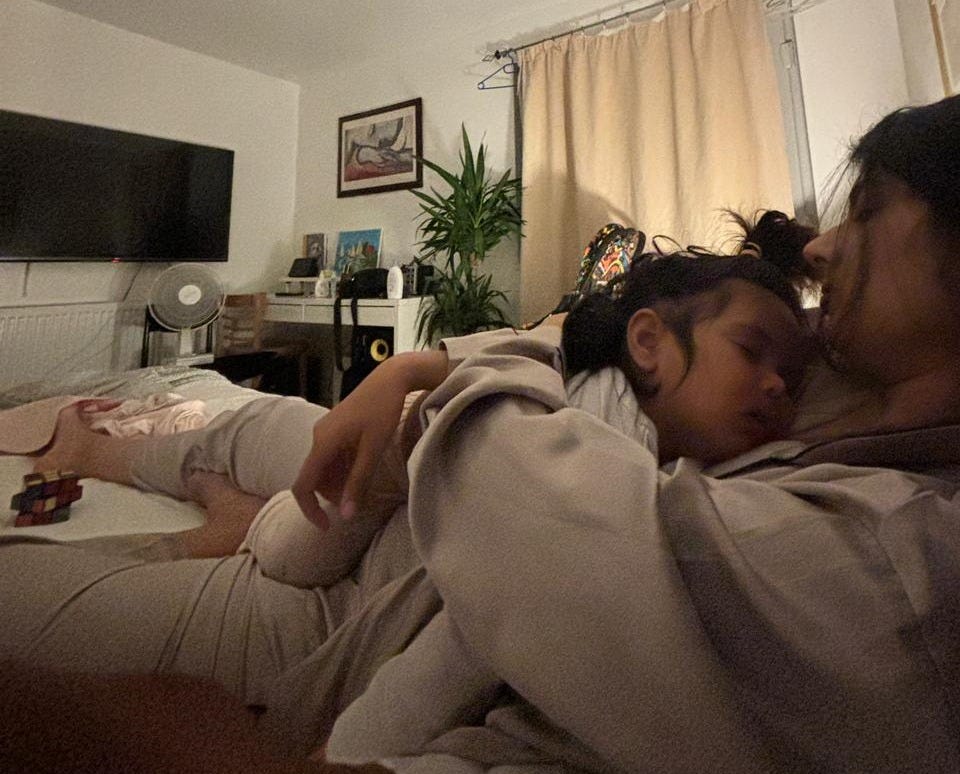
His birthday. The day his daughter looked at him, clearly and deliberately, and said: ‘Papa.’
Not babble. Not approximation. His name, in her voice, on the one day in the year that belonged to him.
“The most emotional moment was not when she was born. It was the first time she clearly called me ‘Papa’. And it happened to be on my birthday.”
He pauses when he says this. Even in recounting it, the weight of it is visible.
This is the paradox of Dr. Rohit Choudhary: a man who processes the world in clinical terms, who understands risk and complication with a precision most people never have to develop, and who was completely undone by a single syllable from a tiny human.
The Conversation Nobody Has
There is one thing Dr. Rohit raises without being asked, and he raises it with the quiet firmness of someone who has felt its absence personally.
Paternity leave.
He received ten days. He wanted more. Not for himself but because a wife, in those first weeks after birth, needs her husband more than she needs her mother-in-law, more than she needs well-meaning relatives rotating through. She needs her partner. Present. Awake. Sharing the weight.
“Ten days were not enough. A wife needs her husband post-delivery more than anyone else. Paternity leave should be at least a month. The idea that a husband cannot be involved in the post-pregnancy phase is a patriarchal notion.”
He says it without rhetoric, without anger. Just an observation from someone who was there, who tried to do more than ten days would allow.
It is, perhaps, the least discussed side of pregnancy: what fathers carry, what they fear, what they are given no formal permission to feel.
Dr. Rohit Choudhary would be the first to admit he’s still figuring out fatherhood. He will be the first to tell you he is anxious, and probably too cautious, and maybe more scared than he should be.
But he is present. He is paying attention. He is asking the questions that most new fathers don’t know they’re allowed to ask.
And sometimes, on a birthday, a tiny voice says ‘Papa’ and all the fear, for one perfect moment, goes quiet.

About Dr. Rohit Choudhary
Dr. Rohit Choudhary is a physician specializing in industrial health, based in Delhi. He completed his medical education in Armenia, where he also taught English and began his journey as a performer and creator. Alongside his clinical practice, he is an active medical content creator on YouTube and Instagram, posting a blend of serious health education and creative content that reflects the two worlds he has always lived between. He is a husband, and the proud, occasionally terrified, deeply devoted father of one daughter.
This story is based on a conversation between Dr. Rohit Choudhary and the Janitri Club team. His words have been lightly edited for clarity while preserving his authentic voice.
About Janitri
Janitri is built on a simple yet powerful mission: to save lives by supporting women and newborns through the critical 1,000-day journey from pregnancy to early motherhood. Every solution we create is rooted in care, early detection, and the belief that no woman should lose her life while giving life.
With this same spirit, we introduce Janitri Club, a space where we celebrate not designations, but the people behind them. The caregivers, doctors, parents, and supporters who quietly hold this journey together.
Through real stories of emotions, challenges, and victories, Janitri Club brings these voices to life, honouring their experiences and building a community that uplifts everyone who stands beside a woman in her journey.