


The calls come at 2 AM, at 4 AM, sometimes just before dawn. Dr. M Keerthi Reddy never hesitates. She runs to the hospital through the sleeping streets of Tellapur, driven by a confidence forged decades ago in a life that had nothing to do with medicine.
“My father used to give me that immense confidence,” she says. “Even my night duties, I never got scared to travel alone. I used to run to the hospital even in the midnights. He just used to give me so much of confidence. Okay, you can do anything and everything. Everything is possible.”
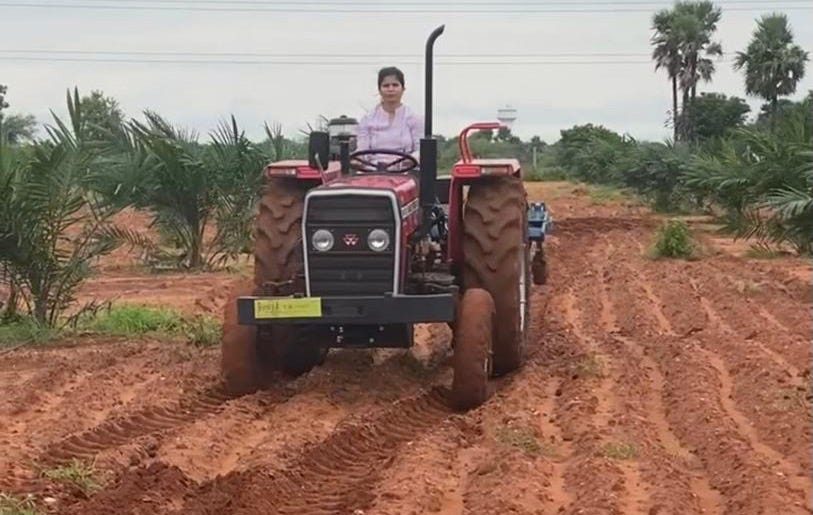
But to understand why a surgeon runs fearlessly through darkness, you have to go back. Back to a village where a farmer’s hands froze from working fields before dawn. Back to a hostel room where a five-year-old cried herself to sleep, hundreds of kilometres from home.
The Girl Who Left Home Too Early
There are some childhoods that teach you survival before they teach you joy.
When Dr. Keerthi was just a child, her father made a decision that would shape everything: send his children to a hostel, hundreds of kilometers away, so they could access education their village couldn’t provide.
“We used to cry like hell,” she remembers. Not just ordinary homesickness, but the kind of loneliness that comes when you’re sick and small and no one is there to hold you.
“We were sick, upon that they were not there, which caused even more sadness,” she says quietly, the memory still raw after all these years.
But her father had planted something during those years; a conviction that would outlast the tears.
“The education we have is not given by anyone and cannot be taken by anyone and defines you and also gives you immense discipline.”
These weren’t empty words. They were born from a life of backbreaking hard work.
“We have seen him struggle barefoot, the hands and foot frozen, gotten hard with corns and everything, because of his work in the field.”
He worked the land with those frozen hands so that one day, his daughter could work with steady ones in an operating room probably.
After four years, he knew they couldn’t continue living apart. “In a span of four years, when I was in fifth class or something, we moved to Hyderabad for our education after his immense struggle.”
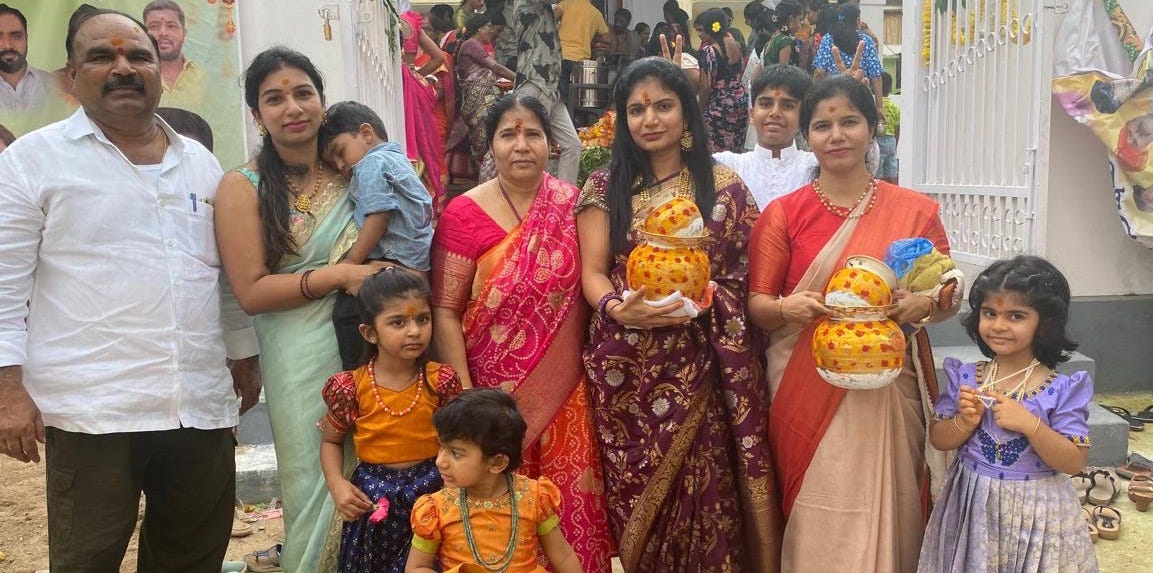
He didn’t force this path. He created the possibility for it.
“We were not directed towards education, we did not have that facility, but we were very interested, but now you have all the opportunity and I will give you all the opportunity to get educated, he said.”
“He strived very hard and he pushed us towards this.” she added.
The Dream She Didn’t Choose
In seventh grade, Dr. Keerthi’s school visited a textile manufacturing unit. She saw people working together, laughing, building something massive.
“I decided to become an entrepreneur that day, start a manufacturing unit of my own and get into textile industry. That was my thought at that time.”
But her father had a different vision. Medicine, he said. A noble profession. One he had dreamed of but could never reach.
So she went. Not out of passion, but out of respect for the man whose struggle had made this choice possible.
“While pursuing medicine, actually I did not have an idol or inspiration. I just took medicine. So I finished it.”
The knowledge entered her mind, but it hadn’t yet touched her heart.
The Night Everything Changed
The transformation happened during her internship at Gandhi Hospital in Hyderabad.
Suddenly, textbooks became flesh and blood. Abstract diagnoses became real deliveries. Medical theory became the sound of a newborn’s first cry, the relief flooding a mother’s face.
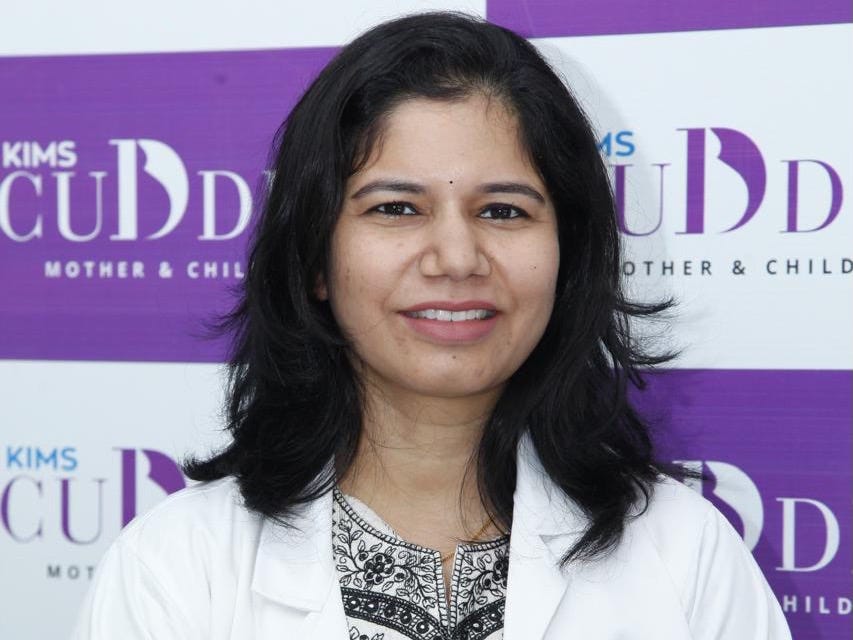
“Everything was giving goosebumps. Everything was making me so happy, delivery of a baby, intubating a patient, it’s give life to someone and I loved it.”
But there she also learnt heartbreak. She remembers the father who abandoned the child because the mother had a heart disease and died during delivery. The cruelty that can exist even in the most vulnerable moments.
“That incident was very heart-breaking.”
This is when Dr. Keerthi began to understand something crucial about her chosen field.
“Obstetrics, it is very unpredictable, which case turns up bad or when, we can never guess. Any normal case can get complicated at any point of time.”
She learned this lesson viscerally one night when she was the only gynaecologist on duty. It should have been routine, premature rupture of membranes, cervix dilating well. Just after midnight, she delivered the baby.
Then the bleeding started.
Cervical tear. Posterior vaginal wall tear. The patient’s pulse climbing, tachycardia accelerating in a way that made Dr. Keerthi’s own heart race.
“The blood loss was not much but she started showing tachycardia and that too very huge, so I figured that the blood loss was immense.”
O-negative blood. Rare. Hours spent tracking down blood units across Hyderabad. Four PRBC transfusions. Colleagues called from sleep. Sutures placed with hands that refused to shake even as her mind raced through worst-case scenarios.
The patient stabilized. Dr. Keerthi finally exhaled.
“That day, yeah, it was a nightmare. A normal case turned out complicated... that was a lesson.”
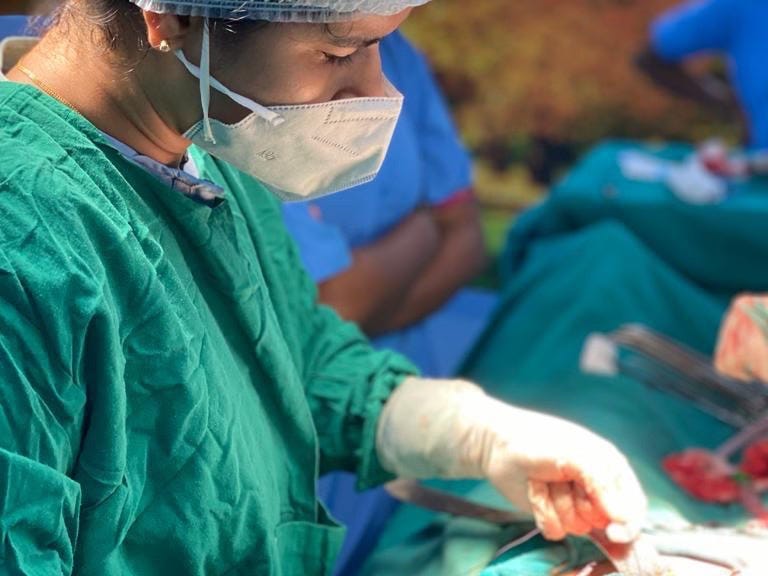
What she really learned that night wasn’t just about obstetric complications, it was also about herself. About what she could handle when everything could go wrong and she was alone between chaos and catastrophe.
Her parents had been preparing her for this moment her entire life.
How You Build Fearlessness
What makes a woman comfortable running alone to a hospital at 3 AM? The answer lies in how Dr. Keerthi was raised; not coddled, but strategically challenged.
“My dad, he never came, you know, for everything he was there for us, never there beside us. On a call, he used to encourage us saying, okay, you go, you do it yourself. You will learn. Any mistakes, I am there to guide, but do it by yourself first. Only then you will learn.”
This wasn’t neglect. It was deliberate scaffolding. support available on call, but never preemptively provided.
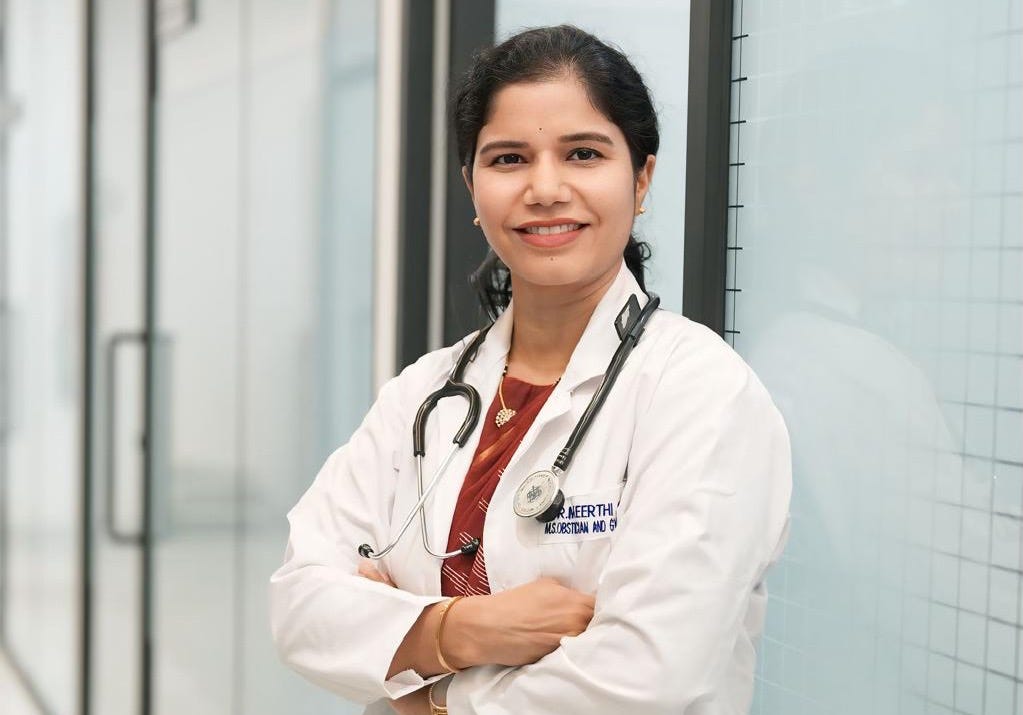
Her mother refused to let gender become a limitation. “My mother also used to push me: learn driving. I mean any outside works, she never gave me limitations,” she remembers. Her parents insisted: “Don’t get submissive thinking that you are a female, you can’t do this, you can’t do that, all those don’t exist.”
The result?
“Today I can do everything and anything by myself. I can drive, I can go anywhere, I can travel, I can do anything. I have the confidence just because of my parents.”
This childhood training shows up everywhere now, in her personal life, her being a working woman and a mother of two kids, her children looking up to her, in the advice she gives to every family she meets.
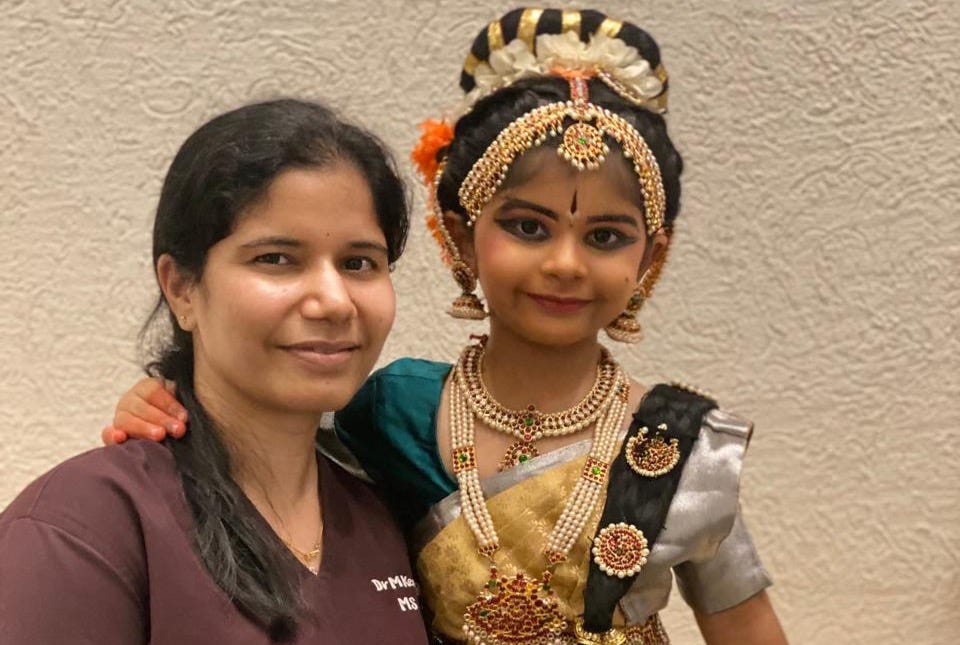
The Cases That Shaped Her
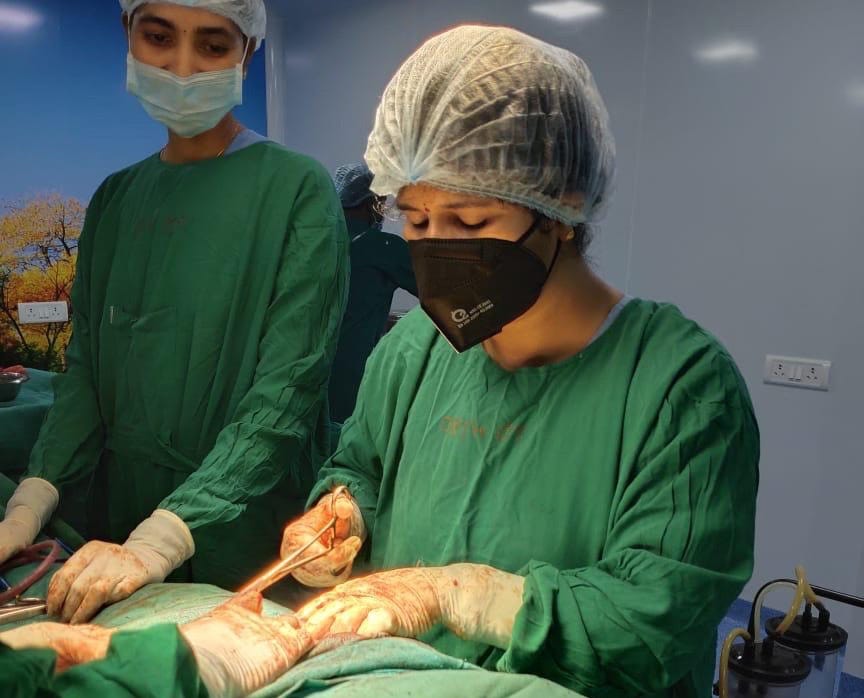
During her laparoscopic and robotic fellowship at Apollo Hospitals, Hyderabad, under the guidance of her mentor Dr. Anuradha Panda from Apollo, Dr. Keerthi entered a different world of medicine. Frozen pelvis surgeries. Uteruses so enlarged they filled cage after cage of specimens, five, six, seven cages. Cases that existed in textbooks but rarely in real life.
The one that stopped her cold was Pleural Endometriosis, endometrial tissue that had somehow migrated all the way to the lungs.
“That day I understood that even pleural endometriosis, which we have actually read in books, also existed in real life. Book written is not just book written, it’s not just in the book. There are actual patients.”
She watched Dr. Vimee Bindra work with a precision that comes only from years of experience, learning not just technique but surgical intuition that can’t be taught, only witnessed and absorbed.
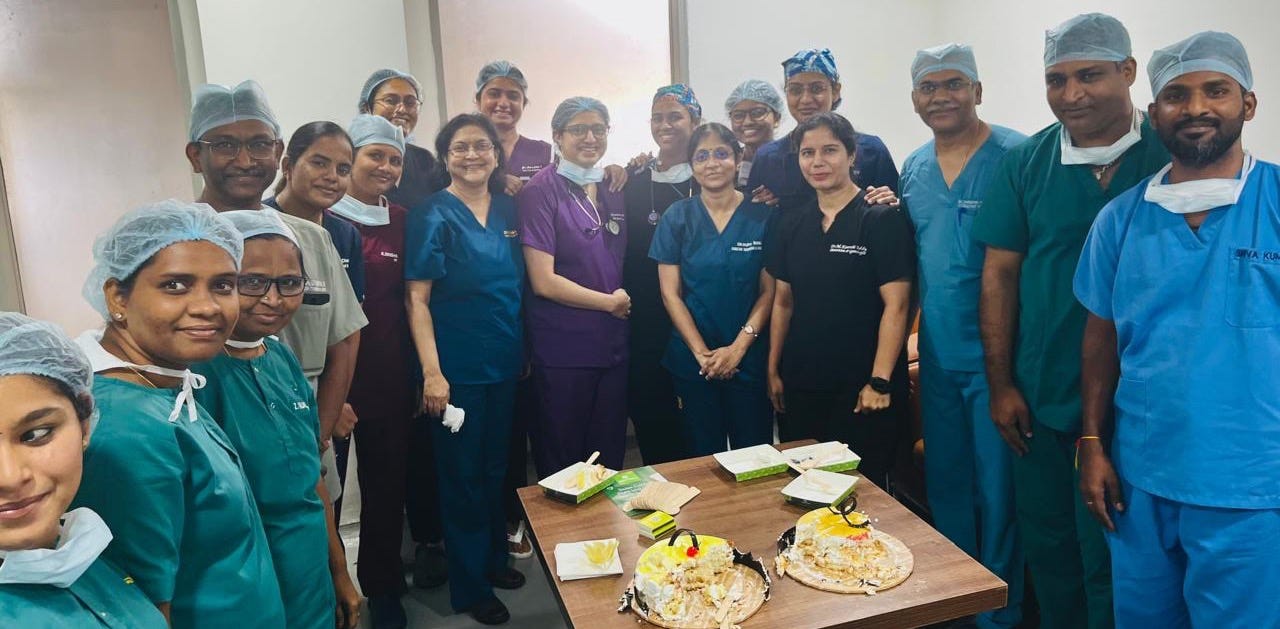
But perhaps her most memorable case wasn’t the rarest. It was the one where she simply sat and listened.
A woman came in desperate, insisting Dr. Keerthi hear her story. For an hour. Then an hour and a half. Hair falling out in patches. Years of PCOD treatment that wasn’t working. Being told repeatedly it was just PCOD, nothing more.
Dr. Keerthi listened to every word. Every detail. Every frustration.
Then she ordered autoimmune disease panels. The results came back positive: systemic lupus erythematosus. Finally, a diagnosis that fit. Finally, treatment that worked.
“She came very happily, took the treatment, she recovered. Her hair fall reduced. She actually had alopecia. Segmental alopecia. So, she was very relieved and joyful. Her happiness also made me very happy.”
Sometimes the most heroic thing a doctor can do is listen long enough to hear what everyone else has missed.
What She Sees Now
Four years into practice, Dr. Keerthi has witnessed something: women today have access to more information than any generation in history, yet they’re often more confused and anxious than their grandmothers ever were.
Her philosophy, forged from her own journey, cuts through the noise:
“Don’t try and become a perfect mother. There is nothing called perfect mother because perfection, its definition is different for everyone. What is perfect for you does not seem perfect to the other person. So it’s important that you be a happy mother.”
This isn’t about lowering standards. It’s about raising them, shifting focus from Instagram-perfect aesthetics to actual wellbeing, from following everyone’s advice to trusting informed choices.
The irony of this wisdom hit home when she and her husband, both doctors, missed their own newborn’s jaundice.
“We both, being doctors, missed our child’s bilirubin levels. We had a yellow light. We couldn’t see the tinge of the baby’s skin. For a regular checkup on the fifth day when we went to the doctor, the doctor told us that the baby is having jaundice. We didn’t understand, everything appeared to be normal.”
This vulnerability shapes everything about how she treats her patients. She doesn’t demand perfection because she knows firsthand that perfection is impossible.
What she sees in her practice are two extremes, both harmful in their own ways.
“Nowadays I see many patients, once they get pregnant, all from the mother’s family, all from the paternal and maternal, both of them come in and show immense love and keep on feeding her one by one. They say this is what we did during our time and make the mother do them, which is not required. You did it in your time, that is different. Now, the environment has changed, everything has changed, so they need a doctor’s advice to be followed, not your advices.”
On the other side: nuclear families where pregnant women face everything alone, with no emotional support system at all.
“Either this is this side or that side. It is important that it is mid. Their presence is important, but that should be towards the positive side.”
Her prescription is simple but profound:
“Activity is important, rest is also important. Anything in moderate gives a good result, anything in excess ruins.”
The Google Problem
Then there’s the internet.
“Please don’t google your symptoms and come to the doctor.”
She’s watched this play out countless times, women arriving at her office with self-diagnoses that range from mildly inaccurate to wildly catastrophic, their anxiety amplified by every contradictory forum post and medical website they’ve consumed.
But perhaps most concerning is what she’s seeing with postpartum depression; a real and serious condition that has somehow become both over-diagnosed and trivialized.
A woman approached her the day after giving birth, demanding that Dr. Keerthi tell her husband and in-laws she had postpartum depression so they would stop “troubling” her.
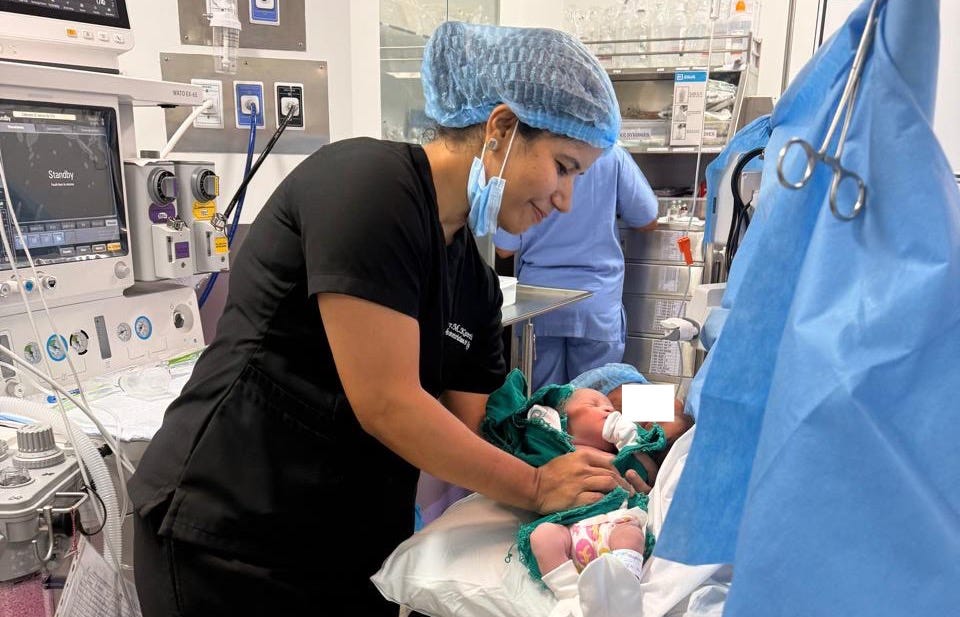
“I asked her which way are they troubling you? No, they are asking me to sleep. They are asking me to take rest. They are asking me to do things. I am like what things are you doing? Normal things. Why should you not do normal things? You can do normal things. You have undergone normal delivery.”
“Postpartum depression is important. It is very important that immense care and affection are required at that point of time. But then you should have a clarity what is postpartum depression. Every mother in postpartum is not obligated to have depression.”
The Equality Revolution
If there’s one message Dr. Keerthi wants every couple to hear, it’s this:
“There is nothing called mama’s job, there is nothing called dada’s job. So every job is equally important and everything can be done by everyone.”
This isn’t politically correct rhetoric. It’s practical wisdom backed by what she sees in her patients’ outcomes.
“Fathers play a very positive and strengthening role in pregnancy frankly. So their support, them accompanying their wife for the scans, staying attentive throughout the delivery, be it post care, whatever it is, a father’s support plays a very immense positive role.”
The impact is measurable: “If the father is beside, any complication, the mother faces it with immense strength. She will be under that confidence that okay, whatever it is, nothing will happen because of the care and affection of the father. She will have that confidence and that positive result will give whatever complication, it will be simplified.”
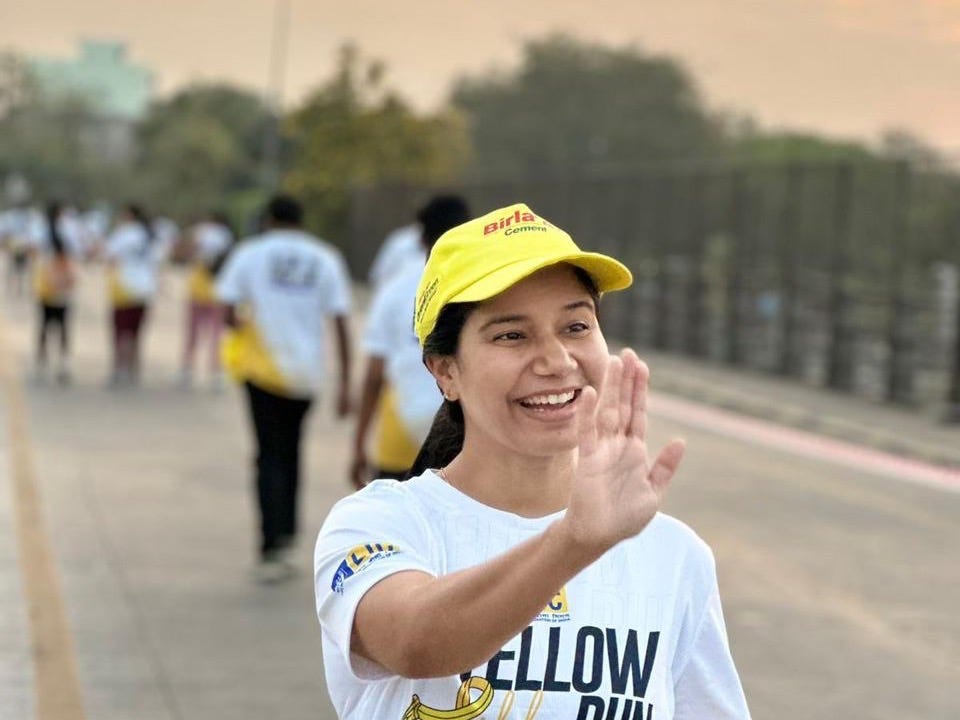
But it extends beyond pregnancy and delivery. Children watch. They learn. They absorb.
“Mother is always there for them, surrounding them, around them every time. Whatever the mother depicts doesn’t seem very accurate to them, so whatever a father says or whatever a father shows appears to be very accurate to them.”
Her advice: “Be together in everything. Together upbringing is one important thing. The parents beliefs, their habits, everything will be inculcated by the child, not only of the mothers’, the fathers’ too.”
The Threads She’s Weaving
Dr. Keerthi has come full circle from that seventh-grade field trip to the textile mill. She’s still building, though not with looms and thread. Her tools are surgical instruments and her parents’ wisdom, her materials the lives she saves, mothers given strength, babies brought safely into the world. Each one becomes part of a fabric more enduring than any cloth.
Every patient she sees at midnight, every high-risk pregnancy she manages, every anxious mother she counsels, all of it traces back to a farmer and his wife who believed education was the one thing that couldn’t be taken away.
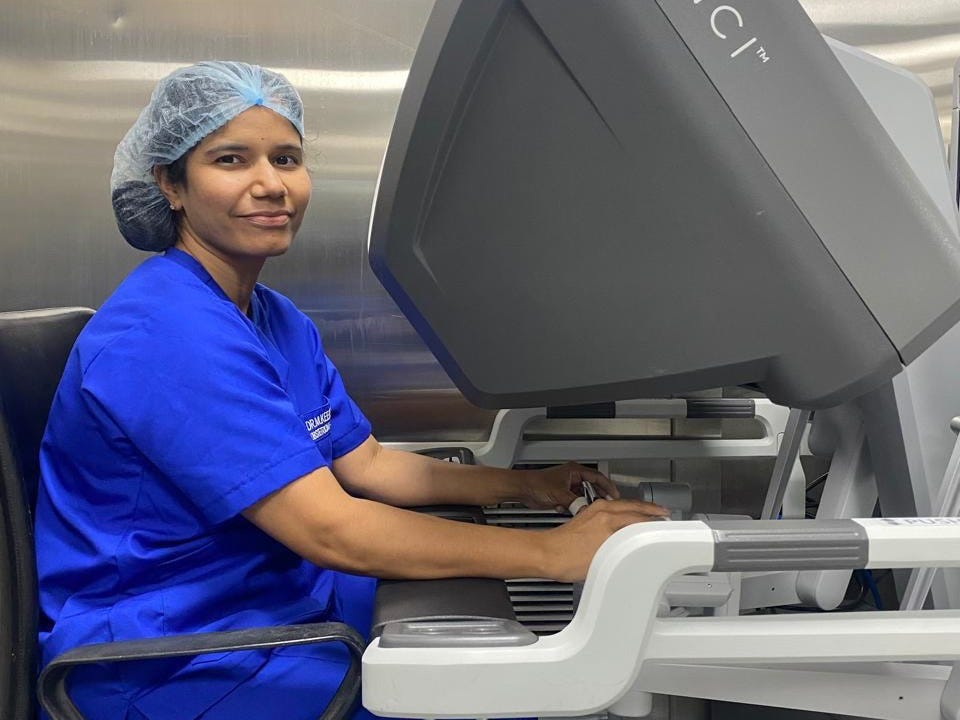
When Dr. Keerthi tells pregnant women to be happy mothers rather than perfect mothers, she’s not lowering standards. She’s raising them. She’s asking women to embrace the same philosophy her parents taught her: you are capable of more than you imagine, but you have to do it yourself to discover this truth.
And when she runs to the hospital alone at 3 AM, completely comfortable in her capability, she embodies the ultimate outcome of her parents’ investment, not just the medical degree, but the unshakeable confidence that made everything possible.
“Every day, every patient gives us that happiness and a proud moment. When a patient tells that the problem is solved, that their body is getting better or when they confess happy that we came to you.”
For Dr. Keerthi Reddy, this is the compound return on her parents’ decision decades ago to move their family to Hyderabad, to invest everything in education, to push their daughter toward confidence rather than protection.
Every solved problem, every healthy delivery, every anxious mother who leaves her office with clarity instead of confusion, these are the dividends of that original investment.
The education her parents gave her truly cannot be taken away. But more than that, it multiplies with every patient she treats, every mother she guides, every family she helps navigate the beautiful chaos of bringing new life into the world.
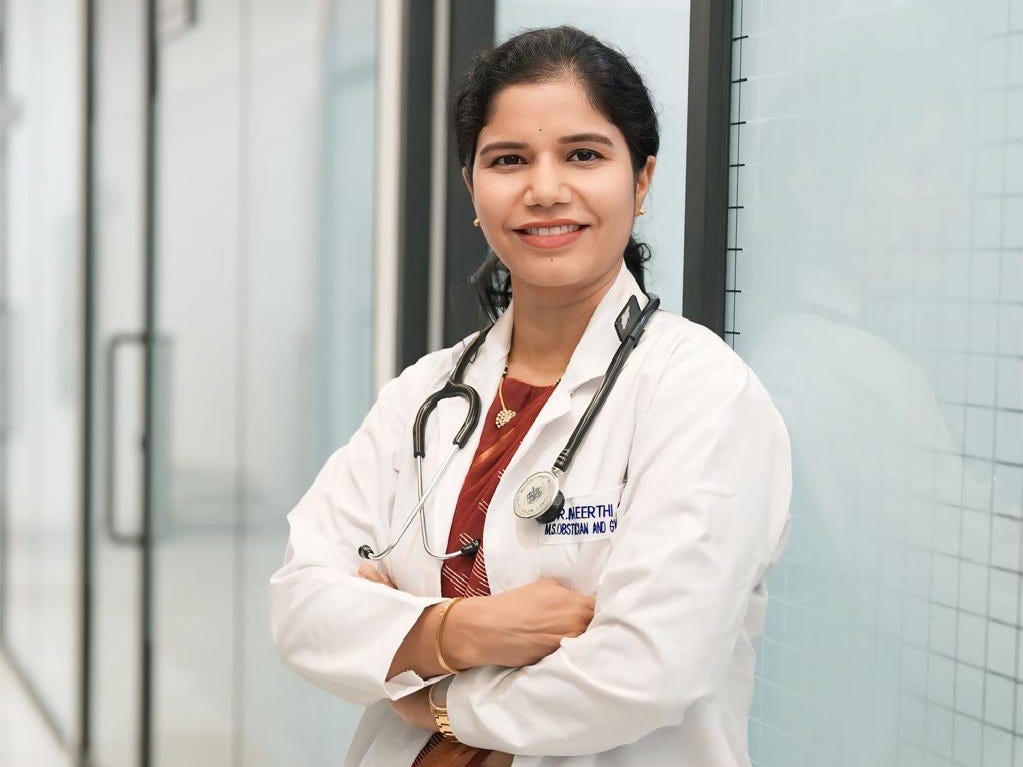
Dr. M Keerthi Reddy is an Obstetrician-Gynecologist specializing in high-risk pregnancies, laparoscopic and robotic surgery, practicing in Tellapur, Hyderabad. Trained under Dr. Anuradha Panda at Apollo Hospitals, she combines surgical excellence with the deeply human belief that being a happy mother matters more than being a perfect one and stresses on the important role of the husband throughout pregnancy and marriage overall.