


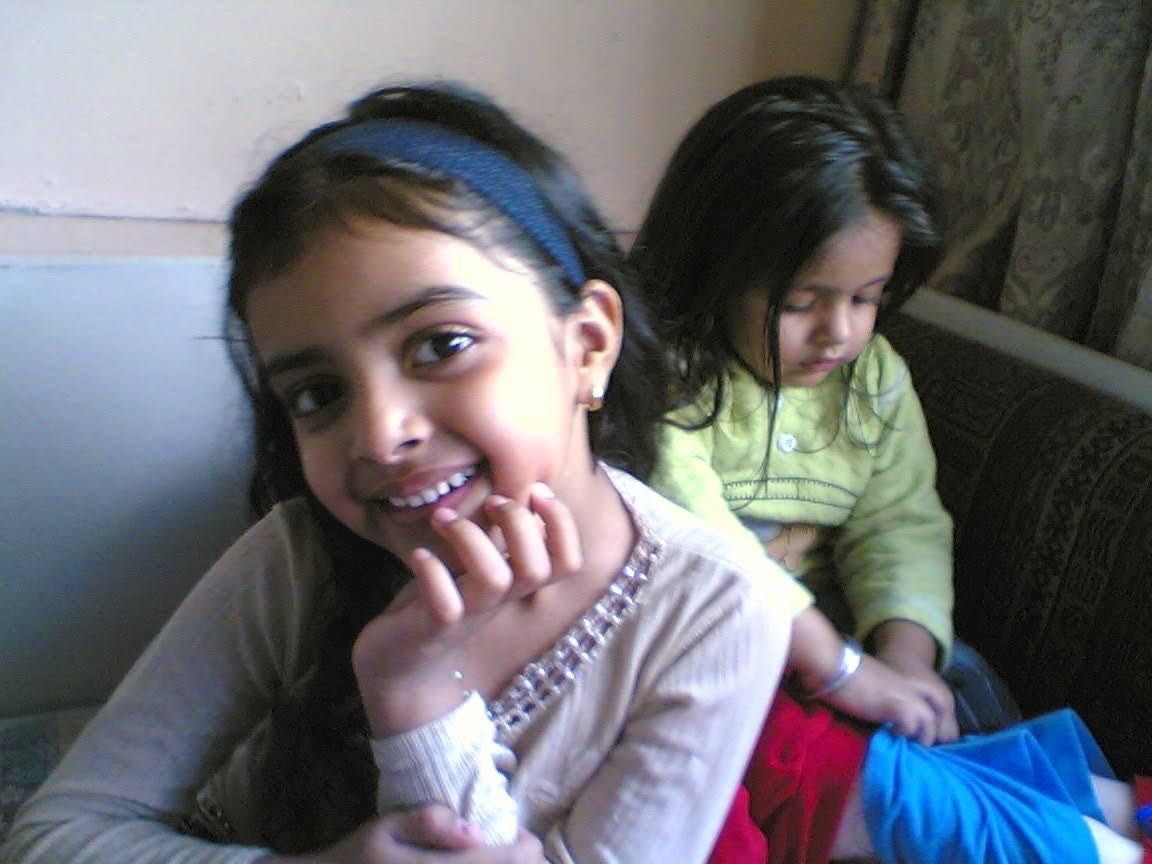
She was nineteen years old, and she was not supposed to speak.
That is the rule for the most junior student on a hospital posting. You stand at the back. You nod. You watch your seniors work, and you say nothing.
The patient that day, at Sassoon General Hospital in Pune, was a little girl - barely two or three, recovering from a spinal surgery to correct her posture. Picture it from where she lay: adults three times her size leaning over her freshly operated body, asking her to move in ways that hurt. She did the only thing a terrified child can do. She cried, and she would not stop. One senior tried, then another. Nobody could reach her.
And then the youngest person in the room - the one with no permission to speak- quietly said: let’s not treat her at all for the first two visits. Let’s just play.
So Rashmeet played. Within two sessions, the child stopped crying the moment Rashmeet held her. The seniors stepped back and handed over the case. Not long after, that little girl began to walk.
That was the moment Dr. Rashmeet Kaur understood, with a certainty most people spend a lifetime searching for, exactly what she was here to do.
“The seniors had warned me - kids can’t handle you, they cry, your head starts aching. And I said, yes, it happens. But I never take the crying personally. Because half the time, we lose children in a power struggle. We think they’re crying to irritate us. The truth is - they’re crying because they are in trouble.”
She has built an entire life on that one sentence.
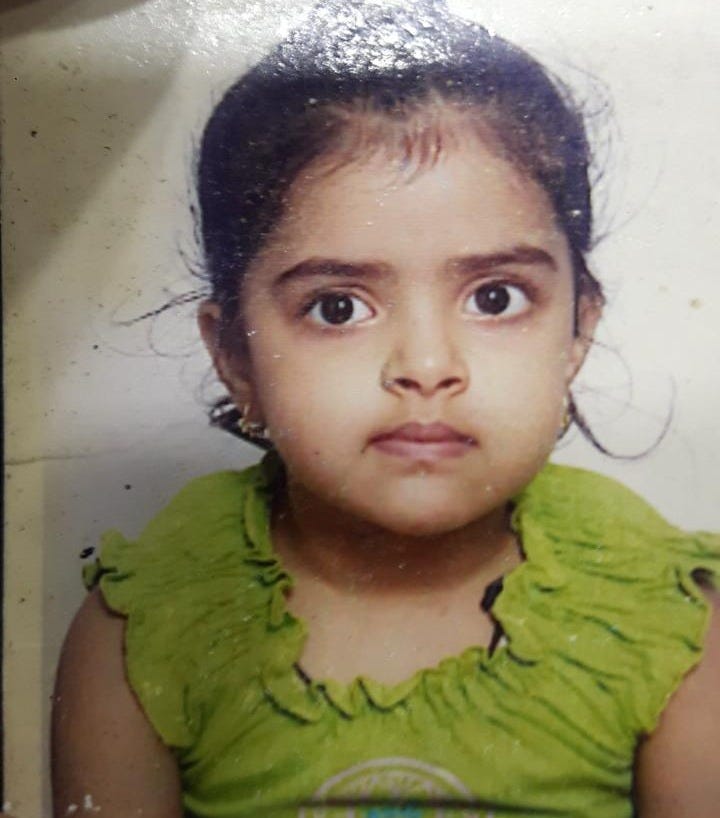
The girl who learned empathy the hard way
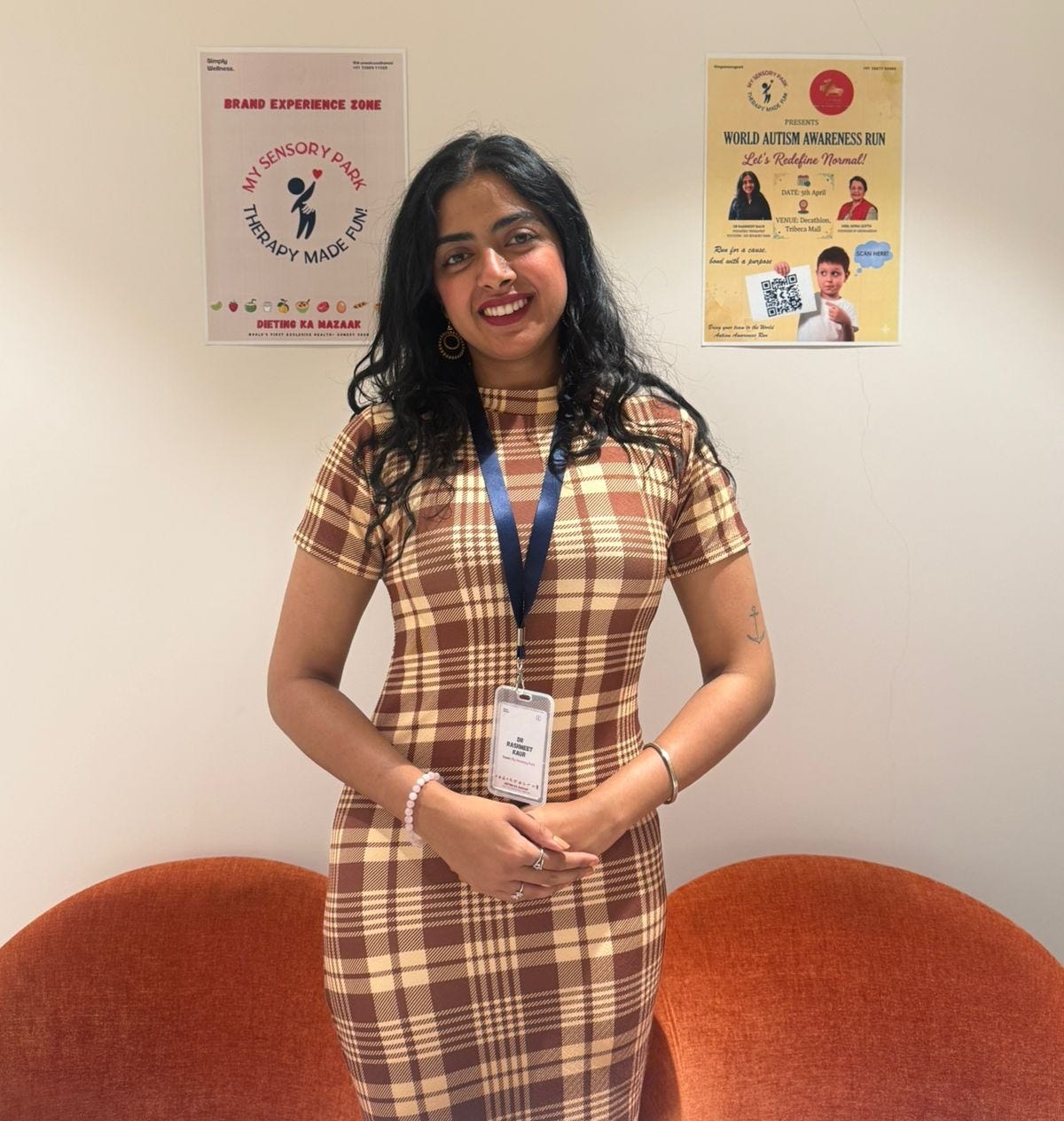
Dr. Rashmeet Kaur is twenty-five. She is an internationally trained pediatric physiotherapist, a feeding specialist, and a parent coach who now trains other parent coaches. And she is unflinchingly honest about where the empathy beneath all of it was forged.
When she was five, her father passed away. Her mother carried the family alone, then remarried - and gave Rashmeet a man she refuses to call a stepfather, because he never once made her feel like one. And yet, a father-shaped absence walked quietly beside her through all the years that followed.
She does not tell this for sympathy. She tells it because it is the engine of everything.
“I know how grief feels. I know how loneliness feels. Not exactly what these children are going through - but I’ve seen a share of it myself. And if a person like me, with everything my family went through, could grow out of it and build a life out of helping children - then anyone can. If I can change, anyone can.”
For most of school, she was painfully introverted, almost invisible, right through the tenth, even into the eleventh and twelfth, unsure how to cope in any social setting. Then, in her first year of college, something flipped overnight. The quiet girl became the one everybody knew, able to talk to all fifty people in her batch and the seniors and juniors besides. To this day, she says, her whole college remembers her.
That single transformation became the seed of her entire philosophy, the conviction she now carries into every session: people are not fixed. Children are not fixed. With the right environment, anyone can become more of who they were always meant to be.
Her own twisted family dynamics did something else, too. They made her curious about the machinery of parenting itself - how a family works, how it wounds, how it heals. So she trained as a parent coach and built a practice around the things she’d most needed and most studied: how to be emotionally available to a child, how not to create abandonment issues, how to never let a child feel anxious or left out of the conversation about their own life.
The climb nobody saw
The calling at nineteen was a beginning, not a shortcut. What followed was years of unglamorous work.
It started with a quiet observation in her second year: children were calmer with her than with the other doctors and therapists around her. Even untrained, even junior, she seemed to have the connect. So she made a decision most students don’t make - she stopped trying to be a generalist and aimed her whole life at pediatrics.
From 2020, she took physiotherapy-assistant jobs at pediatric clinics after college hours, including places like Winks Pediatric Physiotherapy - stacking up real, hands-on experience while her classmates were still only studying. By the time she graduated, she already had more than three years behind her. She went on to become Head of Department of a hospital’s Child Development Center, before finally building the place that is now entirely her own: a pediatric therapy center in Pune that cares for children from three months to eighteen years.
There she works across the full spectrum of child development - autism, ADHD, cerebral palsy, Down syndrome, intellectual differences, feeding difficulties, even handwriting struggles. Anything, as she puts it, that touches how a child grows.
Connection before correction - her doctrine
If you sat in on a single session with Rashmeet, you’d notice she breaks the one rule most adults instinctively follow with an upset child: the urge to teach at the worst possible moment.
“Don’t teach someone how to swim when they’re drowning.”
When a child is mid-meltdown - screaming, refusing, falling apart on the floor - the adult instinct is to explain. Sharing is caring. Calm down. Be good. Rashmeet calls this the power struggle, and she says it is exactly where we lose the entire game. The child is not in any state to receive a lesson; the part of the brain that reasons - the frontal lobe - is simply not online yet. You may be completely, morally right. It does not matter. The door is shut.
So she does the opposite. She gets down to their level and names the feeling out loud. Are you feeling sad? Are you angry? Frustrated? Bored? Because the instant a child realises their parent actually understands what’s happening inside them, half the storm passes. They no longer have to scream louder to be heard.
“Acknowledge the emotion. Half the time we don’t. We just say, the child is crying. But he’s not just crying - he’s sad, he’s scared, he’s overwhelmed. The moment he feels understood, he calms down on his own.”
Only once they’re back at the shore does the lesson come - gently, later. Remember earlier, when you didn’t want to share? Mumma didn’t like that. Let’s try again now. Calm first. Teach second. Never the other way around.
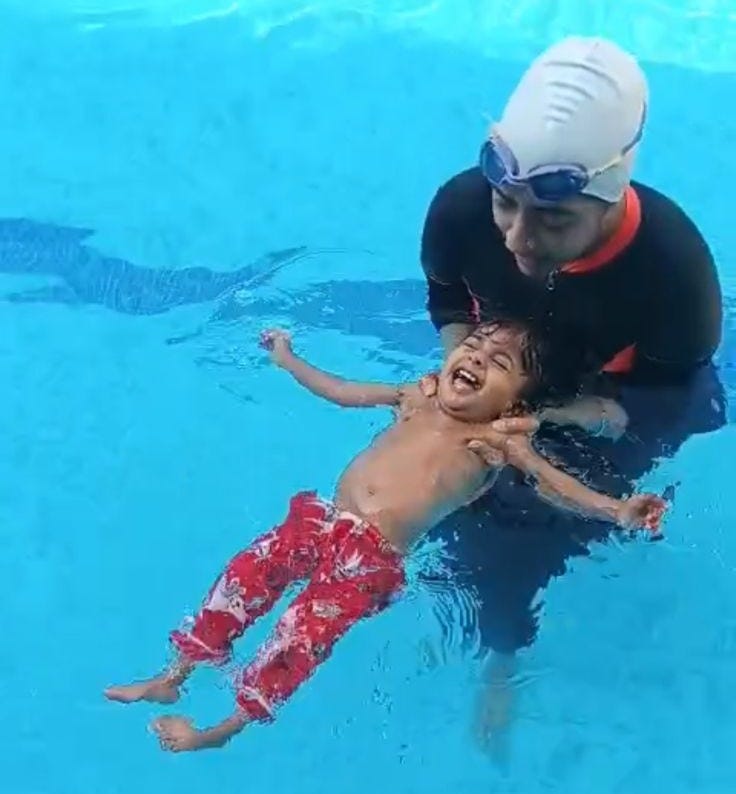
What it actually feels like to be that child
Part of why Dr Rashmeet is so patient is that she can describe, from the inside, what the world is like for a child with sensory processing differences - and once you hear it, you cannot unhear it.
Imagine trying to hold a conversation while the buzz of a fan, the hum of a tube light, and the roar of traffic outside are all turned up to the same volume as the voice in front of you - and you cannot turn any of them down. A neurotypical brain screens all of that out automatically. A neurodivergent brain often cannot. It drowns.
“That child’s mental and physical energy is already going half into managing their sensory world. And then we pile on guilt, shame, embarrassment. That’s too much for any child to carry.”
This is the lens she begs parents to adopt. The “difficult” behaviour is rarely defiance. It is a small person doing extraordinary work just to stay afloat in a room you find perfectly ordinary.
The label she refuses to give
Rashmeet is one of the most striking voices on a debate that quietly torments Indian parents: what is wrong with my child, and what do we call it?
Her answer is to refuse the question’s premise.
“Why do we have to contain a child into one box - this is autism, this is ADHD, this is a learning disability? A child can be a mix. A little autism, a lot of ADHD. There’s no need to limit them to a label.”
As a therapist, she will not - and is not certified to - hand down a diagnosis. If a family genuinely needs a formal report for school or documentation, she points them to the proper tools: psychological testing, the ISAA scale, the Vineland Social Maturity Scale, assessments done by psychologists and developmental pediatricians. But she will never pin a label on a child she is meant to help grow, unless a written report is already in her hand.
And she is just as fierce about the opposite failure - the overdiagnosis driven by money.
“The notion in India is that if you go to a pediatric therapist, they’ll definitely put therapy on your child, no matter what - because they want to earn. But anyone true to their practice will tell you, a hundred and ten percent, when your child does not need therapy.”
She means it literally. She has sent countless anxious parents home with nothing at all, because their child was simply fine. And where a parent is too worried to rest easy, she’ll offer the lightest possible touch - one stimulation session a week - rather than manufacture a problem. Better safe than sorry, she says. But never safe at a child’s expense.
Fatima: proof that hope is mostly someone refusing to stop showing up
Every therapist has the one case. For Dr. Rashmeet, it is a baby named Fatima.
Fatima arrived at the clinic at fifteen months old, wrapped in a towel - because her body could not hold itself upright. No head control. No eye contact. No flicker of recognition. Developmentally, she sat at the zero-month mark, in the body of a fifteen-month-old. The family had very little money, so Rashmeet quietly gave them the concession they needed. The pledge, she says, is to work with children no matter what.
Then the real work began. Five sessions a week. Every home programme followed to the letter. A constant stream of videos from a mother - herself raising two other children - asking, is this right for my child?
And here is the line that belongs on the wall of every parent who has ever feared they weren’t doing enough:
“I gave Fatima a hundred percent. But that mother - she gave her a thousand.”
In roughly one year, Fatima went from a baby swaddled in a towel with no head control to a child walking with the support of a single hand.
Rashmeet is careful about why this one moves her most. Not because she worked harder on it - she gives every child everything she has. But because consistency like that mother’s is rare, and quietly heroic. That is what she wants every parent to carry away: hope is not a miracle that arrives. Hope is mostly someone who refuses to stop showing up.
A short detour - the truth a mother offered back
Somewhere in the middle of the conversation, the woman interviewing her - a mother of two - went quiet, and then offered a story of her own, because Rashmeet’s words had landed on something she had lived.
She’d been twenty-six, with a son not yet two, when she found she was expecting again - against everyone’s advice. And in that lonely stretch, her one-year-old began taking care of her: bringing water during her video calls, gathering the scattered toys into one corner, entirely unprompted. Years later, that same boy would say to her about his little sister, “Mumma, take care of her a little more. It’s okay, she fell. I’m here with her. You go.”
That, she realised, is not something you teach a child. It is what a child becomes when they are treated, from the very beginning, as someone capable of understanding.
Which was the exact truth Rashmeet had been pointing at all along:
We treat kids like kids - and in doing so, we miss who they already are.
Children feel everything - so stop hiding it
Here is the clinical heart of her work: children may not have the vocabulary to label shame, guilt, embarrassment, grief, or insecurity. But they feel those things at full volume. A toy snatched away can strike a small child with the same force that losing a job or a friend strikes an adult. The situation is smaller. The emotion is not.
Which is why she pours so much energy into something that has nothing to do with therapy and everything to do with dignity: how a family treats a child who is different.
She has watched parents, out of pure shame, slowly isolate a neurodivergent child - keeping them away from other children, hushing up the diagnosis - until the child absorbs the unspoken message that there is something wrong with them. She knows a relative who has spent almost his entire life in a single room with two caretakers - not because of his condition, but because his family could never be open about it. His whole life, shrunk to one room.
Her answer is to refuse the hush.
“Anything you try to hide becomes a taboo in the house. That’s how the conditioning happens. So make it a conversation at the table. Tell the sibling - your brother’s brain just works a little differently. He hears the world like this, he feels it like that.”
There is even, she points out, wonderful content on YouTube that lets a child feel what autism feels like - show them, she says. Condition a child to that kind of understanding while they’re young, and imagine the adult they become: the sibling who, decades later, cares for their brother or sister not out of duty, but out of genuine understanding. Empathy is not born. It is built - at the dinner table, in childhood.
She has carried that empathy since she was a child herself. She still remembers a classmate, when she was twelve or thirteen - one in forty - whom the whole class laughed at. She never once laughed. She didn’t even understand why the others did. Only now, as an adult, does she realise he was almost certainly on the spectrum - a boy his teachers wrote off as dumb or lazy, when he was neither.
That is the world she is trying to change. This past April, she and her partner Soma Gupta hosted Pune’s first autism awareness marathon. Five hundred people registered. Eighty-five of them were neurodivergent. She describes watching twenty-something autistic athletes share breakfast and tea with the other runners as the most surreal experience of her life - for once, an entire society simply being together. The whole point of neurodiversity, she insists, is equal opportunity: make these children capable, let them reach their full potential, let them be part of the world. Next on her list is a programme that goes school to school, teaching neurotypical children how to befriend - not bully - their neurodivergent classmates.
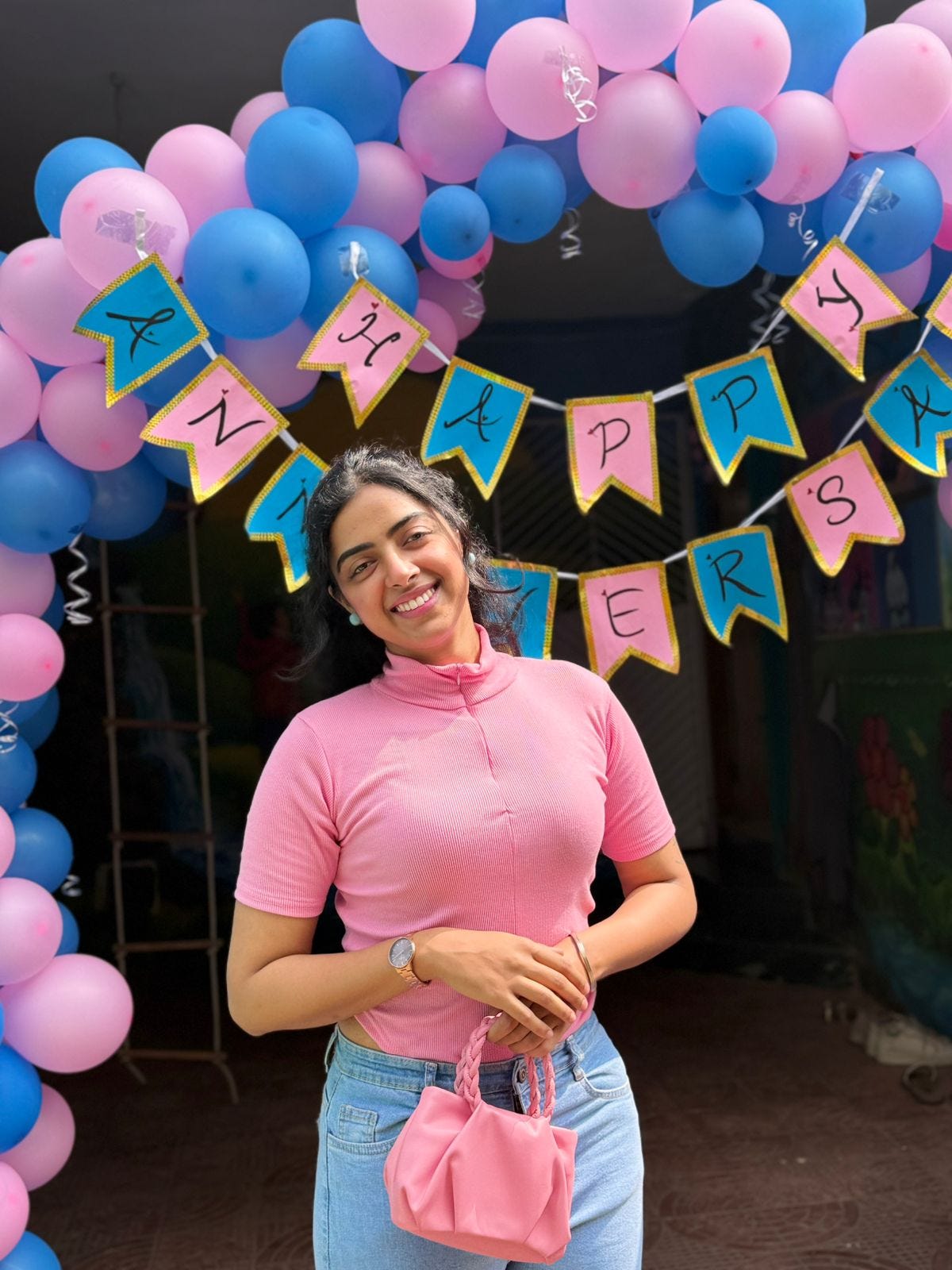
Her hardest truth for parents: the child is your mirror
If there’s a single line she repeats to nearly every parent she coaches, it’s this:
“You cannot pour from an empty cup.”
A child, she says, is a mirror of the parent’s own state - and ninety percent of the parents she sees don’t realise it. A nervous system that’s forever firing - no sleep, endless scrolling, junk food, never a moment of stillness - gets absorbed by the child like a sponge.
Her remedy is not sainthood. You do not have to meditate for two hours under a tree. A “nervous system reset” can be one quiet cup of coffee at a table - not on a call, not with the child or the mother-in-law or the boss, just five minutes of being a person again. She practices it herself, daily, because she knows the cost of not doing so. Eight or nine emotional sessions a day, holding space for other people’s children and other people’s fear, empties her own cup until she feels low even when nothing in her life is wrong.
And the most freeing permission she gives parents is this: you are allowed to be wrong. To lose your patience. To apologise to a four-year-old and mean it.
“We moral-police our kids so much, in the name of perfect parenting. We forget they’re kids - that they’re allowed to be messy, allowed to make mistakes, allowed to be selfish about a toy.”
The repair - the honest “I was wrong, I’m sorry” - teaches a child more about love than any lecture ever could.
And to every parent crushing their child over marks
There is one more thing she wants said plainly, because she lived it.
She was not a good student. She barely studied. Her parents were rarely happy with her marks. And then, in college, the same girl quietly became a gold medalist, a silver medalist - because the thing inside her finally found its subject.
“If it is there in you, it will happen. It is not about studies. Trust me, it is not about studies. It’s the smartness your child has in them.”
So if your child isn’t reading, isn’t topping the class - do not raise your hand to them, she says. There is life beyond the report card. The skills that actually carry an adult through the world are few, and most of them are never graded.
This, too, is part of the same doctrine: stop measuring a child by the one yardstick that happens to be in your hand, and start seeing the whole of who they are.
Why she believes in coaching the parents, not just the child
Dr Rashmeet is, by now, not only a parent coach but a trainer of them - a visiting faculty member teaching others how to coach parents of neurodiverse children. And she’s clear-eyed about the field’s hardest limit.
The trainees always ask her the same thing: what do we do about the parent who refuses to understand? Her answer is gentle but unsentimental. Parent coaching is a niche, and the parents who walk through the door are, by definition, already self-aware - they know something needs work, and they’ve come to do it. The vast majority of families never come at all, because they aren’t aware, or won’t admit there’s anything to face. You cannot coach someone who hasn’t yet decided to look in the mirror. But for the ones who do - that decision is already half the healing.
For you - the parent reading this right now
She wanted this part included not for applause, but because awareness of child development in India is still painfully thin. None of these are a diagnosis. They are simply invitations to pay attention.
The social smile. A baby’s first real conversation with the world is the smile they give around 8 to 10 weeks. Easy to miss. It is the very first milestone of connection.
Fifty words by two. By age two, a child typically has around fifty-plus words - and single words count: mama, papa, pani, bye, aao. If they aren’t coming, ask someone. And no - “boys talk late, girls talk early” is only a myth.
Walking. A clear delay past 18 months is worth keeping an eye on.
The golden window is 18 months to 5 years. Catch things closer to 18–24 months, and the path is gentle. Wait until 3.5 or 4, and certain patterns and meltdowns have already set in, and take far more work to unlearn.
Don’t over-read the “eye contact” myth. A school once told a worried mother her daughter “doesn’t look us in the eye.” But children aren’t adults - they play, they glance away, they talk for two minutes and move on. What’s “normal” eye contact for a child is wildly subjective. Watch patterns over weeks, not single moments.
Trust your gut. As she puts it plainly: there are still very few real tools in India to monitor a child’s development, sleep, or vitals at home. So much rests on a parent’s instinct. If something feels off, get it checked. It is always better to be safe than sorry.
That last point - the missing tools - is exactly the gap Janitri set out to close.
The thread that runs underneath it all
It is no accident that this conversation happened under the Janitri Club banner. Because everything Rashmeet believes about children - that they feel everything, understand everything, and are simply waiting for us to listen - is, in its own way, the very reason Janitri exists.
A newborn cannot tell you their oxygen is dropping. A feverish toddler cannot tell you their temperature is climbing at four in the morning. They are, in the most literal sense, the children who cannot yet speak. Janitri’s monitoring tools - a foot-worn baby monitor that keeps a continuous watch on a sleeping infant’s oxygen and pulse and raises an alarm the moment something drifts, and a fever patch, born from one mother’s helpless 4 a.m. fear, that tracks temperature continuously and sends doctor-shareable reports - exist to give that silence a pair of ears for the hours a parent cannot keep watch.
It is an idea Rashmeet recognises instantly. She’s seen the value of it herself, reaching for oxygen monitoring for a young patient whose parents were terrified by his breathing through the night - and she lights up at the fever patch as something she could put into the hands of the families at her own clinic. The therapist listens with her hands and her patience; Janitri listens with technology. Both are bent over the same child.
The two will keep the conversation going - an educational webinar together later this year, on parenting, on the early signs every family should know, and on the tools that give worried parents a little more peace and a little more sleep.
But the heart of this story was never a marathon, or a monitor, or even a method. It was a young woman who lost her father at five, found her calling at nineteen, and decided that the most overlooked people in the world deserved someone who would never stop showing up for them.
Your child is listening. Your child is understanding. Your child is feeling all of it, at full volume - long before they can ever tell you so.
Dr. Rashmeet Kaur has spent her whole life learning to listen back. The rest of us are only just beginning.
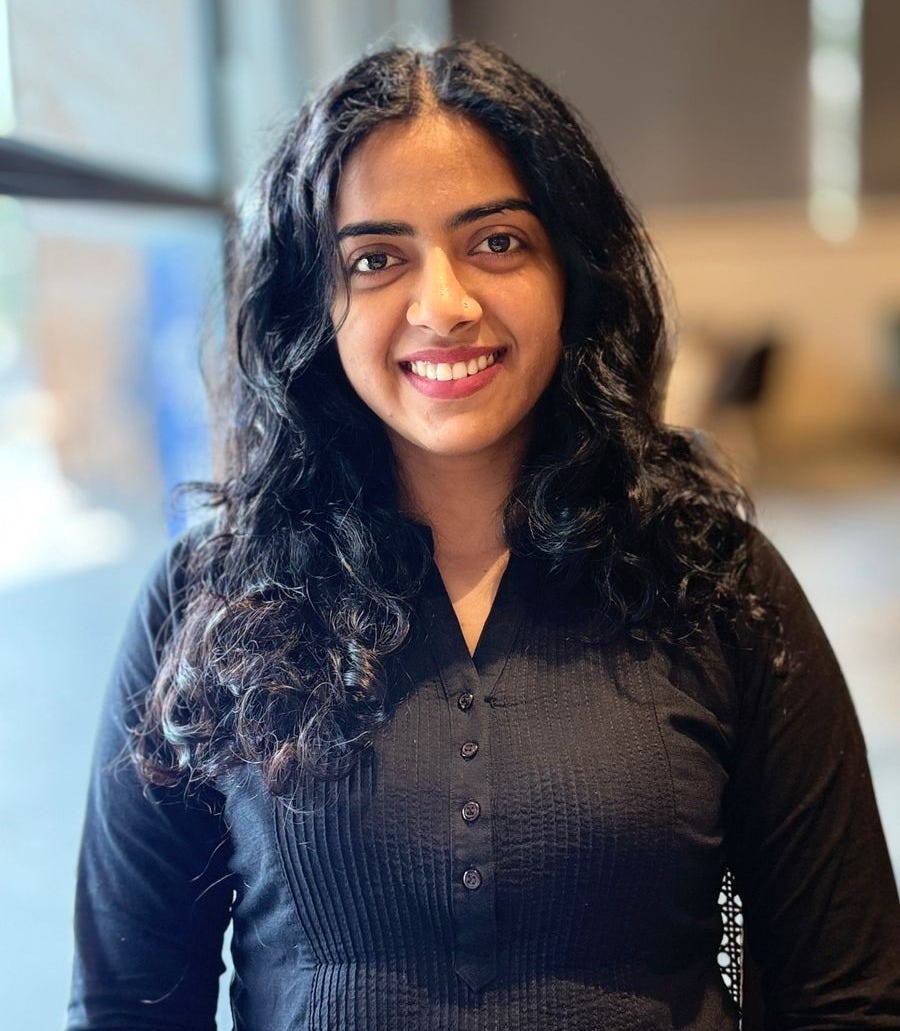
Dr. Rashmeet Kaur offers online consultations, parent coaching, and home therapy programmes for families across the world, reachable through her Instagram and the details in her bio.
This conversation is part of Janitri’s ongoing series with leading voices in maternal, New Born and women’s health exploring pregnancy care, high-risk pregnancy management, fetal monitoring and the technology bringing early detection home.
About Janitri
Janitri is built on a simple yet powerful mission: to save lives by supporting women and newborns through the critical 1,000-day journey from pregnancy to early motherhood. Every solution we create is rooted in care, early detection, and the belief that no woman should lose her life while giving life.
With this same spirit, we introduce Janitri Club, a space where we celebrate not designations, but the people behind them. The caregivers, doctors, parents, and supporters who quietly hold this journey together.
Through real stories of emotions, challenges, and victories, Janitri Club brings these voices to life, honouring their experiences and building a community that uplifts everyone who stands beside a woman in her journey.

you know the art of writing killer headline