


The surgery was supposed to fix everything, but three months later, watching her grandmother retreat from family gatherings, avoid leaving the house, and lose the spark in her eyes, Shreeja realized something had gone terribly wrong. This wasn’t just a medical complication, this was a woman losing her sense of self. And despite having two generations of doctors in the family, no one seemed to have answers.
When Medicine Becomes Personal
Most doctors can tell you the exact moment they knew, like truly knew, what their calling would be. For Dr. Shreeja Gurrala, that moment came not in a lecture hall or during a groundbreaking surgery, but watching her grandmother’s quiet suffering after a procedure that meant to help her.
The surgery for pelvic organ prolapse had seemed straightforward. But the complications that followed, severe urinary incontinence that no amount of antibiotics or follow-up visits could resolve transformed her grandmother’s life in ways that went beyond the physical.
“If this is my grandmother, having like two generations of doctors in her family, then what must a normal person be going through,” Shreeja thought. That question eventually lead her to urogynaecology, a field that barely existed in India when she started medical school. A specialty dedicated to conditions that rob women of their comfort and confidence but is rarely spoken about.
But we’re getting ahead of ourselves. Because before she became the specialist who helps women reclaim their confidence and quality of life, she was a twelve-year-old girl standing in a hospital corridor, watching something that would plant the very first seed of her calling.
A Moment That Plants Seeds
The year was 1996, maybe 1997. Young Shreeja stood beside her father, an ophthalmologist, in the hospital. A patient had just come through surgery successfully, and the family’s gratitude was overflowing. The patient’s wife, an elderly woman of about 75 fell at her father’s feet. She praised him endlessly, then asked for something unusual: a photograph of him to keep in her home, alongside images of deities.
“There is some profession where you are younger and still people actually treat you like some baba,” young Shreeja thought, mesmerized. “I could do this. I could do this all my life.”
That moment planted a seed. But the journey from that corridor to becoming a urogynaecology specialist would be anything but straightforward.
A Natural Scholar
Dr. Shreeja Gurrala grew up watching her father, an ophthalmologist, serve his community with dedication and compassion. While she was never the student who came first in class, she consistently held her ground in second or third place, not because she lacked ability, but because she understood balance. She studied what was needed, played, danced, and enjoyed extracurriculars. Her childhood was marked by curiosity and a natural affinity for the sciences, particularly botany and zoology.
“I was not a very studious student when I was really young, but I had it in my way,” she reflects. “I would study whatever is required for the day and I would play, I would do all the extracurriculars.”
Her passion for dance was so strong that she once considered pursuing an MA in the art form. But her father, perhaps seeing a different destiny for her, eventually stopped her dance classes, a decision that redirected her path toward medicine.
Finding Her True North
The journey to medical school wasn’t entirely straightforward. Like many students in India, Shreeja too flirted with the IIT craze. But after six months, something felt profoundly wrong.
“I realized I am not fit for math. I really couldn’t do math,” she admits candidly. “I was really good in physics and chemistry but then I was missing my biology.”
Returning to BiPC to pursue biology felt like coming home. Though her classmates teased her, “Why did you even come from MPC? We are all trying to move from BiPC to MPC and you are one fool who is coming all the way from there”. Shreeja knew she had made the right choice. Her preparation in Plus 1 and Plus 2 paid off handsomely, earning her a coveted seat at Osmania Medical College.
Medical School: Where Friendships Became Foundations
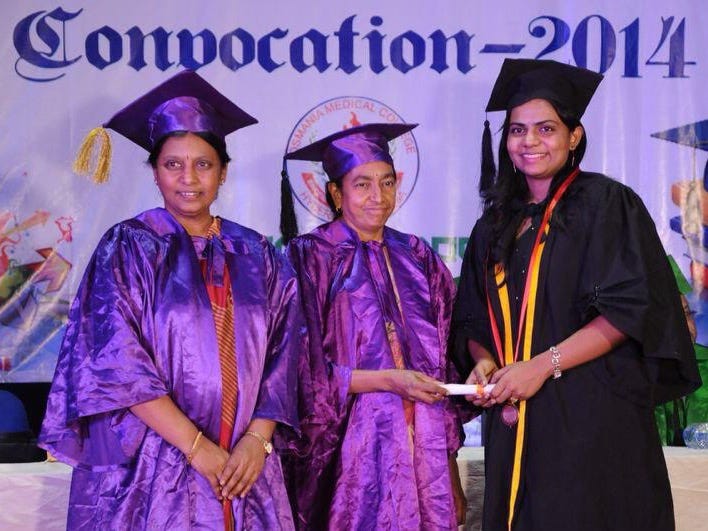
Medical school at Osmania wasn’t just about acquiring knowledge, it was about building relationships and learning through lived experience. Divided into smaller groups for hospital postings, Shreeja and her 200-strong batch formed bonds that would last a lifetime. Many of her closest friends from those days are now surgeons and physicians scattered across the globe, from the US to the UK.
“I think somebody who is missing out on med school, if you are not attending your postings, if you are not attending your classes, I think you are missing out a lot in your life,” she emphasizes. “You want to capture all of these memories later on in life, maybe 20 years down the line, 15 years down the line, you actually think of it and you have a smile on your face.”
The practical knowledge she gained during postings; examining patients, learning from consultants, being present in the hospital became the foundation of her clinical expertise. Today, when she examines patients, she draws on skills learned as early as second and third year of MBBS.
“It’s not a recent learn, it’s there in the long-term memory,” she explains.
Choosing OBGYN: A Deliberate Decision
When it came time to choose a postgraduate specialization, Shreeja had to make a critical decision. She received general surgery at Gandhi Hospital but opted instead for obstetrics and gynaecology. The reasoning was both practical and personal.
“I thought I would be delivering babies and I would be seeing female patients and I thought I will connect with females better,” she says. “And in surgery I was thinking when there are so many colostomies and I would have to clean the bags because I have seen my PGs do that... I didn’t want to do that.”
But more than avoiding the unpleasant aspects of general surgery, Shreeja was drawn to a surgical field where she could build deeper connections with patients. Obgyn offered that perfect blend, surgical expertise combined with the ability to support women through some of the most vulnerable moments of their lives.
During her postgraduate years, she found exceptional mentors in Dr. Naima Fatima and Dr. Jayanti Reddy. “They have been two strengths and two pillars for me to go through that PG period and be a good clinician rather than be just a gynaecologist,” she reflects. “I have learnt how to be ethical, how to actually practice in the right way and understand the patient and find out what they have come for.”
A Grandmother’s Pain, A Doctor’s Purpose
The spark that would eventually lead Dr. Shreeja to specialize in urogynaecology came from a deeply personal place, her grandmother’s suffering. After undergoing surgery for pelvic organ prolapse, including the placement of a mesh, her grandmother developed terrible urinary incontinence. The leaks were so severe that this previously independent woman had to wear diapers constantly, developing painful diaper rashes and losing herself in this new life.
“If this is my grandmother, having two generations of doctors in her family, then what must a normal person be going through,” Shreeja thought. The question haunted her.
Despite having urogynaecology in her mind since MBBS, she initially thought the specialty was out of reach. Fellowships weren’t available in India at that time, and moving to the US to train and return seemed impossibly complex. But fate had other plans.
COVID-19: The Darkest Hour
Just as Shreeja was contemplating fellowships and future directions, COVID-19 struck. All international doors closed. Fellowship opportunities vanished. And then, life became genuinely dangerous.
Dr. Shreeja got married and immediately became pregnant with twins. At the same time, she was posted at Gandhi Hospital, the nodal COVID center. She worked through her sixth month of pregnancy, suffocating under PPE kits, walking seven floors and through walkways where infected patients coughed and vomited, where bodies wrapped in black bags lined the corridors.
“I thought if I get affected then I will not know the situation of my babies,” she recalls. When she requested reassignment to a non-COVID ward, she was threatened with having her degree withheld. The choice was stark: her career or her life, and that of her unborn children.
She left the posting. Shortly after, she contracted COVID anyway. One lung completely collapsed. At 32 weeks pregnant, with her life hanging in the balance, doctors performed an emergency delivery of her premature twins.
The medical team had to choose: save the mother or lose everyone.
“At that time it didn’t feel anything more than my life, not mine at least my babies,” she says. “I didn’t want to be on the, you know, just in that spot and it didn’t feel right for me.”
She survived. One of her pregnant colleagues, working in the same COVID ward, did not.
Rising From the Ashes
The three months following her COVID recovery were among the hardest of Dr. Shreeja’s life. Postpartum with twins, struggling with depression, needing to breastfeed two babies, she needed support. Her husband became her rock. He took a three-month break from his own medical career to become a “home husband,” caring for the babies, managing their baths and massages, accompanying her to doctor appointments, handling vaccinations, ensuring she ate and recovered.
“Husbands are the main pillars for their wives,” she says gratefully. “He used to take care of the kids, the bathing, the massaging and taking care of me, my food, my appointments to the doctor, taking the kids for vaccinations, all of that he used to do.”
When their babies were just eight months old, Shreeja, being her ambitious self began a fellowship. Her husband relocated with her to Delhi for a month to support her while she continued breastfeeding. For four straight years, as she pursued multiple fellowships, he arranged his hospital placements around the house, available whenever the children needed him.
Fellowships don’t pay. Their household ran on one salary, supplemented by help from parents. “People keep asking, you don’t have savings, how the hell may you have savings, when you just start,” she points out.
Even at 35 or 36, many doctors remain financially dependent on their parents, a reality the public rarely understands.
Finding Her Calling: Urogynaecology
Dr. Shreeja’s path to urogynaecology crystallized when she learned about a fellowship interview at KIMS. A friend recommended she attend. “Totally unexpected that I went to the interview and I got selected and that is my life today,” she says.
Under the mentorship of Dr. Anuradha Koduri, who had trained in the US, along with Dr. Nirmala and Dr. Bindu, Shreeja learned not just the technical aspects of urogynaecology but the art of patient connection. “This empathy, compassion and how you deal with a patient, it is more of connection than money and that is really commendable,” she reflects.
Urogynaecology offered everything she was searching for: the ability to serve patients with previously untreated conditions, the opportunity to make a real income to support her family, and the chance to build something meaningful in a relatively new field in India.
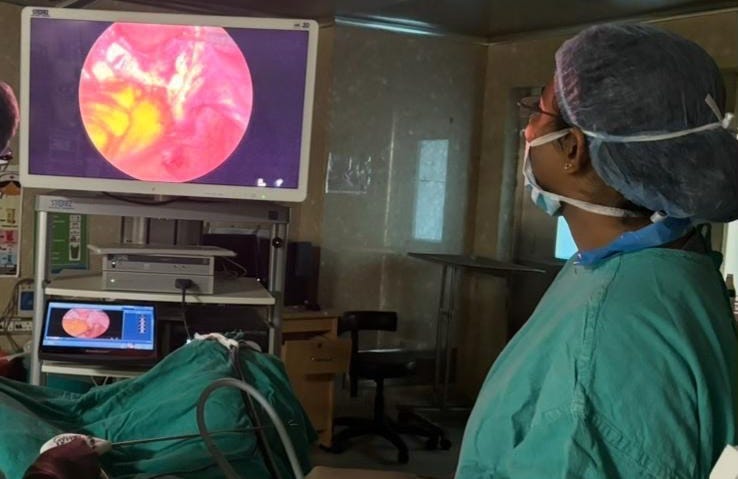
A Doctor Who Listens
Today, Dr. Shreeja Gurrala practices with a philosophy learned through hard experience: connection matters more than speed.
“When they come to the OPD, you know the first visit would be okay just talking to them, being their psychologist and trying to understand them,” she explains. “Of course I do give a lot of time for my patients that is one of the drawbacks may be from my side, but yeah I think that is also important.”
She treats conditions that many women suffer in silence, urinary incontinence, pelvic organ prolapse, vulvodynia causing painful intercourse. Many of her patients, traumatized by difficult deliveries, avoid intimacy with their husbands because of the pain. Others wear diapers despite being relatively young, their quality of life devastated.
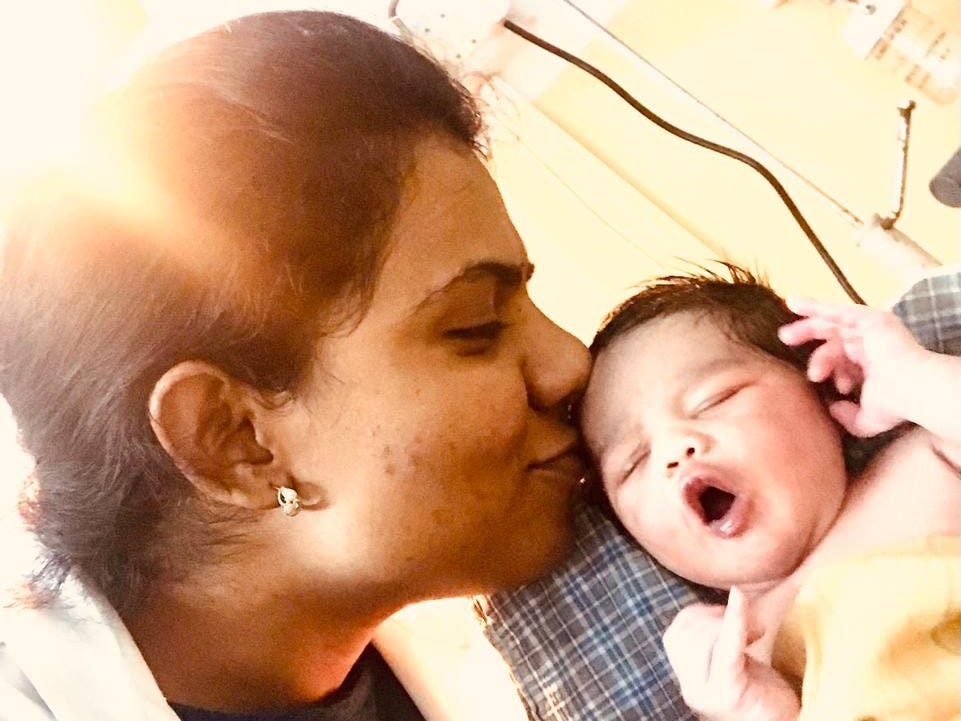
When patients tell her they’re finally free from leaks, or that their pain has resolved after surgery, she feels a profound sense of fulfillment. “That gives a sense of happiness,” she says simply.
A Message to Patients and Future Doctors
Dr. Shreeja is frank about the realities of medical practice, and passionate about correcting public misconceptions.
To patients, she offers this advice: If you don’t connect with a doctor, find another one. Don’t stay with someone who doesn’t listen to you. But also understand that if a doctor sees 100 patients a day, they cannot give you an hour. Write down your questions before appointments. Don’t go home with doubts gnawing at you.
And please, she emphasizes, understand that doctors are human too. “We clean poops everyday, we clean urine everyday and nobody in your family also would do that for you... When your baby is delivering, who is going to clean your poop, you are pooping on our faces and you are pissing on our faces, your amniotic fluid ruptures on our faces, sometimes into our mouths and we have tasted everything.”
Doctors risk exposure to HIV, Hepatitis B, and countless other infections from the first day of MBBS. They work without gloves, get pricked by needles, walk through wards filled with contagious patients. “Just don’t give us, you know, notions that you have in your mind, we know what we are doing and we actually understand the plight of a patient.”
To medical students, her message is equally clear: Don’t miss your postings. Don’t skip classes. Put down your phones. “Learning practically and being there, being present in the hospital, I think you will learn a lot more and it’s actually going to carry in your mind for a really long time.”
Looking Ahead
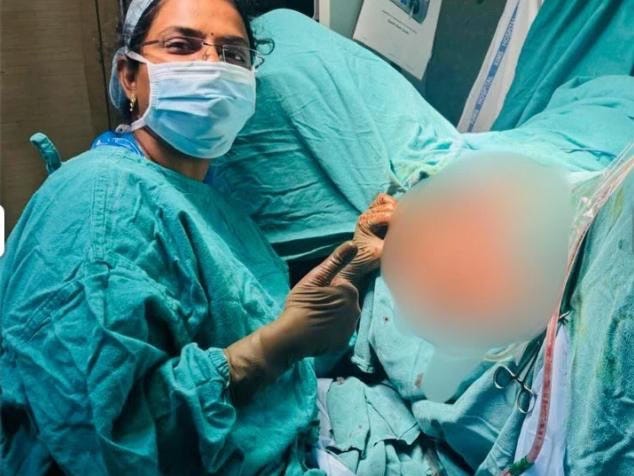
Dr. Shreeja Gurrala’s journey from a twelve-year-old watching her father receive a grateful family’s blessings to becoming a urogynaecologist specializing in restoring women’s dignity has been marked by determination, sacrifice, and an unwavering commitment to patient care.
She survived a pandemic that nearly killed her. She balanced motherhood with twins and professional ambition. She chose service over easier paths. And through it all, she remembered what drew her to medicine in the first place: the profound privilege of healing, the deep satisfaction of alleviating suffering, and the sacred trust patients place in their doctors.
“I think I connect with the patient when they are talking and it really gives me a pleasure when they come out of the pain and they are really happy,” she reflects. “There is no leak or there is a correction after the surgery, you know that gives a sense of happiness.”
In a field that remains relatively new in India; urogynaecology, Dr. Shreeja Gurrala is not just building a practice. She’s building a legacy of compassionate, skilled care for women whose suffering has too often been ignored or minimized.
And for every patient who walks out of her clinic with restored confidence, reduced pain, and renewed hope, that twelve-year-old girl who watched her father receive a patient’s profound gratitude would smile with recognition.
This is what it means to be a doctor. This is what it means to heal.
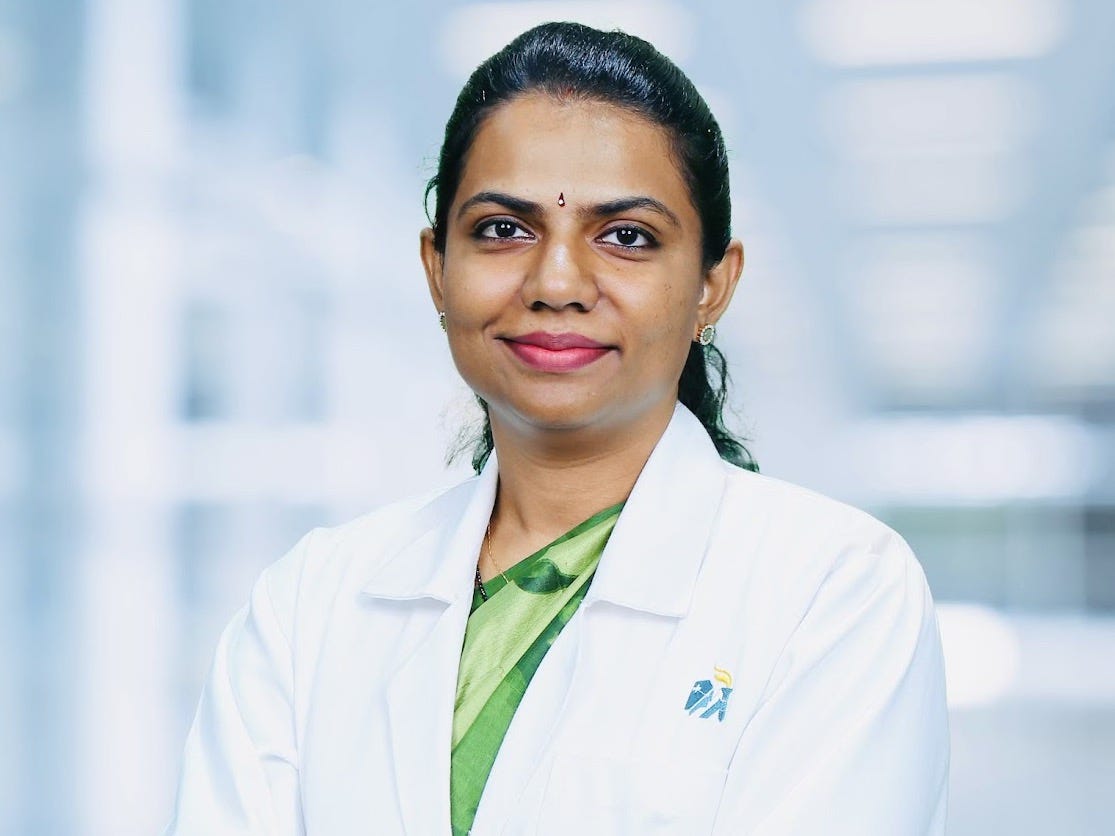
Dr. Shreeja Gurrala is an obstetrician, gyneacologist, and urogynaecology specialist practicing in Hyderabad, India. She completed her MBBS at Osmania Medical College, her postgraduate training in OBGYN, and specialized fellowship training in urogynaecology at KIMS under the mentorship of US-trained urogynaecologist Dr. Anuradha Koduri.