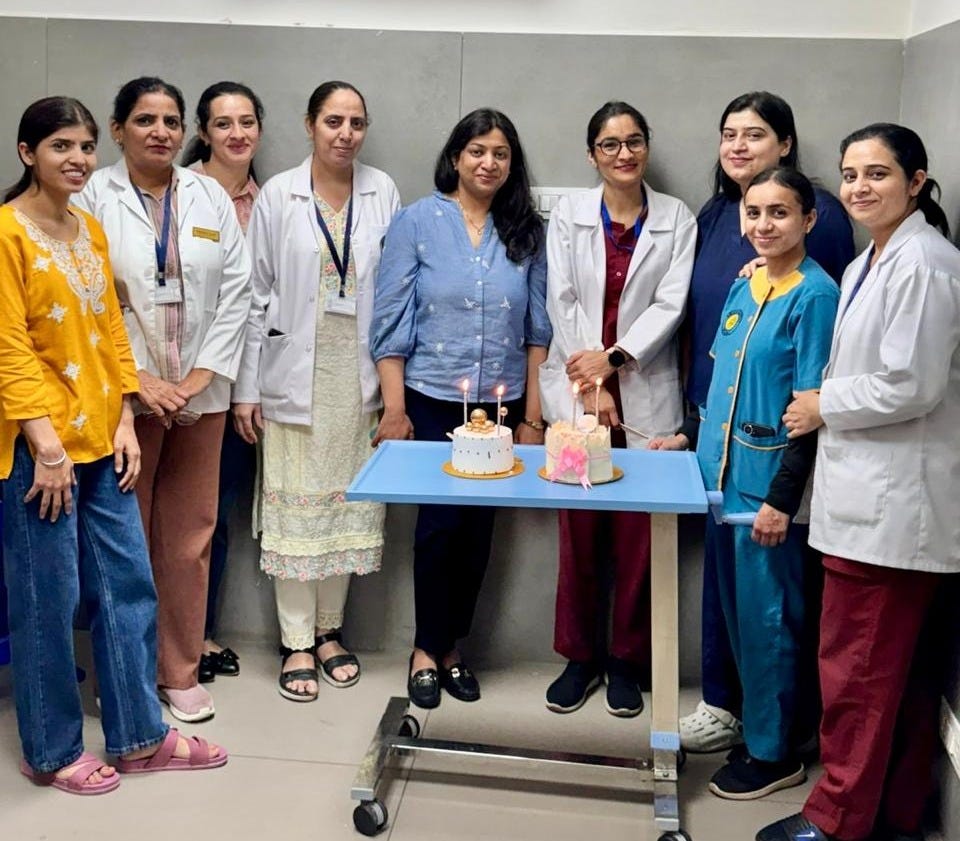
The calls do not surprise her anymore. The emergencies at odd hours, the patient bleeding through the night, the moment when a life hangs entirely in the hands of a single surgeon, Dr. Akanksha Bansal has grown up watching this. She has seen it in her mother’s eyes before rounds, in her father’s late dinners, in the prayers her parents murmured on temple steps for patients they were worried about.
So when she became a doctor herself consultant obstetrician and gynecologist, working out of Chandigarh Tri-City, associated with Amar Hospital in Mohali, on panel with Motherhood and Cloud Nine Hospitals, and now building her own multi-speciality clinic, perhaps it was never really a choice. It was a homecoming.
“I have grown up in a lifestyle where I’ve seen doctors all around me. We have 28 doctors in my extended family.”
But having 28 doctors in a family does not make medicine easier. If anything, it makes it more honest.
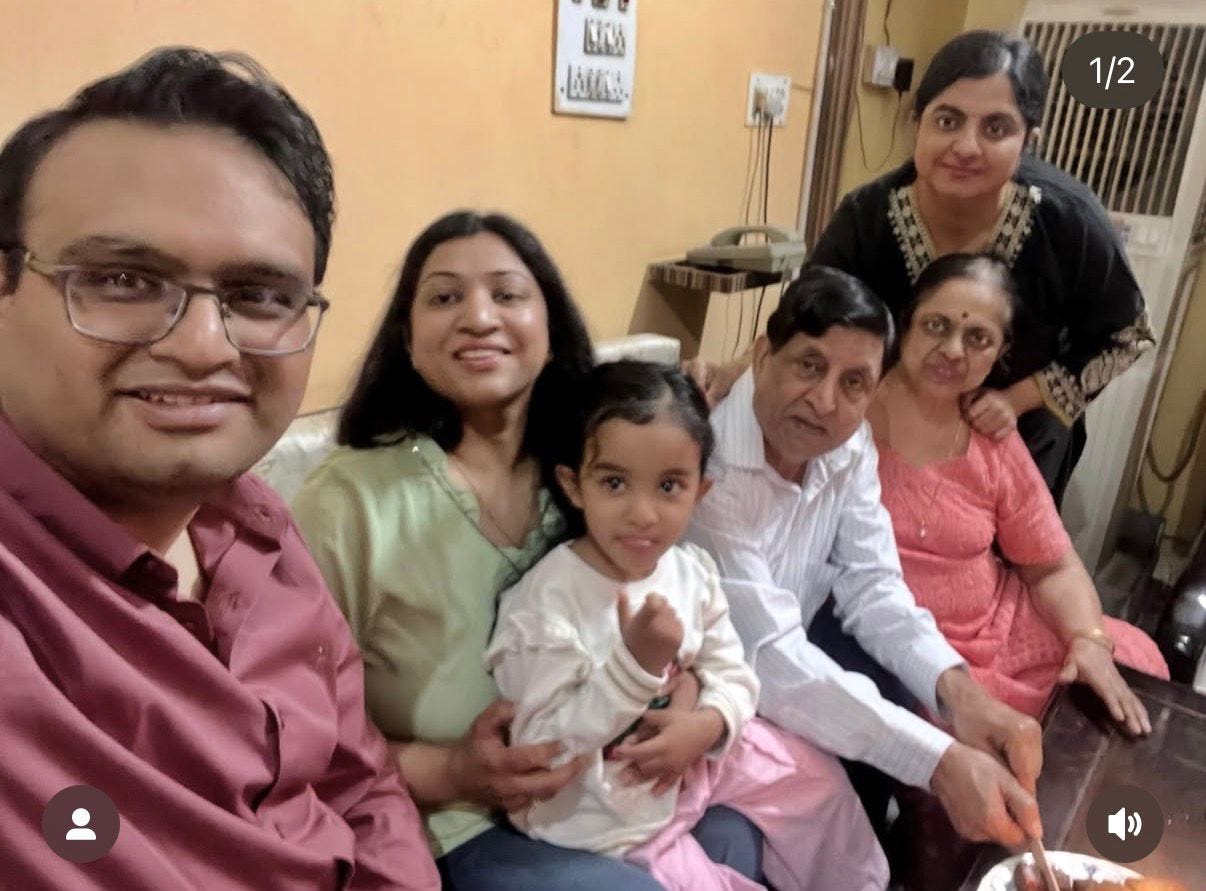
The House That Never Switched Off
Dr. Akanksha’s mother is a surgeon. Her father is a pediatrician. Her siblings are doctors. She did not grow up watching medicine on television; she grew up watching it in motion, in all its rawness, at the dinner table, in hushed voices after difficult shifts, in the way her parents walked a little heavier on some evenings.
What struck her most, even as a child, was not the procedures or the prestige. It was how completely her parents gave themselves over to their patients. The good news could lift a mood for an entire day. The bad news would settle into the house like a quiet grief.
“Each and every day, your lifestyle would start with how your patient is doing. Your mood shifts according to how your patient is doing.”
She watched her father carry his patients home with him in ways nobody could see. And she understood, even then, that medicine was not a job you wore like a coat and removed at the door. It was something that lived inside you.
The moment she understood what that truly meant, she was fifteen years old, standing at a relative’s house-warming gathering in her father’s hometown.
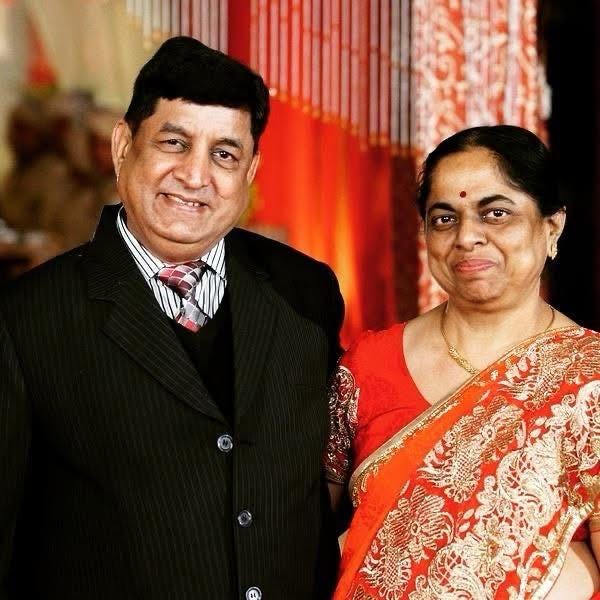
The Man Who Travelled to Say Thank You
A man arrived at the gathering with his daughter, a young woman of nineteen or twenty. He had not come for the celebration. He had come specifically to find Dr. Akanksha’s father. He had brought his daughter so she could meet the person who had given her her life.
The story, once told, was extraordinary. Decades earlier, when her father was a resident doing his pediatrics training in Bikaner, this man’s daughter had been born with a condition for which no treatment was readily available. Working with what little he had and improvising where he had to, her father found a way - performing a procedure that had never been done at his medical college before. And somehow, against all odds, he saved that infant’s life.
Twenty years later, that infant walked across a room to shake the hand of the man who made her existence possible.
“Even if you can make an impact on one life or two it’s worth it. This just doesn’t happen in any other profession.”
That moment confirmed a feeling Dr. Akanksha had been carrying without yet naming it. She wanted this. The ability to be the reason someone is still alive. And she would spend the next two decades learning exactly what it cost to earn it.
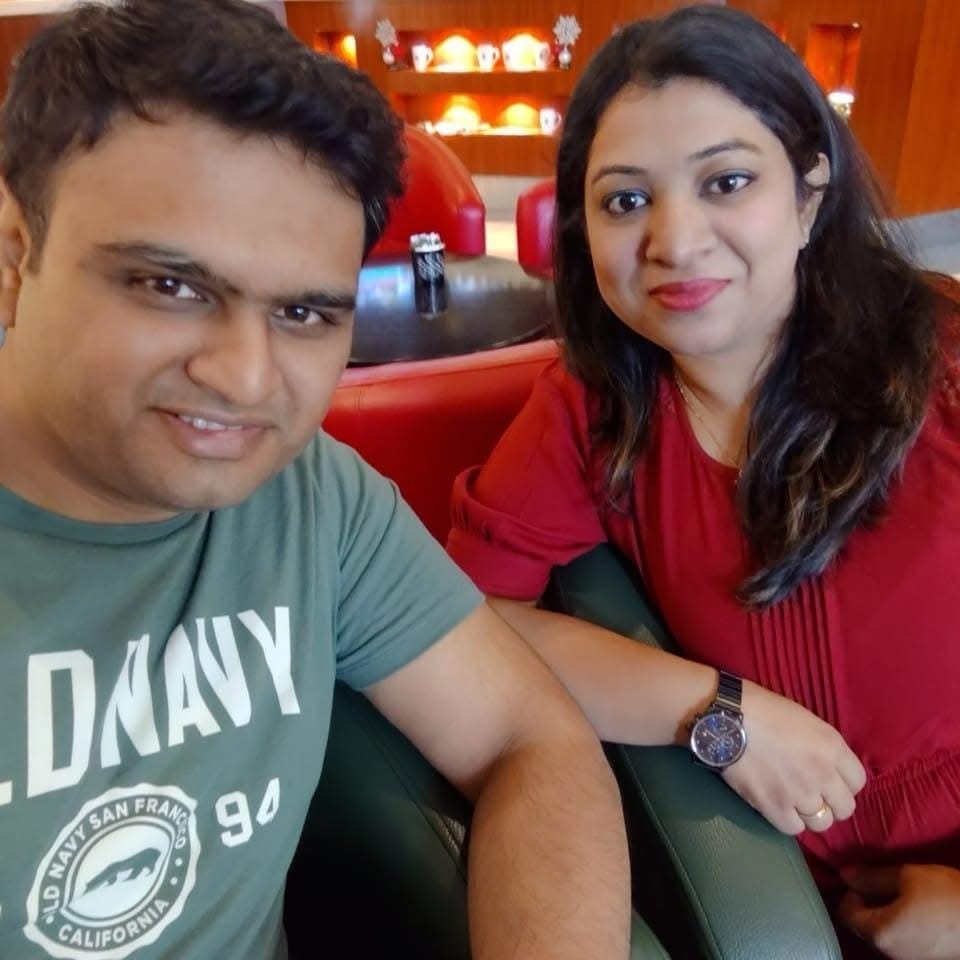
The Man Who Stayed
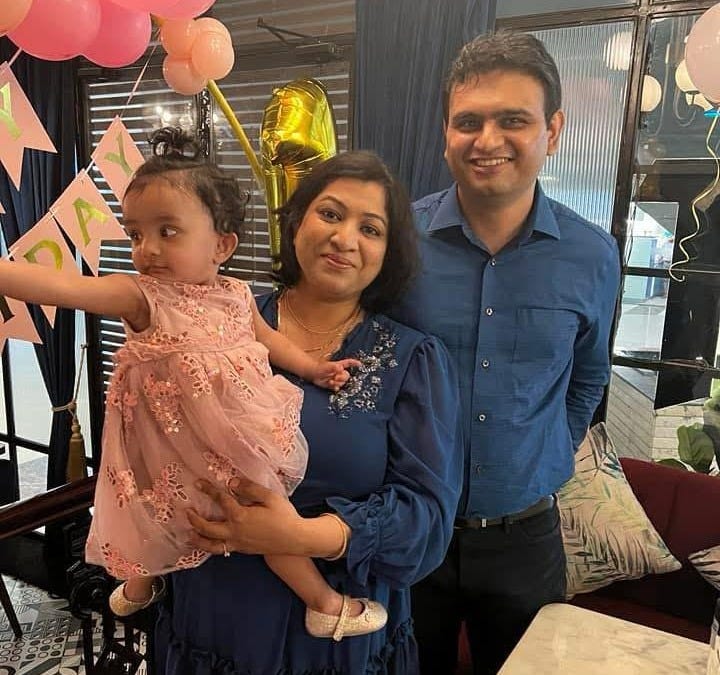
She met him in college. They were batchmates first, friends second, and then quietly, over time, something more. For eight years, they were inseparable in the way only two people in medical training can be: studying for the same exams at the same table, choosing residencies in the same breath, building a future out of the same exhaustion and the same ambition.
When she told her father about the relationship, he had one concern. Not the boy but the risk. “Relationships may not last,” he said. “I worry you might get hurt.” She looked at him and said: This is my choice, and I will be responsible for whatever comes of it. He nodded. That was enough.
When the time came to choose a specialty, she asked her husband what he thought she should do. He said, “It should be a choice that comes from your own heart. Whatever you choose, I will be with you.” She chose obstetrics and gynecology. He chose Anaesthesia and Critical Care. Both emergency branches. The ones everyone else avoided unpredictable hours, no quiet nights, a lifestyle that would ask everything of them. Her father raised an eyebrow: “You are both choosing emergency branches. You will be handling emergencies back-to-back. Your life will not be easy.” They chose it anyway, married in 2016, and went into the grind together, senior residencies in Jaipur, then Delhi, learning the work the hard way.
“We both made this choice consciously. We knew what we were signing up for.”
In 2020, they came home to Chandigarh, his hometown, where his mother was, where life could finally have some shape around it. And it was only then, with that support in place, that she allowed herself to think about a child. She was thirty-three. She knew she had waited long, and she did not encourage others to do the same. But she also knew that bringing a child into the world required more than love - it required someone at home to hold things together while she and her husband held the hospital together.
Her pregnancy was not easy. She was already prediabetic when COVID arrived in the third month, severe, frightening, the kind that forces a pregnant woman into isolation with nothing but her own thoughts and her prayers. She listened to prayers on a loop. She manifested, fiercely and quietly, that everything would be fine. Her husband did not test positive. He stayed with her in isolation anyway. The entire period. He simply refused to leave.
Later, her diabetes worsened, and she went on insulin. In her seventh month, her baby was not growing as expected, and she was put on rest. At thirty-eight weeks, she chose an elective caesarean section. Through every complication, he managed everything quietly, efficiently, without being asked. Their daughter was born in 2022.
“She is pretty much the best part of my day. When I come home tired and she is at the gate with a smile, running towards me it is all worth it.”
Dr. Akanksha does not speak about her husband the way people speak about support systems. She speaks about him the way she speaks about medicine as something chosen, deliberately, with full knowledge of the cost. He is not the backdrop to her story. He is part of its architecture.
Nine Beds, Forty Patients, Zero Room for Error
Medical college, she will be the first to tell you, was not exactly ordinary. She laughs, recalling sitting in a hospital cafeteria past nine at night, textbooks open, coffee shared, jokes exchanged, and still studying. An older man who had been waiting nearby for days looked over and said he had never seen young people study and laugh simultaneously at that hour. For Dr. Akanksha and her classmates, it was just another Tuesday.
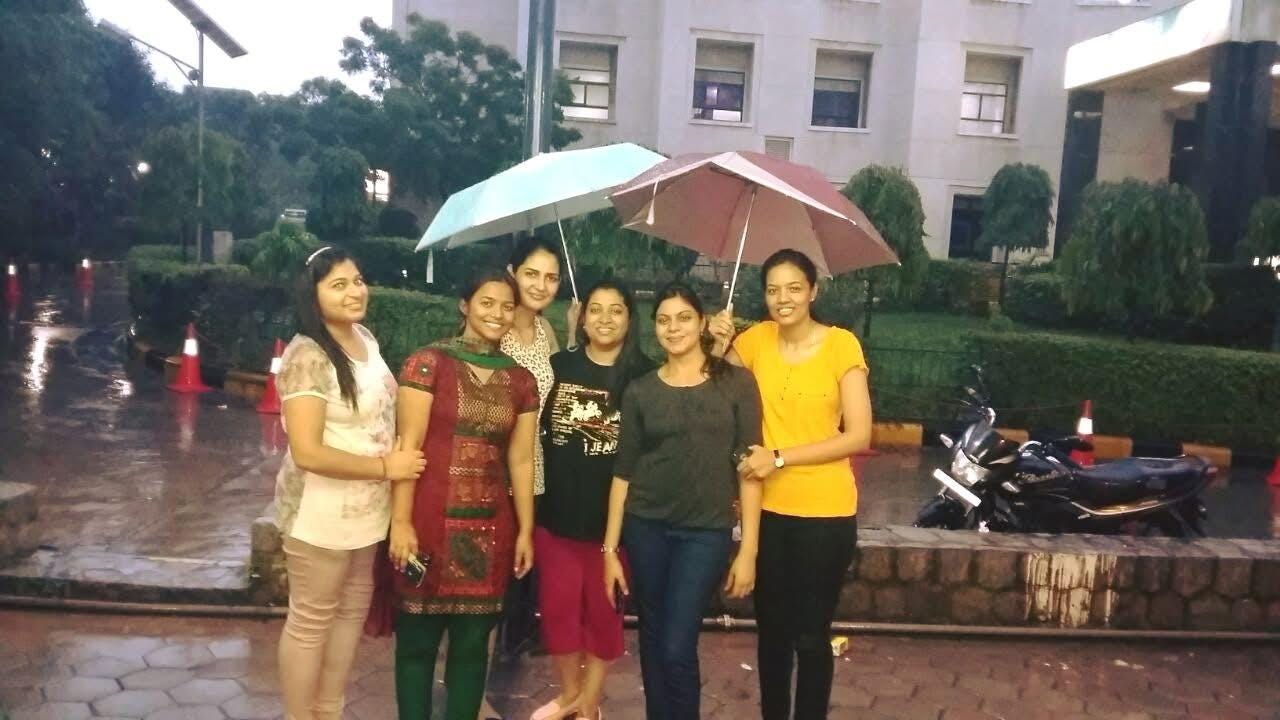
The real education happened in the government hospital wards. And that was something else entirely.
Nine beds in a laboring room. Thirty-five to forty patients in a single night. Three or four women per bed, in labor simultaneously, attended by a team of five or six. Patients arriving with hemoglobin levels of three severely anemic, hemorrhaging, and the team had to figure out, fast, how to save them.
One night, a patient with three previous caesareans came in. Protocol demanded a ligation - further pregnancies would be life-threatening. By 3 AM, the family had gathered, voices raised, threatening the team. And still, the obligation was clear: do what is medically right. Protect the patient.
She did.
These were the cases that shaped her. Not the textbooks. The cases where the margin for error was zero, and the stakes were absolute.
Where Medicine Meets the Miraculous
Ask Dr. Akanksha about her hardest cases, and she will tell you about the bleeding, the instruments, the decisions made in seconds. But ask her what holds her together in those moments, and she will tell you something else.
She believes in an upper power. Not abstractly but practically, in the operating room, in the silence between a crisis and its resolution.
“Sometimes you don’t know what you’re going to face. Every human body is different - it’s not some machine with a manual. And when you don’t know what you’re going to face, there is some spirituality that comes with it.”
She does not use this belief as a substitute for skill. She uses it as a companion to it. The preparation is hers. The outcome, she has learned, is shared.
“I always tell my patients: believe that someone is there and that they are going to help you. Positivity is something they need to hold onto in pregnancy; it is super, super important.”
Fifteen Vessels and a 3.6-Kilogram Miracle
A patient came to her who had delivered her first baby without complication, but could not conceive again. Dr. Akanksha guided her through treatment, and eventually she conceived spontaneously. An earlier low-lying placenta had been flagged but confirmed by multiple ultrasounds to have moved clear. They were planning a normal delivery.
Labor began. First internal examination: normal. Second examination: a vessel, palpable near the cervix. The patient began bleeding.
Emergency ultrasound. A vessel that had not been visible in any prior scan was now revealed, forced into view by the pressure of the descending head. Emergency caesarean.
When she opened the uterus, she encountered a large bunch of vessels running from the lower uterine segment all the way to the cervix anteriorly and posteriorly. About fourteen to fifteen thick vessels in total.
“Can you imagine? Fifteen vessels. I had to tie each one individually. And then I had to ligate the uterine artery also to save her.”
The patient survived. The baby was 3.6 kilograms. Both came home. These are the moments, Dr. Akanksha says, that remind her why obstetrics cannot be practiced on nerve alone. You prepare for everything, you still cannot prepare for everything, and in the gap between those two truths, she has found her faith.
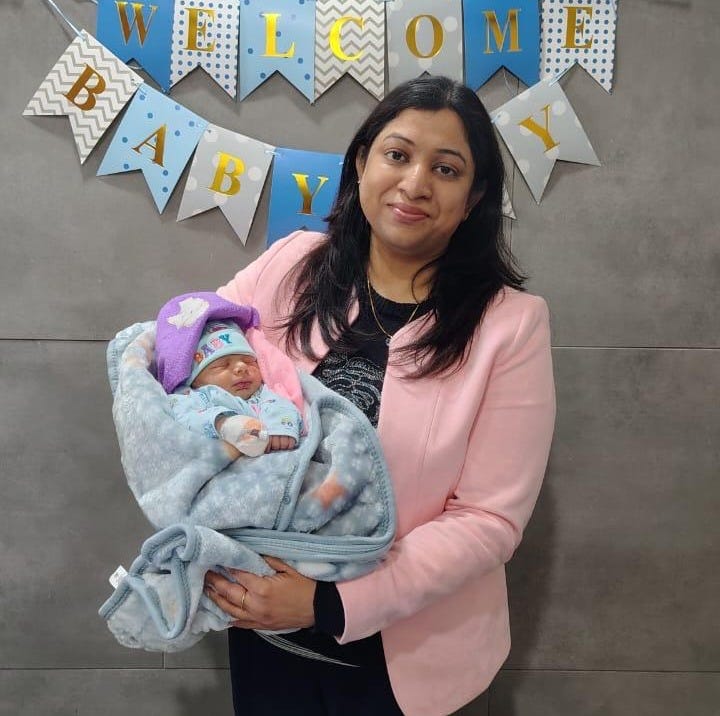
Eight Abortions, One Prayer, and a Baby Who Never Needed the NICU
A couple came to her from modest means, carrying eight years of heartbreak. Eight pregnancies. Eight losses. None past six or seven weeks. No fetal cardiac activity. Evaluations at multiple hospitals, including PGI Chandigarh. Tests are returning normal. Beta thalassemia carrier. Abnormal liver function tests. Nothing else to explain why this woman kept losing her children.
When they found Dr. Akanksha, they had just lost the eighth.
She told them: When you conceive again, we plan this together. We will not lose this one.
The next conception happened while the woman was in Uttar Pradesh. Her husband called. She started the patient on every form of pregnancy support she could think of. Slowly, the woman crossed twelve weeks, a milestone this couple had never reached.
“Ma’am, we have never crossed this period,” the husband said. “I will bring her here.”
They came back to Mohali for her antenatal care and faced many complications, including pregnancy-induced hypertension with BP readings of 210/140 mm Hg resistant to medication, abnormal liver function tests, intrauterine growth retardation, and anemia. A preterm baby who would likely need the NICU, and a couple who could not afford it. Dr. Akanksha made the call to deliver early. She administered lung maturity injections. She prepared them honestly for what might come.”
“No, ma’am,” they said. “The baby will come from your hands.”
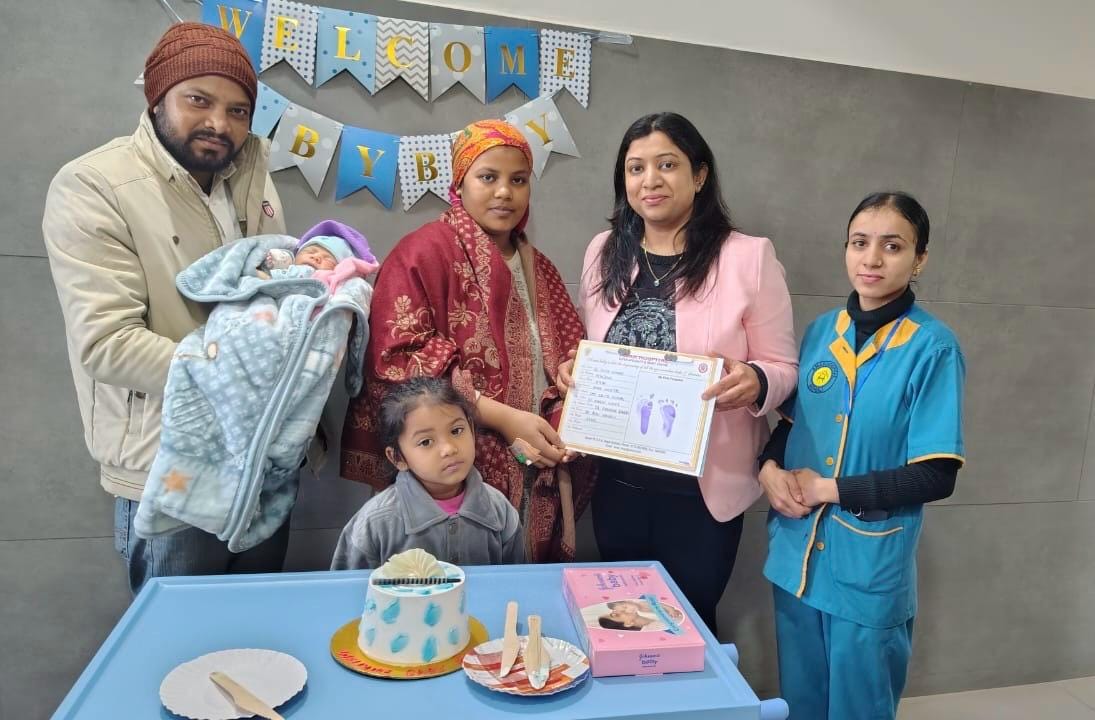
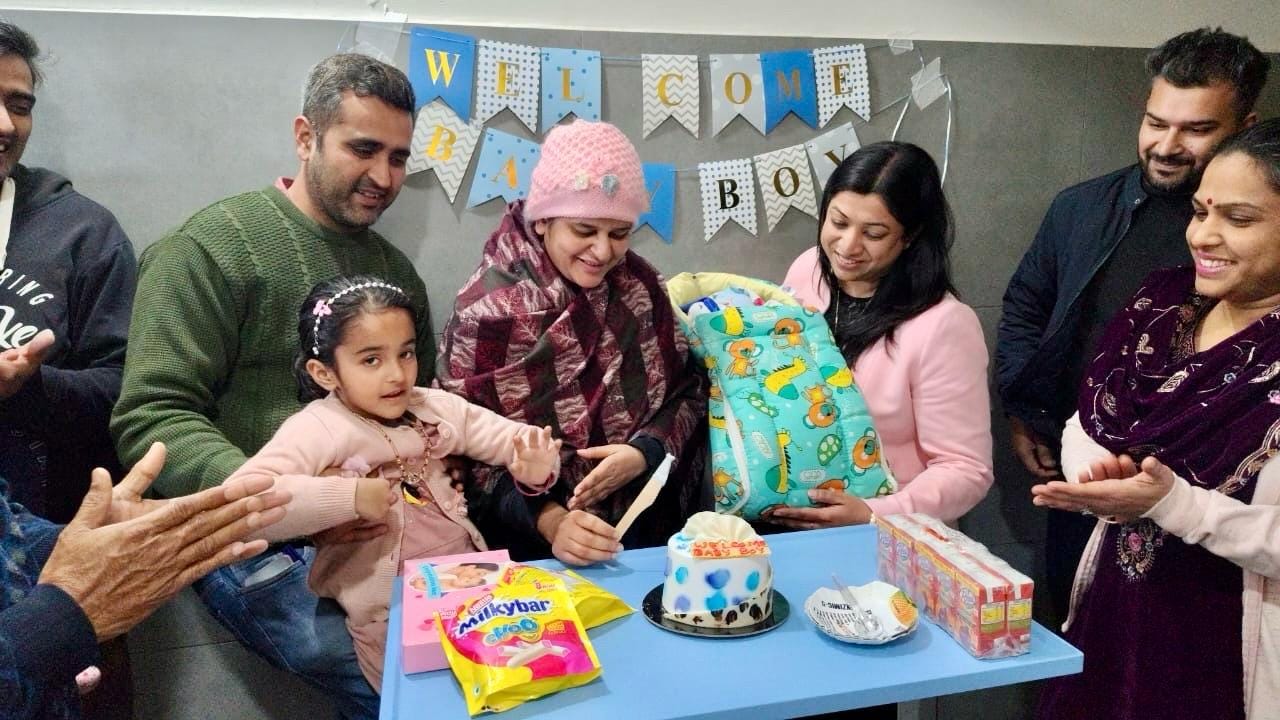
Thirty-four weeks. 2.1 kilograms. Breathing on his own, it was a baby boy. Not one day in the NICU. Mother’s blood pressure normalized within forty-eight hours. Home on day three.
“Can you believe their luck? Even with all the complications and comorbidities - not even one day in the NICU. This is when you believe that God exists.”
The couple has since sent five or six patients to Dr. Akanksha from UP. She now receives infertility referrals from a city she has never visited, carried there by the word of two people who once sat across from her with nothing left to lose.
The Machine That Lets a Mother Walk
Dr. Akanksha has spent her career at the bedside. But she is also clear-eyed about what technology can do when it is built around the patient’s reality, not just the hospital’s convenience.
Take the NST, the non-stress test. For high-risk patients, NSTs may be needed every few days in the final weeks of pregnancy. Each trip to a hospital costs time, money, and the physical strain of travel on a woman who is already at high risk. In the Chandigarh region, a single NST can cost anywhere from 600 rupees at a lower-tier facility to 1,400 or 1,500 rupees at a premium hospital. For families already stretched thin, this adds up fast.
Home-based NST monitoring changes that equation. The device comes to the patient. The report goes directly to the doctor. The woman stays home, stays rested, and stays safe.
“It is easier for patients, less time-consuming, and more economical in the long run compared to repeated hospital visits. And the travel itself is a risk for a high-risk patient.”
For her new clinic, where she will see patients across, Dr. Akanksha sees this technology as essential, not a luxury, but a logical next step for anyone managing a pregnancy that needs close watching.
But the conversation does not stop at home monitoring. It continues into the labor room, and this is where she becomes particularly animated.
Traditional CTG monitors require a woman to lie still, wired to a machine, while her contractions are tracked. The problem: activity during labor, walking, movement, and staying upright significantly increases the chances of a normal vaginal delivery. The two things are in direct conflict.
“Activity increases the chances of a normal delivery. That is the major problem with a wired monitor - you take away the one thing that helps her the most.”
She recalls a patient who had seen the device featured on Shark Tank and came in specifically asking for it - not because a doctor recommended it, but because she had done her own research and knew she wanted to walk during labor. That, Dr. Akanksha says, is the shift happening in patients: they are more aware, more demanding of their care, and more willing to advocate for what they need.
Technology meets them where they are.
The Alarm That Could Save a Life in a Government Ward
In a government hospital, the math is brutal. Nine beds. Forty patients. A handful of staff. The question is not just how to treat every patient well, but also how to know, at any given moment, which patient needs you first.
This is where the alert and alarm system on a device like the Keyar DT Max Plus changes the picture. The machine monitors uterine contractions, maternal and fetal heartbeats, blood pressure, PPH values, and maternal SPO2. The software connection allows the attending doctor to see vitals, cervix dilation, and partograph data in real time.
And when a patient is going into active labor, the system tells you.
“The alarm and alert system can help doctors in high-volume government hospital settings prioritize patients going into labor. In a room with forty patients, that alert is the difference between reaching her in time and not.”
Dr. Akanksha has worked in that room. She knows what it means to make a triage decision based on feel and instinct and the sound of a voice across the ward. A system that surfaces the right patient at the right moment does not replace clinical judgment. It sharpens it.
She sees this technology not as a replacement for the doctor, but as a force multiplier for the doctor who is already stretched too thin.
What She Would Change, If She Could Change Anything
Ask Dr. Akanksha what she would do if she had one magic power, and the answer is not a surgical tool or a new protocol.
“I would change people’s mindsets to a more positive one. I believe that would bring about the most positive change in the world.”
It is, in its way, the most clinical answer she could give. Because she has seen what happens when a patient loses hope - and she has seen what happens when they hold onto it. The woman with eight abortions who finally carried a baby home. The couple from UP who drove across state lines because they believed, against all evidence, that this time would be different.
Positivity, she would tell you, is not naive. It is a clinical intervention. It changes outcomes.
And in her new clinic, she will tell every patient the same thing she has been telling them for years: believe that someone is there. Trust your doctor. Trust yourself. Trust something larger than both.
The Doctor She Became
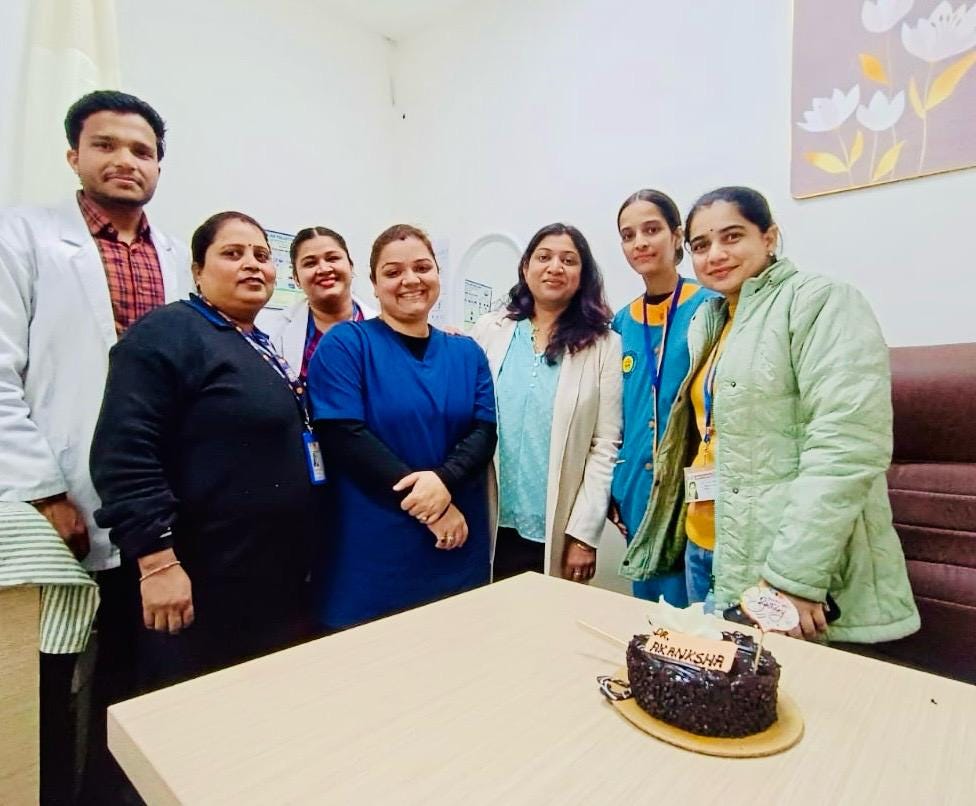
Today, Dr. Akanksha Bansal runs her practice across the Chandigarh Tri-City region - Amar Hospital, Motherhood, Cloud Nine, and now her own multi-speciality clinic, opening its doors to patients who will receive nine months of antenatal care under one roof.
She has not forgotten the government wards. She has not forgotten the nine beds and forty patients and the 3 AM confrontations and the woman with hemoglobin of three who needed four things done at once. That education is in her hands. It is the thing no amount of comfortable private practice can undo.
She carries it with her, the way her parents carried their patients home at the end of every shift.
“It would make my day - an entire day. And if a patient has lost a child, it would affect me at an internal level. That is what this work is.”
She grew up in a house where 28 doctors learned, over and over, that the work does not stop when you leave the building. She grew up watching that truth live in people she loved.
She grew up, in other words, knowing exactly what she was signing up for.
And she signed up anyway.
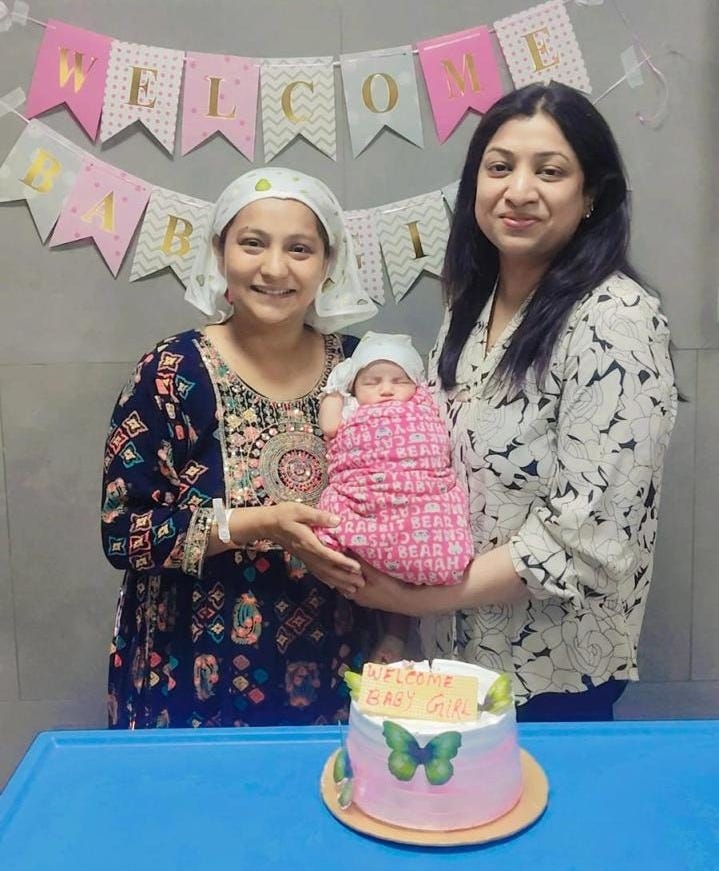
Dr. Akanksha Bansal is a consultant obstetrician and gynecologist based in Chandigarh Tri-City. She is associated with Amar Hospital, Mohali, and on the panel with Motherhood and Cloud Nine Hospitals. She is currently opening her own multi-speciality clinic.
About Janitri
Janitri is built on a simple yet powerful mission: to save lives by supporting women and newborns through the critical 1,000-day journey from pregnancy to early motherhood. Every solution we create is rooted in care, early detection, and the belief that no woman should lose her life while giving life.
With this same spirit, we introduce Janitri Club, a space where we celebrate not designations, but the people behind them. The caregivers, doctors, parents, and supporters who quietly hold this journey together.
Through real stories of emotions, challenges, and victories, Janitri Club brings these voices to life, honouring their experiences and building a community that uplifts everyone who stands beside a woman in her journey.