There is a particular kind of courage that does not announce itself with fanfare. It wakes up at 3 a.m. when water breaks unexpectedly. It holds a two-day-old baby under phototherapy lights and does not fall apart. It goes back to work after five years, picks up a biomedical device, and starts again. That is the courage of Pooja Billar, a biomedical engineer, wife, and mother of two, a woman who learned, one pregnancy at a time, that strength is not the absence of fear. It is choosing to move forward anyway.
Pooja completed her engineering degree and got married in 2016. Today, she works as a biomedical engineer calibrating, maintaining, and troubleshooting the very medical devices that hospitals depend upon to care for mothers like her. She is the mother of Chirag, now in the third standard, and a second child, Sanvith, who is in first standard. In ten years of marriage, she has lived what millions of Indian women silently live, the invisible weight of being excellent at your job and utterly present for your family, all at once, with very little room for error and even less room to pause.

The Dream She Carried Before the Baby
Before Pooja became a mother, she carried a different kind of dream, one that involved airports, foreign laboratories, and the thrill of hands-on biomedical invention. She wanted to travel abroad, analyse cutting-edge medical equipment, and work on innovations that mattered. She wanted to become an entrepreneur.
“I wanted to get exposure to equipment by travelling,” she says quietly. “I wanted to analyse things, to work on inventing.” The dream was vivid and detailed, close enough to touch. Then came marriage and two months later, a pregnancy.
“No one tells you that becoming a mother means quietly folding up a version of yourself and putting her away not forever, but for now.”
She did not resent the child growing inside her. But she allowed herself, in an honest corner of her heart, to grieve the timeline she had imagined. This is an acknowledgement many mothers are afraid to voice. Pooja voices it and, in doing so, makes space for every woman who has felt the same.
The Panic That Changed Everything
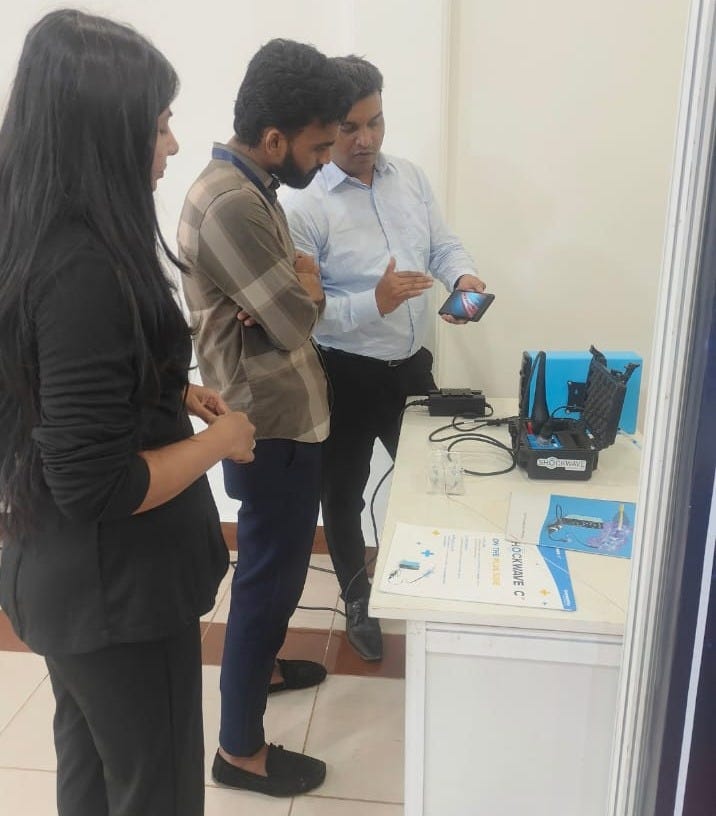
She was four months pregnant and at her office when it happened. Something shifted in her abdomen: a flutter, a tightening, an uncertainty she could not name. Panic swallowed her whole. She created, in her own words, “a big havoc” in the office. Her managers stepped in, called her spouse, and arranged for her to be taken to a hospital in Whitefield.
It was there, lying on a sonography table, that she heard it for the first time, her baby’s heartbeat. She describes it as an “out of the world feeling” that still makes her emotional today.
“That sound it changes everything. One moment you are scared, and the next, you are completely undone by love.”
Pooja later reflected that having an at-home fetal Doppler like Janitri’s Keyar Echo would have given her immediate reassurance during that panic at work, without the anxiety of an emergency hospital trip. For working mothers who spend long hours away from family support, such tools can serve as a quiet anchor of calm.
“She Could Feel It. I Could Not.” The Fifth Month That Tested Everything
Of all the moments Pooja describes, there is one that carries a particular weight, a quiet, almost invisible wound that lodged itself somewhere deep and refused to let go.
It was the fifth month of her pregnancy. She had a close friend who was expecting at the same time, in the same trimester, at the same milestone, at the same stage of becoming. And her friend had started feeling the baby’s kicks.
Not just once. Regularly. Enthusiastically. The kind of kicks that a first-time mother reports with the breathless joy of someone receiving a secret message from within. Her friend called to share every flutter, every movement, every little sign of life she felt from her growing baby. And then, almost without intending to wound, she turned it into a comparison.
“She told me if you are not feeling the kicks, something might be wrong with your baby.”
Those words landed like a stone in still water. Pooja had not been feeling the kicks with any certainty. And suddenly, what should have been a shared joy between two friends at the same stage of life became a source of deep, spiralling fear. She began to question everything. Was she failing at something other mothers were succeeding at? Was her body not communicating what it was supposed to? Was her baby okay?
She went to the hospital. She needed to know. The doctor examined her carefully, listened to her fears without dismissing them, and then explained something no one had told her before: not every mother feels kicks at the same time. In the first five or six months, many mothers miss the movements entirely, especially first-time mothers who do not yet know what to look for. The sensation is subtle, easy to overlook, easy to mistake for something else. Her baby was perfectly healthy.
“The doctor told me I might have just missed them,” Pooja recalls. The relief was enormous. But the experience left a mark because the fear had felt so real, so isolating, so personal. Two women, side by side on the same journey, having completely different experiences and the gap between them had been filled not with reassurance, but with worry.
This is exactly why tools like the kick counter feature in the Janitri Mother App exist. Rather than relying on comparison with other mothers whose pregnancies are never truly identical, a kick counting tool gives each woman a personalised baseline for her own baby’s activity. Pooja strongly agreed: an in-house device or app feature to monitor and track movement would have spared her that hospital trip and, more importantly, the days of quiet terror that preceded it.
Cravings, Google, and the Art of Imperfect Pregnancy
No honest pregnancy story is complete without the confessions. Pooja’s? Pickles. Mango pickles with rice and ghee were an irresistible craving that her doctors had explicitly warned against. She recruited her younger brother as an unwitting accomplice, waited until the house was empty, and indulged. The result: an upset stomach, a hospital visit, and a scolding from her doctor that she remembers with laughter and a little embarrassment even now.
She was also, by her own admission, a devoted “Google doctor” researching the impact of every food, every emotion, every argument on her unborn child. This is the voice of a biomedical engineer and a first-time mother, trying to reconcile science with instinct, facts with folklore.

The Night the Water Broke
Her first labor began at 3 a.m. She had been told only one thing about labor: when your water breaks, the baby is coming. So when it happened, she panicked and wept, confused and frightened, unable to separate fact from folklore in the fog of early morning fear.
What followed was fifteen to sixteen hours of labor, a transfer between hospitals because her haemoglobin was dangerously low, hovering around six when thirteen is healthy and the terrifying logistics of finding a hospital with a blood bank, all while still in active labor. Her first child was born healthy. And Pooja, who had once feared she might not survive childbirth, came through it not untouched, but stronger.
The Second Time: When Joy and Fear Arrive Together
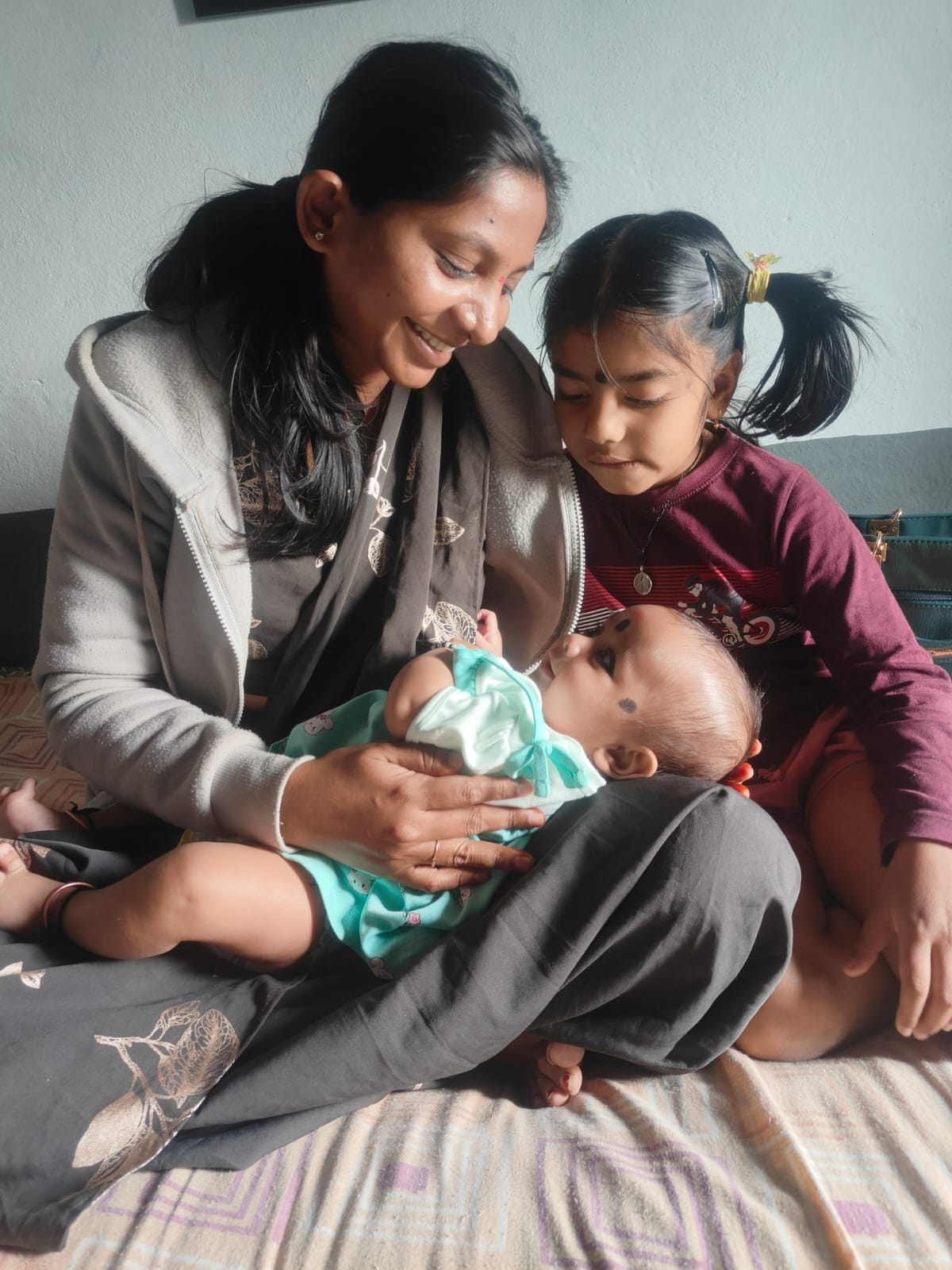
Her second pregnancy came with more confidence, born of experience. But the postpartum period brought a challenge she had not anticipated. Her newborn arrived with a jaundice level of 17.8, significantly elevated, and bulged kidneys that caused visible pain each time the baby urinated. The two-day-old child was admitted to the hospital, placed under phototherapy lights, and given injections. Pooja watched all of it.
“When your newborn is under those lights and you can do nothing but watch that is a helplessness no mother is ever prepared for.”
The doctors told her that mother’s milk works wonders. She breastfed. Her baby recovered and came home. But the fear did not leave with the discharge papers.
Pooja reflects that a device capable of monitoring her baby’s vitals at home, oxygen saturation, pulse, and respiratory patterns would have transformed those early weeks. She later learned about Janitri’s Mom Baby Monitor, which provides real-time SPO2 tracking and alarms for abnormal readings. “That would have been a great relief,” she says simply.

The Mother She Became And the Engineer She Returned To
For four to five years after her first child was born, Pooja detached herself from the world, from friends, colleagues, and social plans. She gave those years entirely to her children. She missed her social life. She accepted the loss. She found unexpected joy inside the sacrifice.
She also put her career on hold. Unlike her male colleagues, she had no choice. “As a mother,” she says, “you compromise. Men don’t have to.” This is not bitterness. It is a statement of fact, delivered with the quiet clarity of a woman who has made peace with an unfair reality while still naming it for what it is.

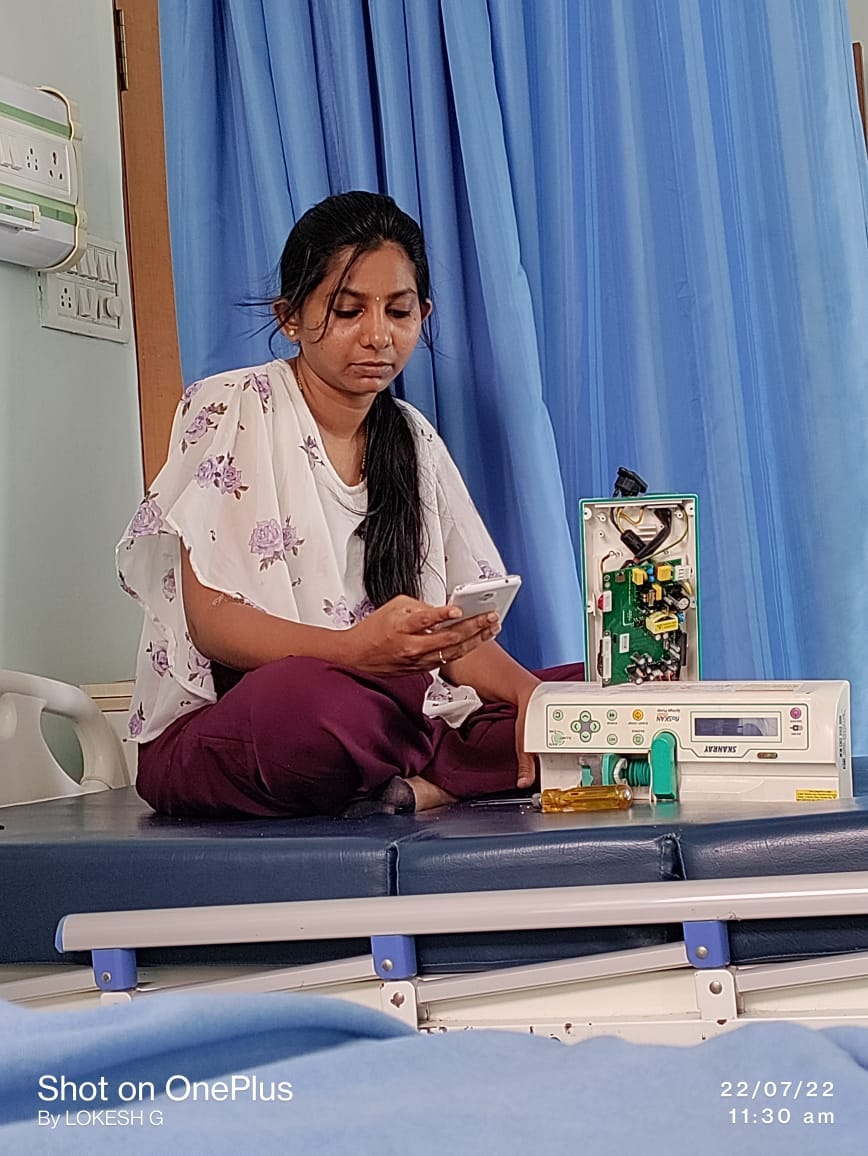
When her second child turned two, Pooja returned to work this time as a biomedical engineer. She now works with the very category of medical devices that she once desperately wished she had access to as a patient: monitoring equipment, diagnostic tools, and the technology that stands between a frightened mother and an answer. There is something quietly poetic about that. The woman who once panicked at four months pregnant, wishing she could hear her baby’s heartbeat from home, now spends her days ensuring that the machines that give those answers work exactly as they should.
“I know what these devices mean to a mother who is scared. I have been that mother.”
What She Wants You to Know
If you are pregnant, Pooja wants you to manage your cravings thoughtfully and to seek advice from your doctor or a dietician rather than trusting only midnight search results. What you eat affects your baby, not just your body.
She wants you to know that if your friend is feeling kicks and you are not, do not spiral. Every pregnancy is different. Everybody is different. Every baby moves differently. Go to your doctor, get reassurance from a professional, and do not let comparison become fear.
She wants you to know that kick counting matters, that monitoring your baby’s vitals at home is not being overprotective, it is being prepared. And she wants you to know that returning to yourself after motherhood is not a betrayal of your children. It is a gift to them.
And above all, she wants you to know that the happiest moments of her life are the simplest ones: looking at her children in photos, in person, in the ordinary light of an ordinary day and seeing happiness on their faces.
“That,” she says, “means the world to me.”
Every mother carries a story. This is Pooja’s.

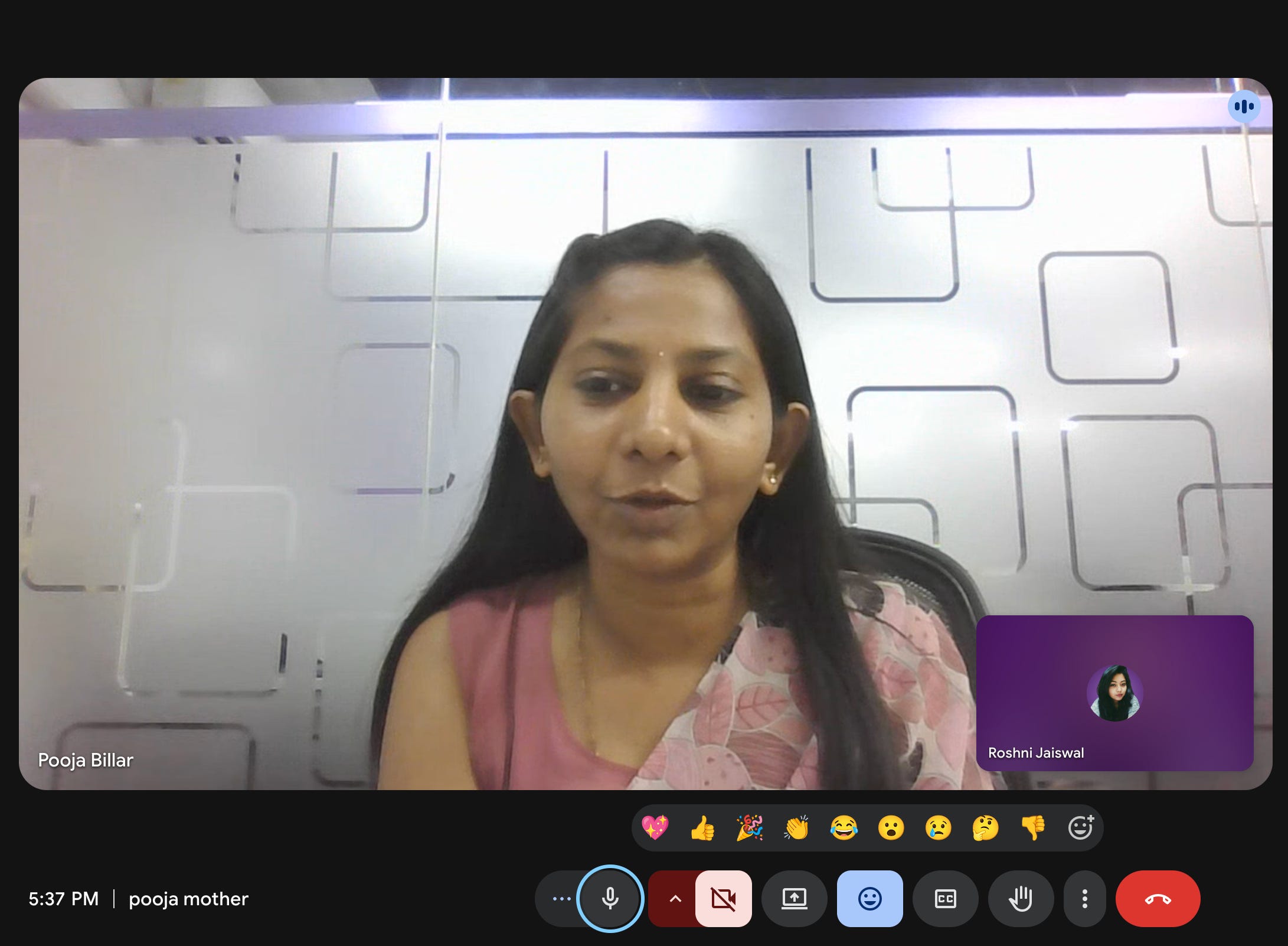
Pooja Billar is a biomedical engineer and a mother of two based in Bengaluru. She completed her engineering degree and has worked as a technical support engineer and biomedical engineer, specialising in the maintenance and servicing of medical devices. After a four-to-five-year career break dedicated to raising her children, she returned to full-time work in the biomedical field when her second child turned two.
This story is based on a conversation between Pooja and the Janitri Club team. Her words have been lightly edited for clarity while preserving her authentic voice.
About Janitri
Janitri is built on a simple yet powerful mission: to save lives by supporting women and newborns through the critical 1,000-day journey from pregnancy to early motherhood. Every solution we create is rooted in care, early detection, and the belief that no woman should lose her life while giving life.
With this same spirit, we introduce Janitri Club, a space where we celebrate not designations, but the people behind them. The caregivers, doctors, parents, and supporters who quietly hold this journey together.
Through real stories of emotions, challenges, and victories, Janitri Club brings these voices to life, honouring their experiences and building a community that uplifts everyone who stands beside a woman in her journey.