HER WORLD, BEFORE
A Life Carefully Built
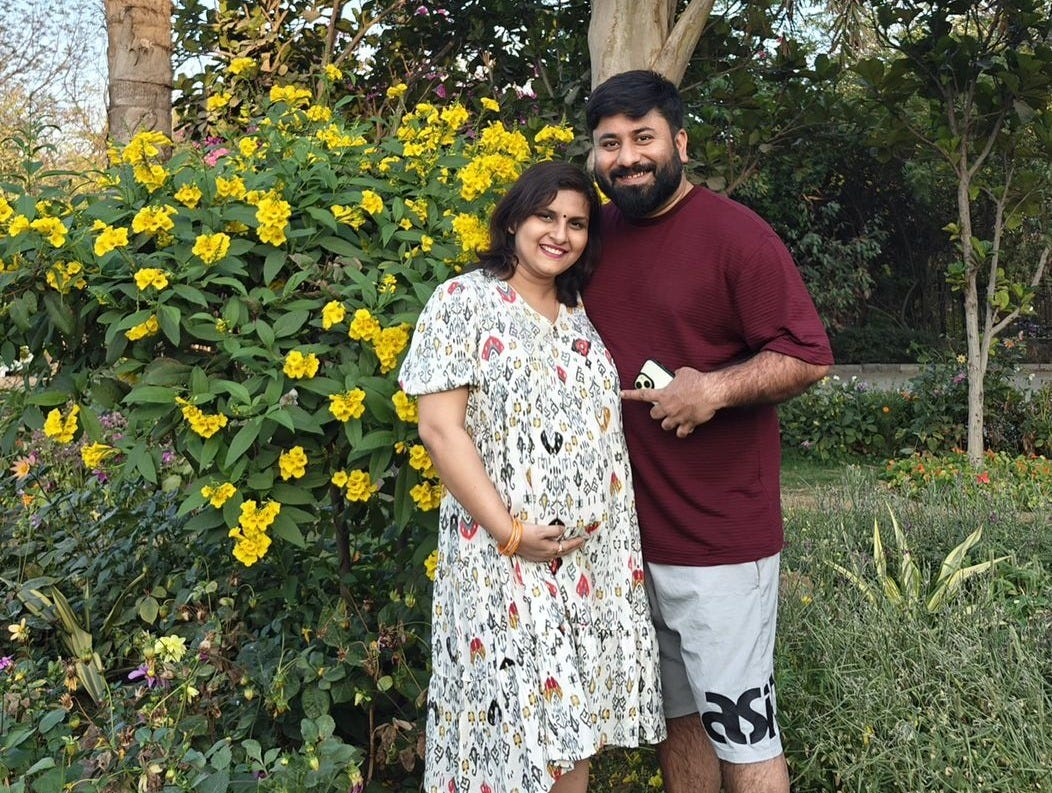
Uma Pathak sits in her home in Gurugram, her two-year-old not far from her side. She speaks with the steady confidence of someone who has navigated both boardrooms and storms of the heart. For thirteen years, Uma has led HR operations at Deloitte Consulting, currently heading their Learning & Development practice, a role that demands calm under pressure, the art of managing people and complexity at once.
Motherhood, she says with a gentle laugh, made her even better at it. “I was already a multitasker,” she explains. “But motherhood taught me to manage ‘calm and chaosness’ together simultaneously, beautifully.” It introduced her to a version of herself she hadn’t met before: one for whom her own health was suddenly non-negotiable, because another life now depended entirely on hers.
THE NEW BEGINNING
A Marriage Full of Hope
Eight years is a long time to want something you cannot have.
When Uma and her husband got married, they did what most couples do: they built a life together, made plans, and assumed that when the time came to start a family, it would come. That’s what you assume when you’re young and in love, and everything else is going well. You don’t anticipate what’s ahead. You can’t.
The wanting started naturally, as it does. And then, quietly, the waiting began.
The first pregnancy brought hope. And then it ended. The grief of a miscarriage is something that society routinely minimises, “it happens to so many people,” people say, as if frequency softens the loss. But for Uma, that first ending was a real and specific heartbreak. A baby she had already begun to love, already begun to imagine, was gone.
She got up. She moved forward. You do, because what else is there to do?
The Second Loss. The Third. The Fourth.
There is a particular kind of endurance required to keep trying after loss. It is not the absence of fear. It is the decision to try anyway, despite the fear, and that takes courage most people will never understand.
The second miscarriage arrived with a cruelty the first had not prepared her for. Because now there was a pattern forming. Now the body that was supposed to hold life had failed to do so twice. The questions begin in the quiet hours: “Is something wrong with me? Will this ever work? How long do we keep going?”
The third loss broke something open that is very difficult to close again. Three times she had conceived. Three times her body had let go of what she was trying to hold. The grief compounds with each loss; it doesn’t reset. Each miscarriage carries the weight of all the ones before it.
Research tells us what Uma lived: women who experience multiple pregnancy losses carry grief that is often invisible to those around them. Society does not have rituals for this kind of mourning. There is no ceremony, no formal acknowledgement, no accepted period of bereavement. You are simply expected to try again or to move on. Neither feels possible.
And yet Uma tried a fourth time. And the fourth time, she lost that pregnancy too.
“Four times I carried hope inside me. Four times I let myself believe. Four times I had to learn how to grieve something no one around me could see.”
By the time the fourth miscarriage was over, eight years of marriage had passed. Uma and her husband had tried everything available to them, including IVF, which is its own emotional marathon of injections, waiting rooms, hormone fluctuations, and devastating outcomes. For Uma, IVF did not work. The failure of that process after everything else was the moment something inside her finally gave way.
“We decided to stop trying,” she says. “We decided to just enjoy our lives.”
Those words are simple. But sit with what it took to say them. Eight years. Four losses. The complete surrender of a dream she had carried her entire adult life. That is not giving up. That is one of the bravest things a human being can do.
THE TURNING POINT
Vietnam, and What Came After
Sometimes the miracle arrives precisely when you stop demanding it.
Uma and her husband booked a 12-day trip to Vietnam to celebrate their wedding anniversary. Not as a strategy. Not as a last-ditch attempt at relaxation before another round of treatment. Simply because they were tired of living inside the story of what wasn’t working, and they wanted to remember what joy felt like.
They travelled. They were present with each other, perhaps truly present in a way they hadn’t been in years, because the weight of trying and failing had gradually pulled them into a cycle of appointments, anxiety, and anticipatory grief. In Vietnam, for twelve days, there were just two people who loved each other, in a beautiful place, living.
About a month after they returned home, Uma noticed something.
I stopped trying to control the outcome. And somehow, that’s when my body found its own way naturally.
After everything the treatments, the loss, the letting go I didn’t know how to trust good news anymore. So I tested again. And again.
The lines are still there. This time, naturally.
Even as her hCG levels began to rise, even as her doctor confirmed what the tests were saying, Uma could not allow herself to feel it. The body learns to protect itself after repeated trauma. After four losses, hope feels like a liability. You don’t want to love something you might lose again.
She and her husband had a silent, unspoken agreement: they would not say the word aloud. They would not tell anyone. They would hold this secret between them and wait, and watch, and try not to want it too much.
For two months, the pregnancy existed in whispers.
NINE MONTHS OF QUIET COURAGE
Alone in the City, Together in Everything
There is a particular loneliness to a pregnancy you are afraid to celebrate.
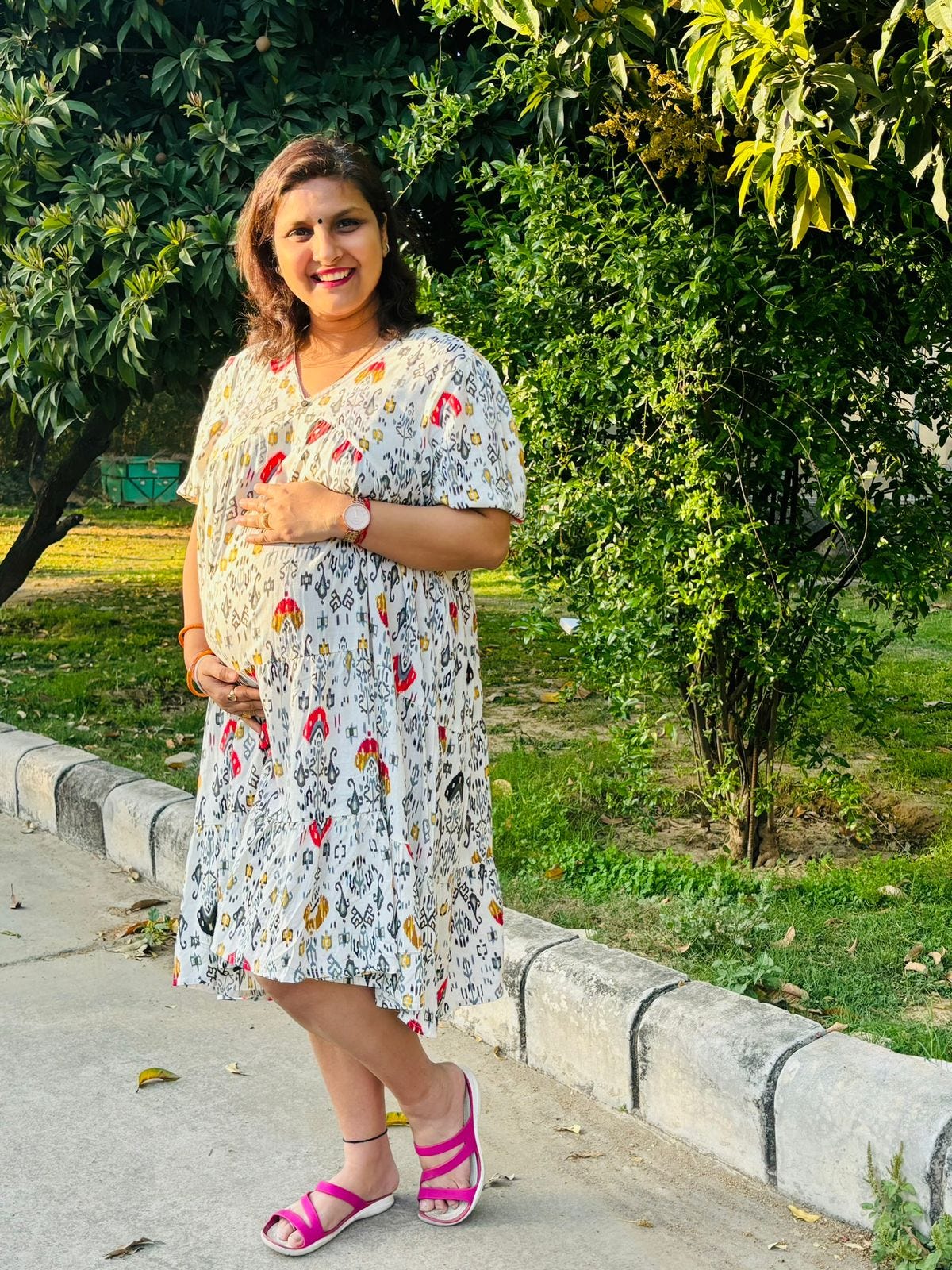
Uma and her husband were navigating this entirely on their own, in a city away from extended family, with no support system around them. They did not tell their parents until the sixth month. Not because they didn’t want support but because each piece of news shared was also a piece of hope extended, and if something went wrong again, they would have to carry other people’s grief on top of their own.
She was on complete bed rest. Injections. Daily medication. The demands of a full-time corporate career managed from home, explained to colleagues with vague references to an ‘exigency’ because the truth was too large and too private to hand to a workplace.
All of this, while carrying four previous losses inside her. While waking up every morning and not knowing if today would be the day her body would fail her again.
“I did not smile for the first seven months of my pregnancy. I was too afraid. Even being an optimistic person, the anxiety was bigger than my optimism.”
She describes the loneliness of those months with a quiet honesty that is arresting. Even with her husband beside her, a man who, she says, “carried the pain, the laughter, the challenges, everything, together,” there were thoughts she couldn’t share with another person. The fear of losing again. The guilt of hoping. The strange guilt of surviving, of making it this far when she hadn’t before.
In those darkest moments, Uma turned to God. She spoke directly to a divine presence that she believed was holding her through this. It was not a performance of faith. It was a private, desperate, necessary conversation between a woman at her limits and the something larger she trusted to carry her.
The Heartbeat That Held Her
It was Uma’s husband who discovered the Janitri fetal monitoring device. He brought it home without fanfare, a practical man trying to find a practical solution to an emotional problem that had no easy solution.
But what that small device gave them was immeasurable. Every time Uma pressed it to her growing belly and heard the heartbeat strong, rhythmic, and undeniable, it delivered proof. Not just that the baby was alive. But that this was real. That this pregnancy was different. That she was allowed, just for a moment, to believe.
The anxiety didn’t disappear. After four losses, anxiety doesn’t just dissolve because you hear a heartbeat. But it found somewhere to land. The monitoring became a ritual, a nightly act of connection between two frightened parents and a baby they were slowly, carefully allowing themselves to love.

THE ARRIVAL
Hello, Baby. We’ve Been Waiting for You.
Nine months of holding your breath. And then, finally, you breathe.
Uma was delivered via C-section. And when they placed her baby in her arms for the first time, there are no words that adequately describe what that moment held. She had imagined it for eight years. She had grieved the absence of it four times. She had spent nine months in fear that it would be taken from her again.
And here was her baby. Warm. Breathing. Real. Hers.
“I was beyond grateful. I was holding the baby I thought I would never see. After everything — after all of it — there was him.”
The anxiety that had threaded through her entire pregnancy did not simply switch off at birth; it continued for the first full year of her child’s life. This is something that rarely gets spoken about: that for mothers who have experienced loss, the fear doesn’t end with a healthy delivery. The vigilance, the checking, the quiet terror of something going wrong, it persists. Because the body remembers what it has survived.
But Uma held her baby. And her baby grew. And the fear, slowly, with time, began to ease.
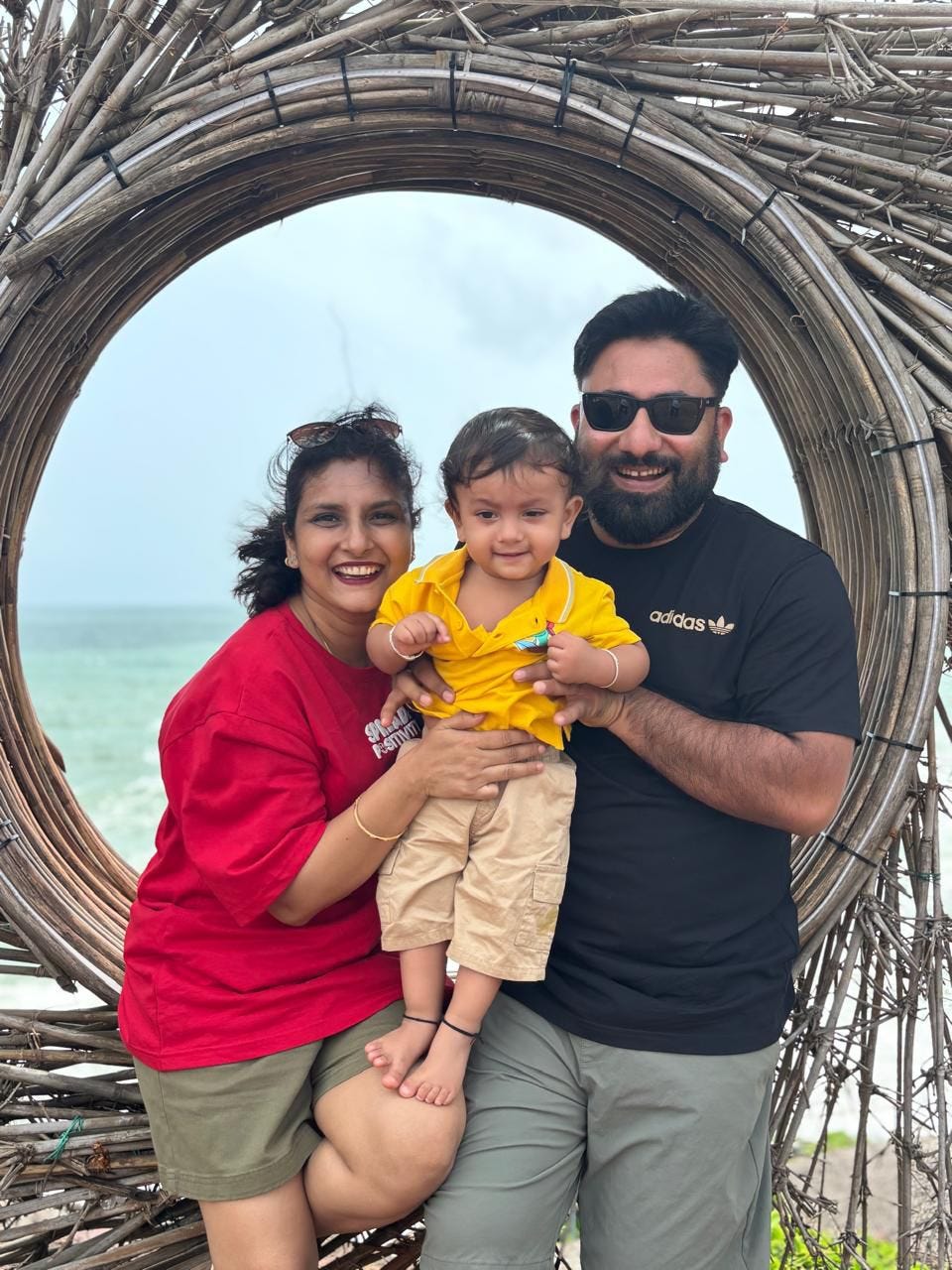
Her child is nearly two years old now. Full of energy, full of life, full of a future that Uma once stopped allowing herself to imagine.
WHAT SHE CARRIES NOW
Empathy, Kindness, and the Shift That Changed Everything
Motherhood, Uma says, gave her “wings to understand how empathy is so important.” It sounds like a simple thing to say. But from a woman who spent eight years in private grief, it is a profound statement about what suffering, when survived, can become.
She thinks now about the women around her in a way she didn’t before. She pauses when someone seems quiet. She asks when she might previously have assumed. She knows, viscerally, that the person sitting across from her in a meeting might be carrying something enormous and entirely invisible. She has been that person. And so she gives others the grace she wished she had been given.
She has also fundamentally rethought what achievement means. “The life you bring into the world,” she says, “is the ultimate achievement. Everything else, work, money, titles, that is all materialistic.” This is not a rejection of ambition. Uma is deeply ambitious. It is a reordering of what matters most, earned through years of understanding what can and cannot be bought, planned, or controlled.
She is thankful for each day now. Not in a performed, social-media way. In the quiet, private way of someone who knows what it is to live without certainty, and who has chosen, despite that, to be grateful.
Uma’s Words for Women Still Waiting
If you are still in the middle of your story, she wants you to hear this.
♥ Take care of yourself first. Your happiness is not a luxury it is the ground your child will one day stand on.
♥ Let your partner carry it with you. Don’t grieve alone when you have someone willing to hold the weight alongside you.
♥ Surrender is not defeat. Sometimes the miracle is on the other side of releasing the grip.
♥ Your grief is real, even if no one acknowledges it. Four losses are four real children you loved. You are allowed to mourn them.
♥ There is light just beside the end of the tunnel. Don’t lose hope. It happened for Uma. It can happen to you.

Uma Pathak is an L&D business leader at Deloitte Consulting in Gurugram, with thirteen years of experience in HR operations supporting large global teams. Sharp, composed, and deeply professional, she has built a meaningful career in one of the world’s most demanding consulting firms, showing up fully, no matter what is happening behind the scenes. She is also a mother. Finally. After eight years of marriage, four miscarriages, failed IVF, and a grief so private that even her own parents didn’t know what she was carrying, Uma Pathak became a mother to a beautiful child who is now nearly two years old. This is her story. And it deserves to be told with all the honesty it earned.
Uma Pathak’s story is not a story about a product, or a brand, or even a miracle pregnancy. It is a story about what human beings are capable of enduring when they love something enough. It is a story about a woman who grieved four times over and still found the courage to try again. Who kept her pregnancy a secret for six months so that no one else would have to share her fear. Who spent nine months in silent terror, and still chose to believe.
She is a mother now. Finally, completely, irreversibly. And that is everything.
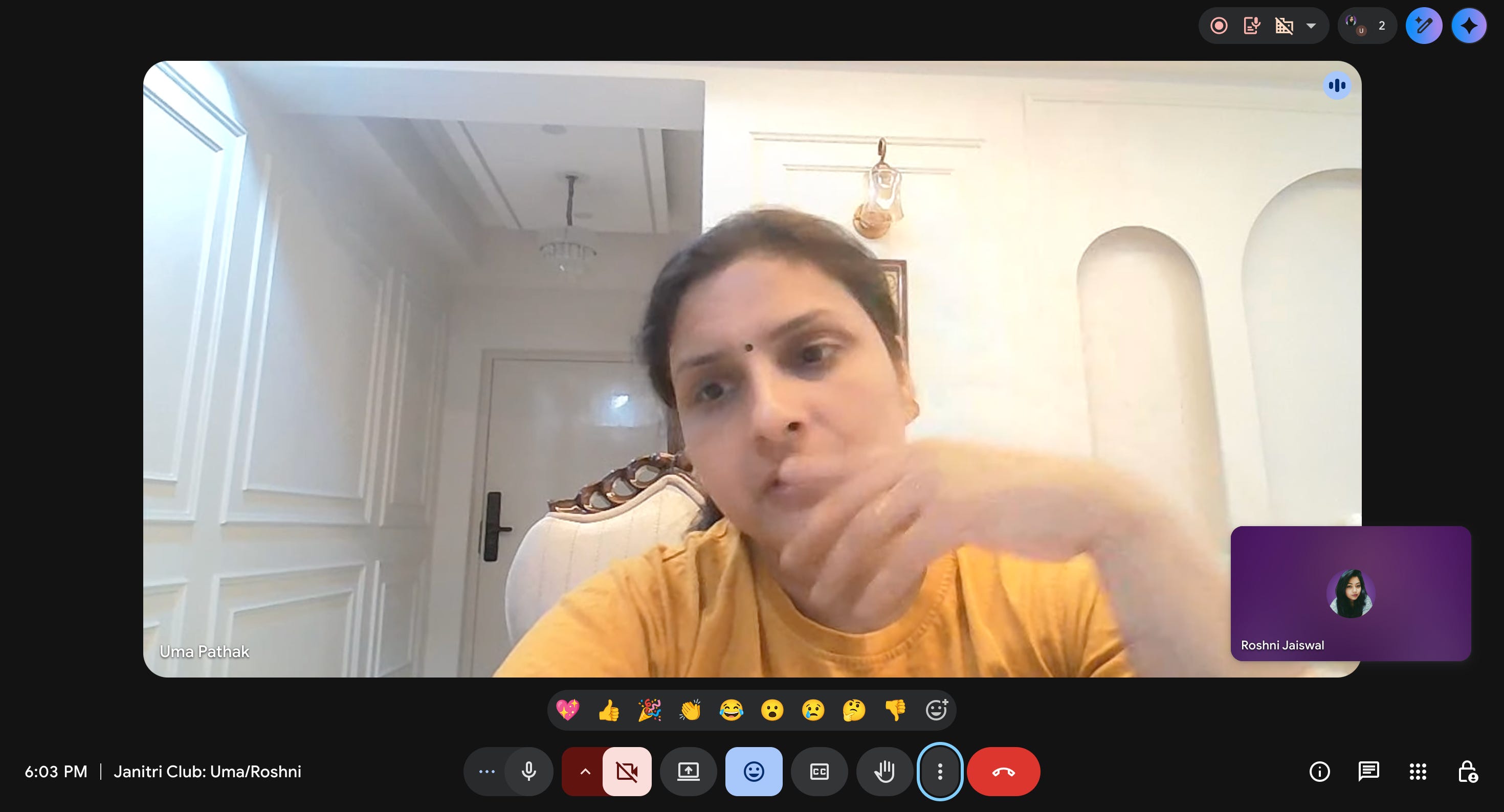
This story is based on a conversation between Pooja and the Janitri Club team. Her words have been lightly edited for clarity while preserving her authentic voice.
About Janitri
Janitri is built on a simple yet powerful mission: to save lives by supporting women and newborns through the critical 1,000-day journey from pregnancy to early motherhood. Every solution we create is rooted in care, early detection, and the belief that no woman should lose her life while giving life.
With this same spirit, we introduce Janitri Club, a space where we celebrate not designations, but the people behind them. The caregivers, doctors, parents, and supporters who quietly hold this journey together.
Through real stories of emotions, challenges, and victories, Janitri Club brings these voices to life, honouring their experiences and building a community that uplifts everyone who stands beside a woman in her journey.