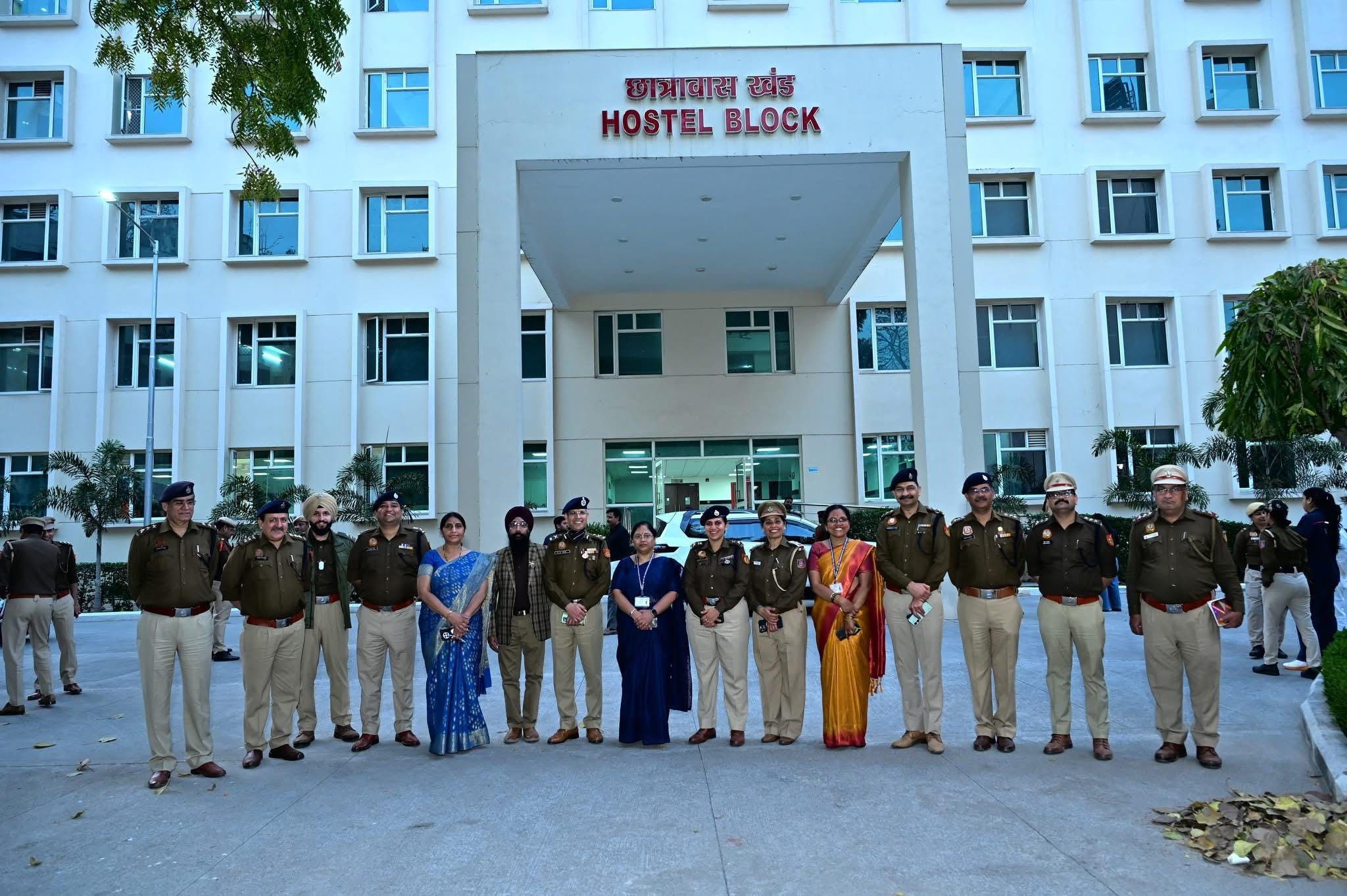
There is a building in Delhi that Dr. Daisy Thomas helped build - tile by tile, color by color, furniture by furniture. But long before she was choosing the shades of its walls, she was laying the invisible foundation for something far more enduring: a generation of nurses who learned from her what it truly means to care.
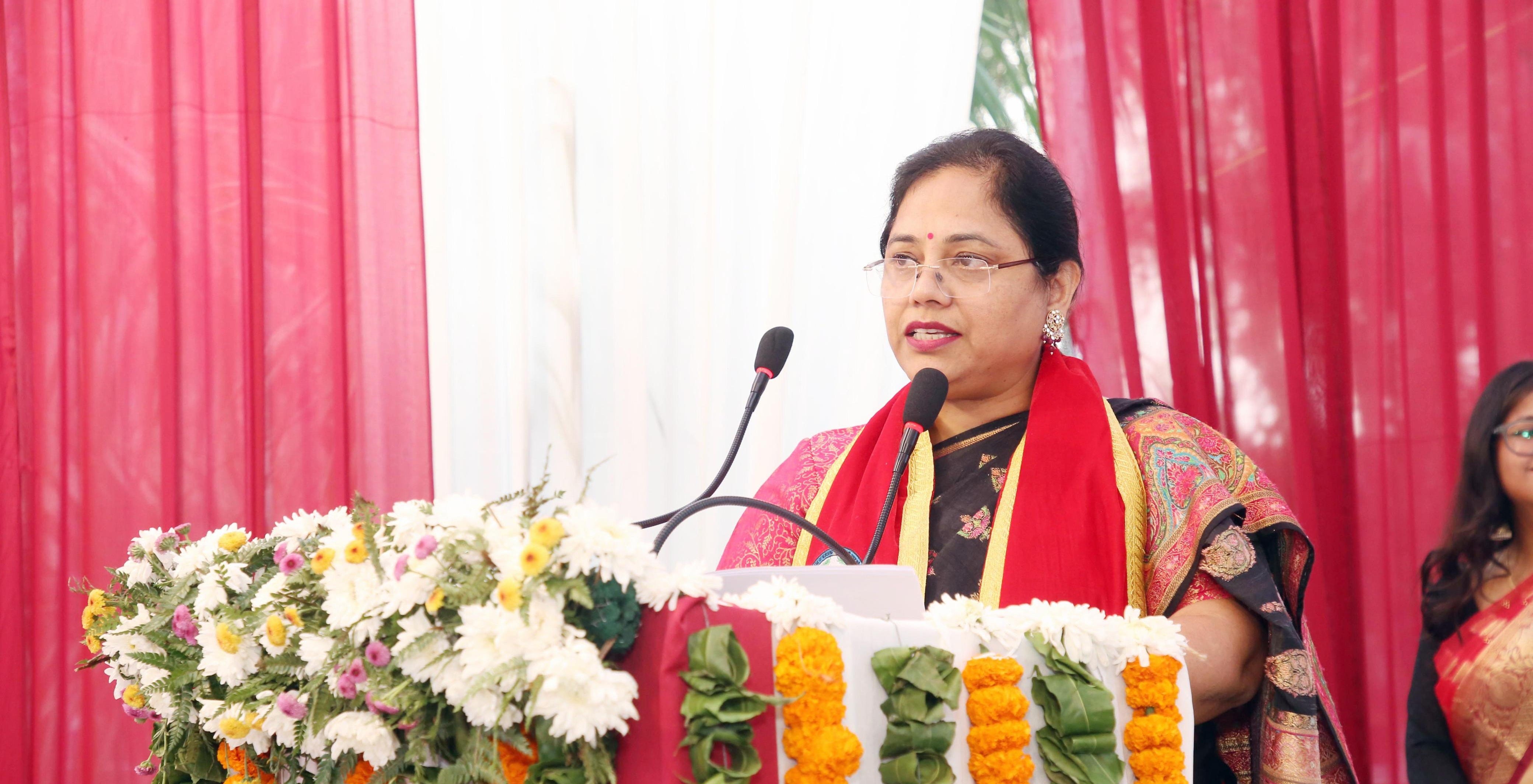
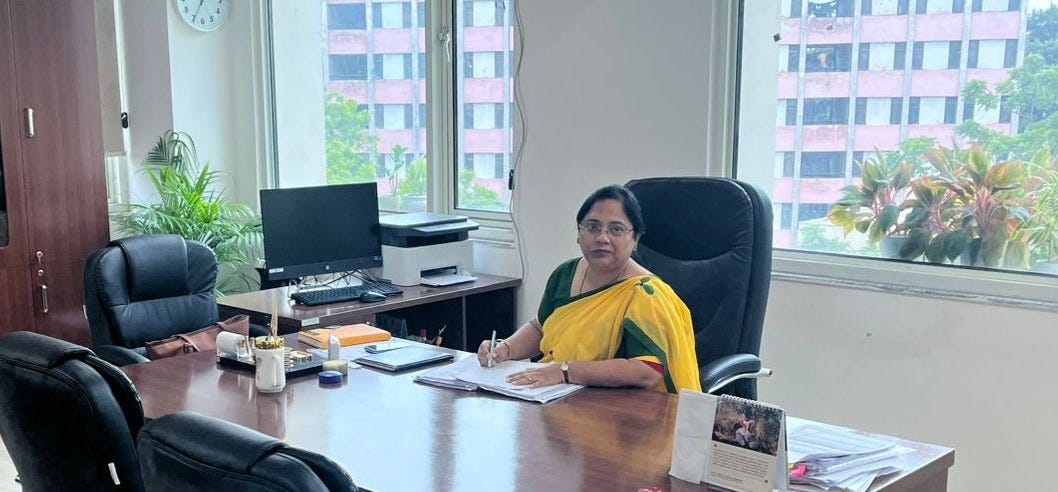
Dr. Daisy Thomas is the Acting Vice Principal of Rajkumari Amrit Kaur College of Nursing. She has been here for 36 years. She joined in 1990. And if you ask her where she hopes to retire, she smiles and says, “This college itself.”
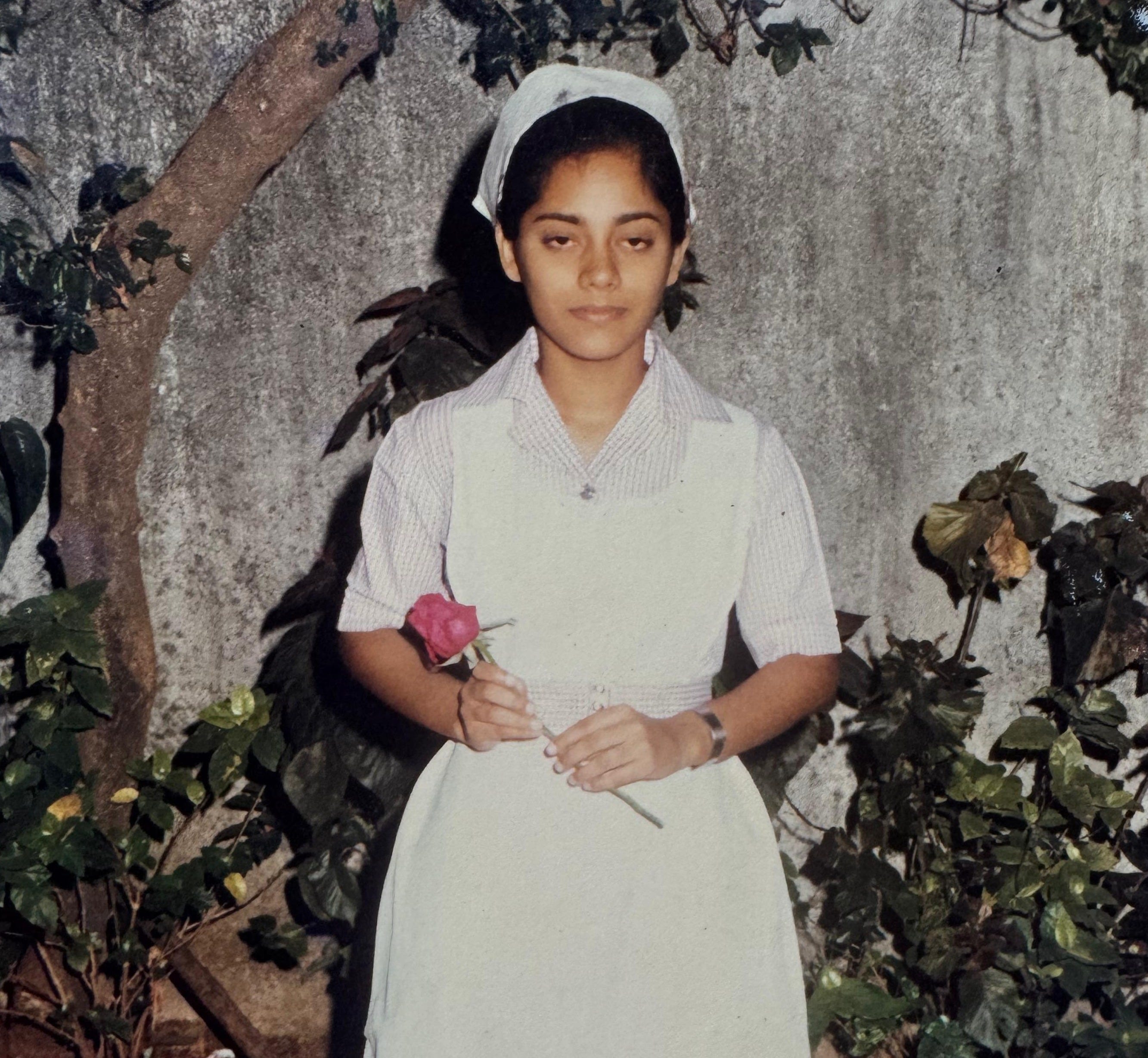
From a Steel City, With a Dream She Didn’t Know She Had
Bhilai, Chhattisgarh - a planned steel city, clean and orderly, described by those who grew up there as a “mini India.” It was here that Daisy grew up, in a world shaped by sectors and routine, where children finished their homework before they were allowed to run down to play in the evening.
Her father worked at the Bhilai Steel Plant. Her mother was a housewife - logical, reasoning, always asking why. Her father, meanwhile, was the kind of man who helped cut vegetables and prepare bhatti alongside her mother, without being asked. “I used to pray,” Dr. Daisy says softly, “that I would get a husband like my father.”
She did.
But before all of that - before marriage, before motherhood, before 36 years of shaping young nurses - there was a young girl from Bhilai who had absolutely no idea what nursing was.
“Nobody in my family was from a nursing background,” she recalls. “I didn’t even know the difference between B.Sc. Nursing and GNM.”
It was a family friend - a senior student at SNDT Mumbai - whose parents set the wheels in motion. They wanted someone from Bhilai to make the journey to Mumbai together, for company, for safety, for comfort. A form was delivered to Daisy’s home by her brother’s classmate. Even then, the form sat unfilled for days.
“My father said, ' Let us just fill it and see what happens.”
What happened changed everything.
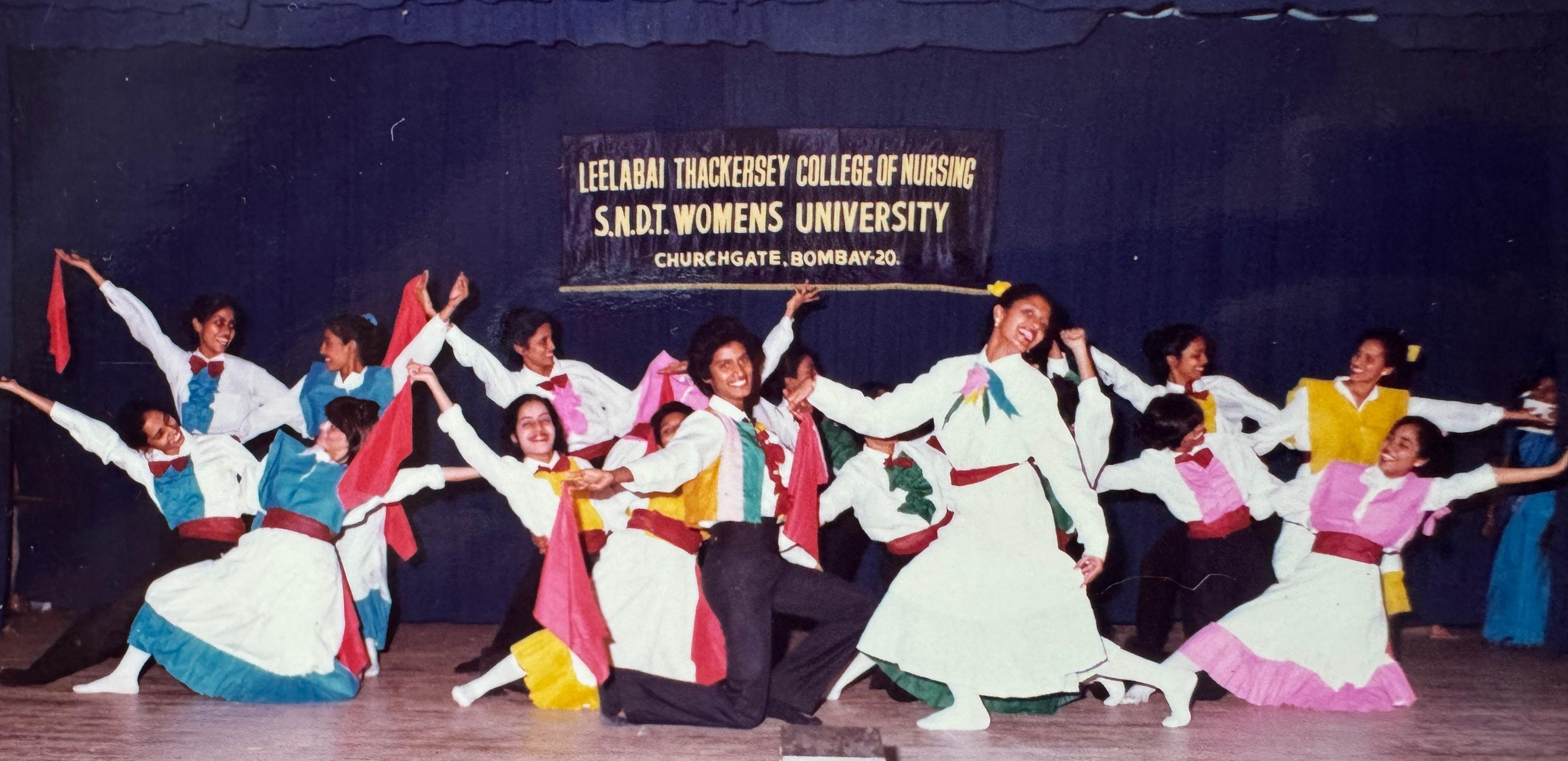
Mumbai, A Hostel, and a Vice Principal Who Said Yes
Three fathers. Three daughters. One train to Mumbai for the entrance exam.
Two of the girls passed. One had to go back. And suddenly, Daisy and her friend were standing in a city they barely knew, with no local guardian - a requirement for hostel admission - and parents who refused to leave until their daughters had a roof over their heads.
The fathers walked into the Vice Principal’s office.
“Either you give them the hostel from day one, or we are cancelling the admission and taking them home.”
The Vice Principal gave them the hostel.
“That’s how we stayed,” Dr. Daisy laughs. “Because we had nowhere else to go.”
The Dirty Bed That Taught Her Everything
College at SNDT was a blend - early mornings, block postings, local trains to hospitals, a close-knit group of five friends who went everywhere together, and last-minute studies that somehow always worked out.
But it was in the wards where the real education began.
She remembers her very first clinical posting. She was asked to make a bed. The bed was dirty. She felt a wave of doubt - Why did I come into this profession?
Her teacher didn’t scold her. She explained.
“If the bed is clean, it reduces infection. If dirt remains, it will infect the surgical wound.”
That one correlation - between a clean bed and a healing patient - stayed with Dr. Daisy for 36 years. It became the way she taught. Not just skills. Not just procedures. But the why behind every action.
“Students used to deliberately choose the sickest patients,” she says with a knowing smile, “so that they would have more to do when the teacher came around, and their evaluations would be better.”
Even a student’s ambition, she learned, could be channeled into compassion.
The Nurse Who Changes the Doctor’s Treatment
Ask Dr. Daisy what a nurse truly is, and she answers without hesitation.
“A nurse is with the patient for 24 hours. The doctor comes and goes. We are the ones who see the patient deteriorate or improve. Our assessment - if done well - should be changing the treatment.”
She talks about the difference between peptic ulcer pain and intestinal obstruction pain - both cause pain, but the presentation is entirely different. A nurse who has studied for four years knows this. A nurse at the bedside can catch this. But only if she looks. Only if she documents.
“Documentation is our biggest weakness,” she says candidly. “And it is also our biggest opportunity.”
In the West, she points out, nurses are recognized as the backbone of healthcare. The reason? Their documentation is meticulous. Their assessments are on record. Their observations are respected. She welcomes technology with open arms - digitalization, AI, clinical tools that lift the burden from nurses so they can do what they do best: care for people.
What She Gave Her Students
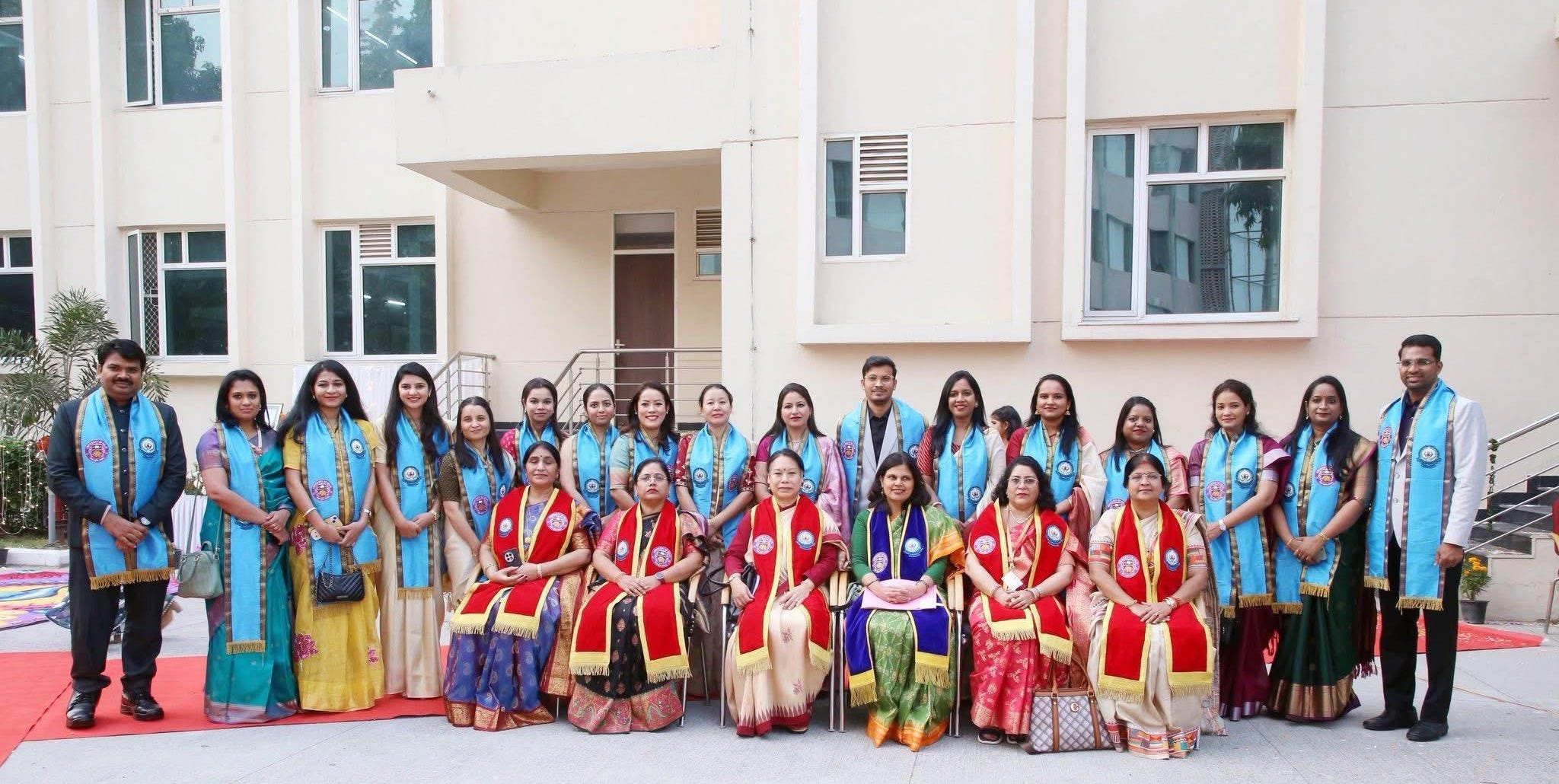
Over the past three decades, Dr. Daisy has trained hundreds of nurses. Some have cleared UPSC examinations. Some are nurse practitioners abroad. Some work in the most respected hospitals in the country.
Recently, she heard about an interviewer who saw that an applicant had graduated from Rajkumari Amritkar College of Nursing - and decided, right then, that no further interview was needed.
“That recognition,” she says, her voice carrying quiet pride, “is the biggest thing.”
But what does she believe she actually gave them?
“Attitude. Ownership. From the first semester, when we assign a patient to a student, we are teaching leadership. This is your patient. That assertiveness, that sense of responsibility, stays with them for life.”
She speaks of how she would demonstrate procedures herself - touching patients, turning them, speaking to them with a smile - so her students would see and mirror it. “If I speak to the patient with warmth, the next time my student approaches a patient, she will speak with warmth too. You cannot teach compassion in a classroom. You have to show it.”
A Pregnancy in Bhilai, Another in Kerala
Away from the wards, Dr. Daisy’s personal life carried the same intentionality she brought to her profession.
Both pregnancies were planned. Her first child, her daughter, now a consultant pathologist at Fortis Escorts, was born in Bhilai’s Jawaharlal Nehru Hospital, with her father by her side. Her son, born in 1998, arrived in Kerala, where her mother had settled after the loss of her father in 1996.
“During both deliveries, I was with my mother. My husband was very supportive. I had the luxury of just enjoying the time.”
She didn’t experience postpartum depression. She attributes this to planning, to support, to having a husband who showed up - the way her father had always shown up for her mother.
“From my father, I learned discipline and care. From my mother, I learned logic — to always ask why. I carry both with me every day.”
One Wish for the World
If she could change one thing in the world?
“Good health,” she says simply.
And in nursing specifically?
“Attitude. I would want every nurse to develop a much more professional, compassionate, proud approach to this profession.”
Because that is what Dr. Daisy Thomas has spent 36 years building - not just in the walls of a new college building, not just in the tiles she chose and the furniture she selected - but in the quiet, lasting architecture of every student she ever stood beside at a hospital bed and said: This is how you touch a patient. This is how you see them. This is how you make them feel less afraid.
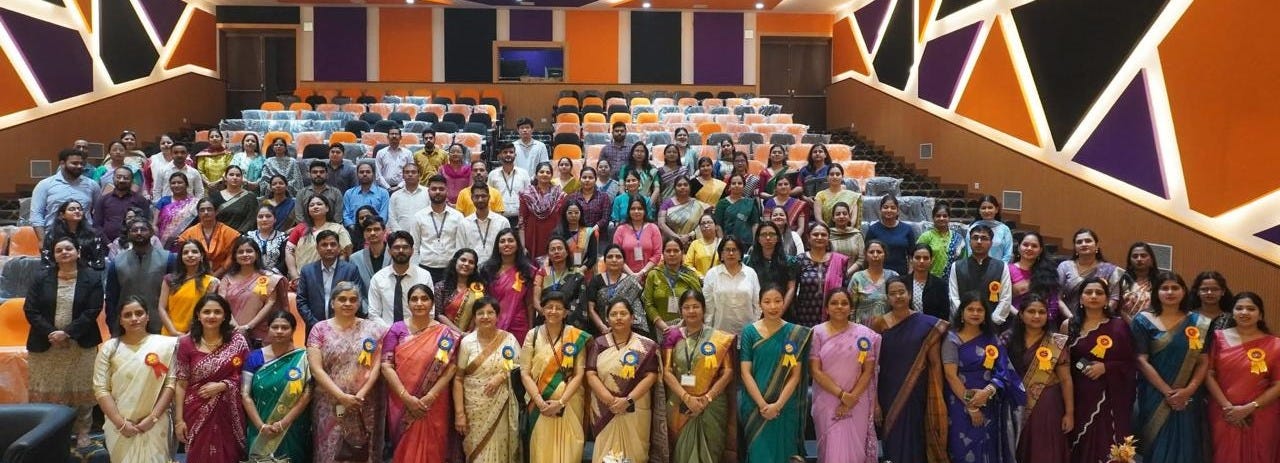
A Note to Every Nursing Student Reading This
If you are reading this at the beginning of your journey, perhaps homesick in a hostel, nervous before your first ward posting, or wondering why you are being asked to make a bed when you came here to save lives, Dr. Daisy Thomas has a message for you.
Everything you are doing right now matters. The bed you make reduces an infection. The smile you carry into a patient’s room reduces their anxiety. The assessment you document carefully could change their treatment. You are not just a support system - you are the eyes, the ears, and the steady hands of healthcare, present for 24 hours when no one else is. Own your patient. Ask why behind every procedure.
Let compassion be your first skill, and documentation be your strongest habit. The nurses who changed the world did not wait to be recognized - they simply showed up, every single day, and cared deeply. You can do the same.
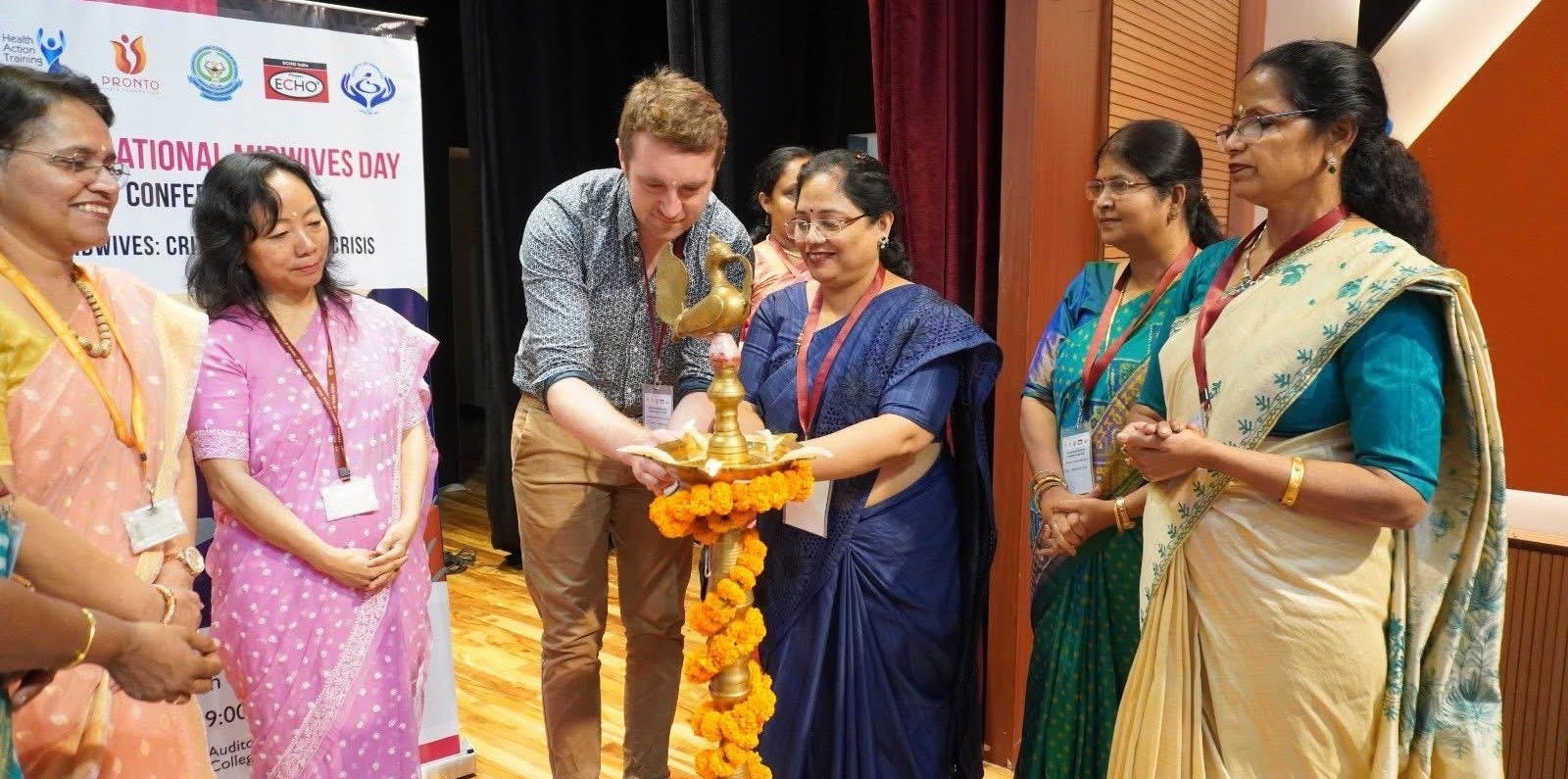
Happy International Nurses Day
On this International Nurses Day, Dr. Daisy Thomas and the entire Janitri team want to pause and say what is not said nearly enough: thank you. Thank you to every nurse who wakes up before the world does, who holds a stranger’s hand through their most frightening moments, who studies for years to earn a knowledge that often goes unacknowledged, and who shows up - shift after shift - with skill, with patience, and with heart. You are not just caregivers. You are the backbone of every hospital, the quiet force behind every recovery, and the reason countless mothers and newborns come home safe. Today is yours. You deserve every bit of it. Happy International Nurses Day: from all of us who see you, celebrate you, and are endlessly grateful for you.
Dr. Daisy Thomas is the Acting Vice Principal of Rajkumari Amrit Kaur College of Nursing, Delhi. She holds a PhD in Nursing from Indira Gandhi Open University and served as Registrar of the Delhi Nursing Council. She has given 36 years of her life to the institution she calls home.
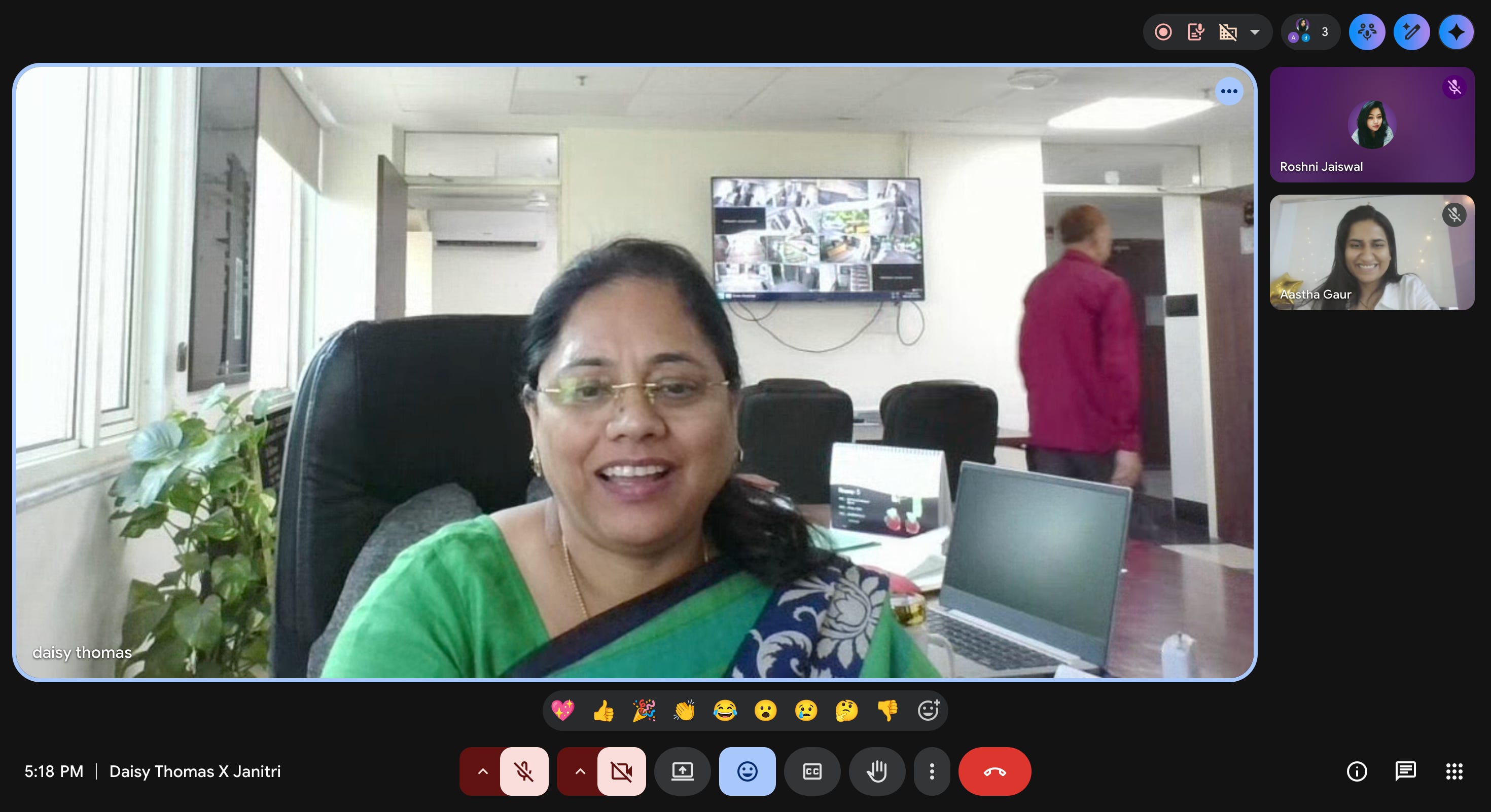
This story is based on a conversation between Dr Daisy Thomas and the Janitri Club team. His words have been lightly edited for clarity while preserving his authentic voice.
About Janitri
Janitri is built on a simple yet powerful mission: to save lives by supporting women and newborns through the critical 1,000-day journey from pregnancy to early motherhood. Every solution we create is rooted in care, early detection, and the belief that no woman should lose her life while giving life.
With this same spirit, we introduce Janitri Club, a space where we celebrate not designations, but the people behind them. The caregivers, doctors, parents, and supporters who quietly hold this journey together.
Through real stories of emotions, challenges, and victories, Janitri Club brings these voices to life, honouring their experiences and building a community that uplifts everyone who stands beside a woman in her journey.